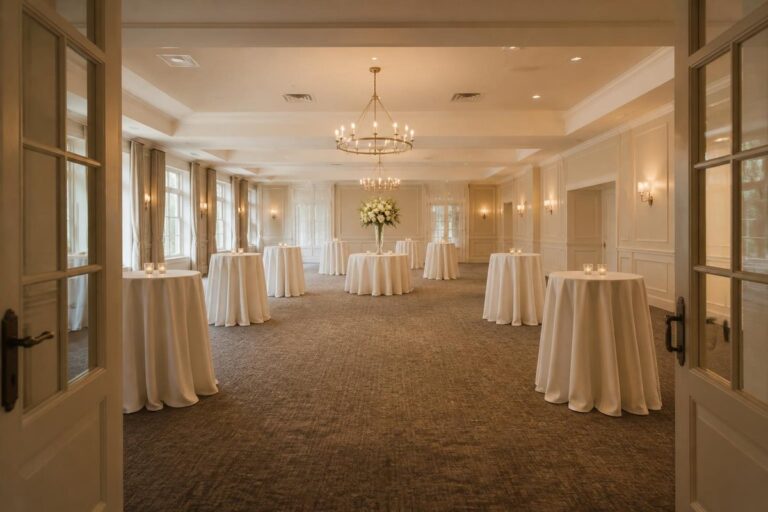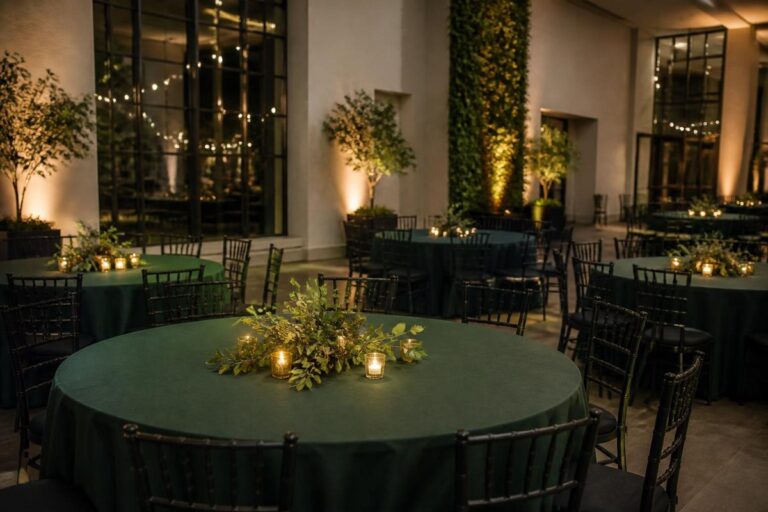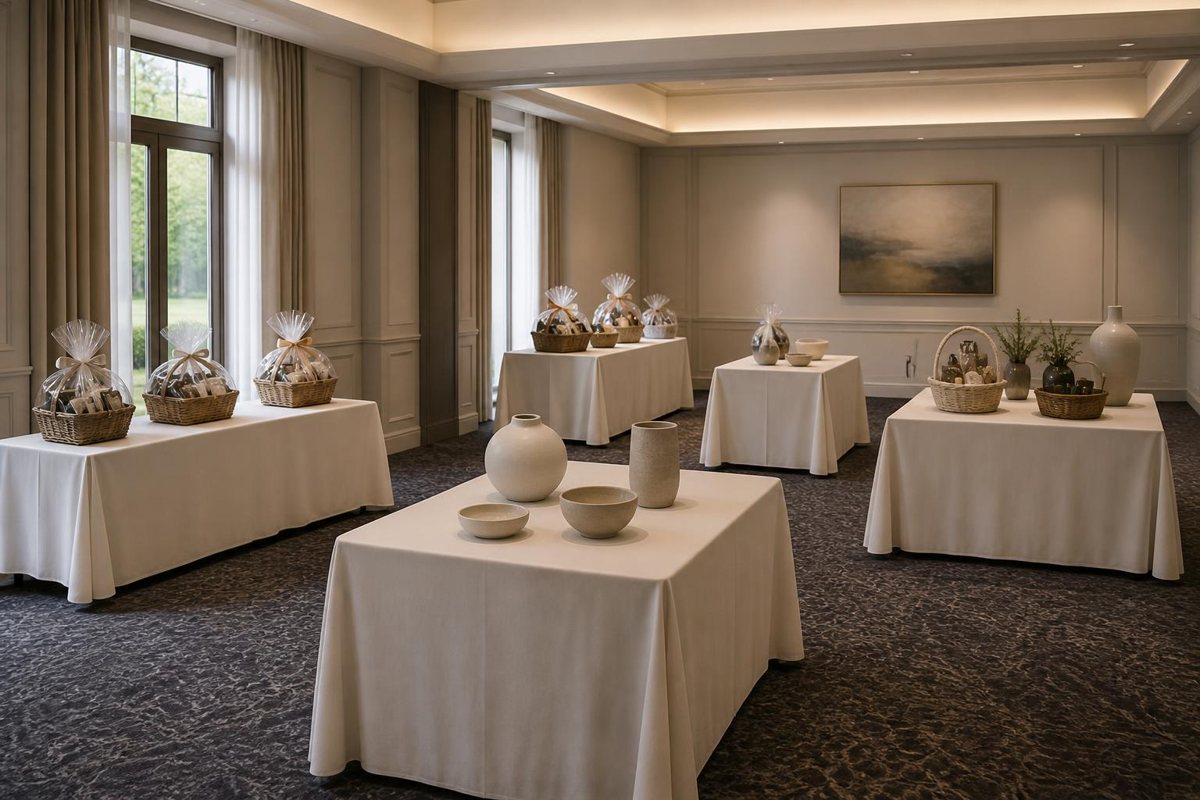
Plan a silent auction layout with room for browsing, bidding, collection, and checkout. Keep display tables and guest movement working together.
A successful auction room makes it easy to browse, bid, ask a question, and leave with a purchase. A thoughtful silent auction layout does that work quietly in the background. It gives each display enough breathing room, keeps bidding visible, and gives checkout a place that does not interrupt the rest of the event.
Before selecting tables or décor, map the guest journey. People should be able to enter, understand where items are, move through the displays, bid without crowding, and find checkout when the auction closes. That sequence works for a school fundraiser, nonprofit gala, or corporate benefit because it starts with movement and clarity rather than decoration alone.
Plan a silent auction layout around the guest journey

Begin with the room dimensions and fixed features: entrances, restrooms, doors, stages, bars, buffet lines, and columns. Mark where guests first arrive and where the event’s main activity happens. The auction should be easy to find without blocking the path to dinner, a program, or a reception line.
For a small item collection, one continuous display area may feel organized. For a larger collection, group items in logical zones such as experiences, dining, family activities, or premium packages. Simple category signs help guests scan the room. Keep the most important instructions near the entrance to the auction area, where people can read them before they start browsing.
Creative Events supports fundraiser event planning for galas, charity auctions, donor events, and community benefits. Bringing the auction layout into the broader floor plan helps the program, food service, and donation activity feel like one event.
Choose displays that protect visibility and conversation
Match table shapes to the items
Flat certificates, gift baskets, artwork, and larger display pieces need different treatment. Tables give smaller items a clear home, while a freestanding display may work for a feature piece that guests need to see from more than one direction. Avoid piling several unrelated items together merely to save surface area. If a guest cannot tell which bid sheet belongs to which item, the display is doing too much.
Use event table rentals to create distinct display zones, then decide where linens, risers, or simple signs will improve visibility. A higher item can catch the eye, but it should not block the view of the item behind it. Keep information cards easy to read at standing height.
Give guests room to pause
Auction tables work best when guests can stop without becoming a wall in a main aisle. Leave circulation space around the display and keep a clear route to the room’s essential destinations. The U.S. Access Board explains the role of accessible routes; use that guidance as a planning reference and confirm the specific venue requirements with the venue team.
Staff or volunteers also need space to answer questions, straighten bid sheets, and help guests who are new to the process. Place a small help point where it can be seen without making it the center of the room.
Make bidding simple enough to use at a glance
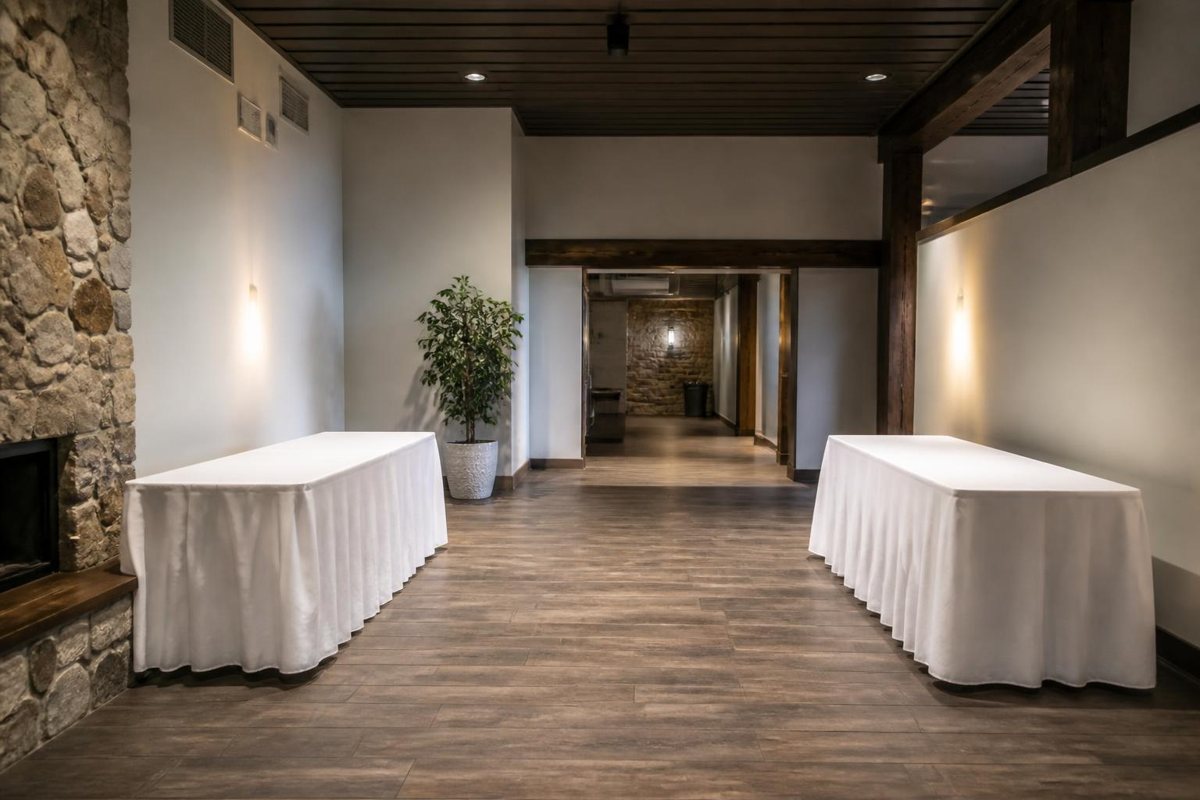
Every item should have one clearly associated bid method. Whether you use paper sheets, mobile bidding, or another system, explain the process before guests approach the first item. Include the item name, a short description, restrictions or redemption details supplied by the donor, and the close time. Review every card for readability from a normal standing distance.
Set the closing time in more than one place: on the event schedule, near the auction entrance, and in any announcements. A visible clock or clear reminder reduces the rush at the end. If the auction closes in sections, label those sections distinctly so guests do not assume every item ends at once.
Do not rely on volunteers to explain details that signage can answer. Good signs free people to welcome guests and solve exceptions. They also make the experience less intimidating for attendees who have not participated in a silent auction before.
Separate checkout from the browsing zone
Checkout needs enough surface area and a predictable line path. Put it close enough that winning bidders can find it, but far enough from the displays that a queue does not cut off browsing. If items must be collected after payment, create a separate pickup point with its own clear sign and a way to confirm the correct winner.
Think through the handoff before doors open. Who receives final bids? Who confirms winning amounts? Who handles questions about a donated item? Who watches items that remain on display? A short, written volunteer plan avoids conflicting answers when the room becomes busy.
For events using bars, catering, or a stage program, look at the auction in relation to those elements. Bar and catering equipment rentals and staging, lighting, and AV rentals can be part of the same floor-plan conversation, so activity areas support rather than compete with each other.
Test the room with a simple walkthrough
Before the event, walk the route as if you were a first-time guest. Enter the room, find the auction, choose an item, read its information, place a bid, then imagine returning at closing time. Repeat the exercise while another person stands at a popular display and a small line forms at checkout. This quick test often exposes signs placed too high, tables that pinch a path, or a checkout location that is hard to find.
Use a written inventory for the display team. Each item should have an identifying number, its associated sign, bid method, and assigned location. The document is not a substitute for donor records or payment procedures; it is a practical way to keep the room organized when volunteers arrive at different times. Photographing the completed layout for internal reference can also help the team return an item to the right place after a question or adjustment.
Plan the close without creating a rush
As closing approaches, shift volunteers toward the auction area and checkout. Keep guests informed about timing through the event’s planned announcements, but avoid changing the process at the last minute. If pickup happens after checkout, make the pickup label match the bid record and set a clear handoff point. Guests should not have to guess whether they need to carry an item, wait for a volunteer, or return later in the evening.
After the event, note what worked: which tables drew attention, where congestion appeared, and which instructions prompted repeat questions. Those observations make the next fundraiser easier to plan without turning one event’s layout into a rigid template for every room.
Make the auction easy to read and navigate
Keep the auction’s visual language consistent: use the same category labels, numbering system, and instruction style throughout the room. Consistency helps a guest understand a new display without relearning the process.
Lighting deserves a final review as well. Guests must be able to read item information and bid instructions without guessing, while the display should still feel consistent with the event atmosphere. Test signs from the guest side of the table, not only from the setup position. If a display relies on a phone-based process, confirm that guests know where to get help if they need it.
Finally, tell volunteers how to handle an item that needs attention. A damaged sign, a misplaced bid sheet, or a question about an experience should have one assigned response path. That small bit of preparation lets volunteers remain warm and helpful instead of searching for answers in front of guests.
Frequently asked questions
Where should a silent auction go in a gala room?
Choose a visible area off the main entrance path, with space for browsing and a separate checkout route. Avoid placing it where a food line, bar queue, or program audience must pass through it.
How many tables does a silent auction need?
That depends on item size, display style, and room flow. Map the items first, then select tables that give each item and bid method enough visual separation.
Should checkout be next to the auction tables?
It should be easy to locate, but a separate nearby zone usually keeps checkout lines from blocking guests who are still browsing.
What information belongs on an auction sign?
Include how to bid, when bidding closes, where to ask questions, and where winners should go for checkout or pickup.
For a silent auction layout that keeps the room welcoming and organized, request a quote or call Creative Events & Rentals at (239) 768-6393. We can help connect your fundraiser displays, tables, and event flow for a Fort Myers or Southwest Florida gathering.