Planning cocktail table rental for a mixer, reception or fundraiser? See how to estimate quantities, choose heights, place tables and dress them with linens.
Standing tables change how guests behave. When people have a place to set a drink and a small plate, they circulate, mingle and stay longer than they would if the only option were a seat. That is why a cocktail table rental is a staple for receptions, corporate mixers, fundraisers, open houses and the cocktail hour before a seated dinner.
The tables also give a space structure. A scatter of cocktail tables defines the social area, keeps guests from crowding the bar and creates natural conversation points. Planning them well is mostly a question of quantity, height and spacing.
Estimate how many you need
A reliable starting point is to decide how many guests will be standing at the same time. At a mixer where nobody sits, most of your guests will use the tables. At a reception with a seated dinner, only the cocktail hour needs them, and many guests will be at the bar, greeting friends or outside.
Each table works best with a small group around it, so divide the number of standing guests by the group size that fits comfortably at your table size. Add a few extras near the bar, the entrance and any food stations, because those areas fill up first. If you are unsure, ask your rental team to review your guest count and layout; a good recommendation depends on the room, not just a formula.
Low or high: choosing a height
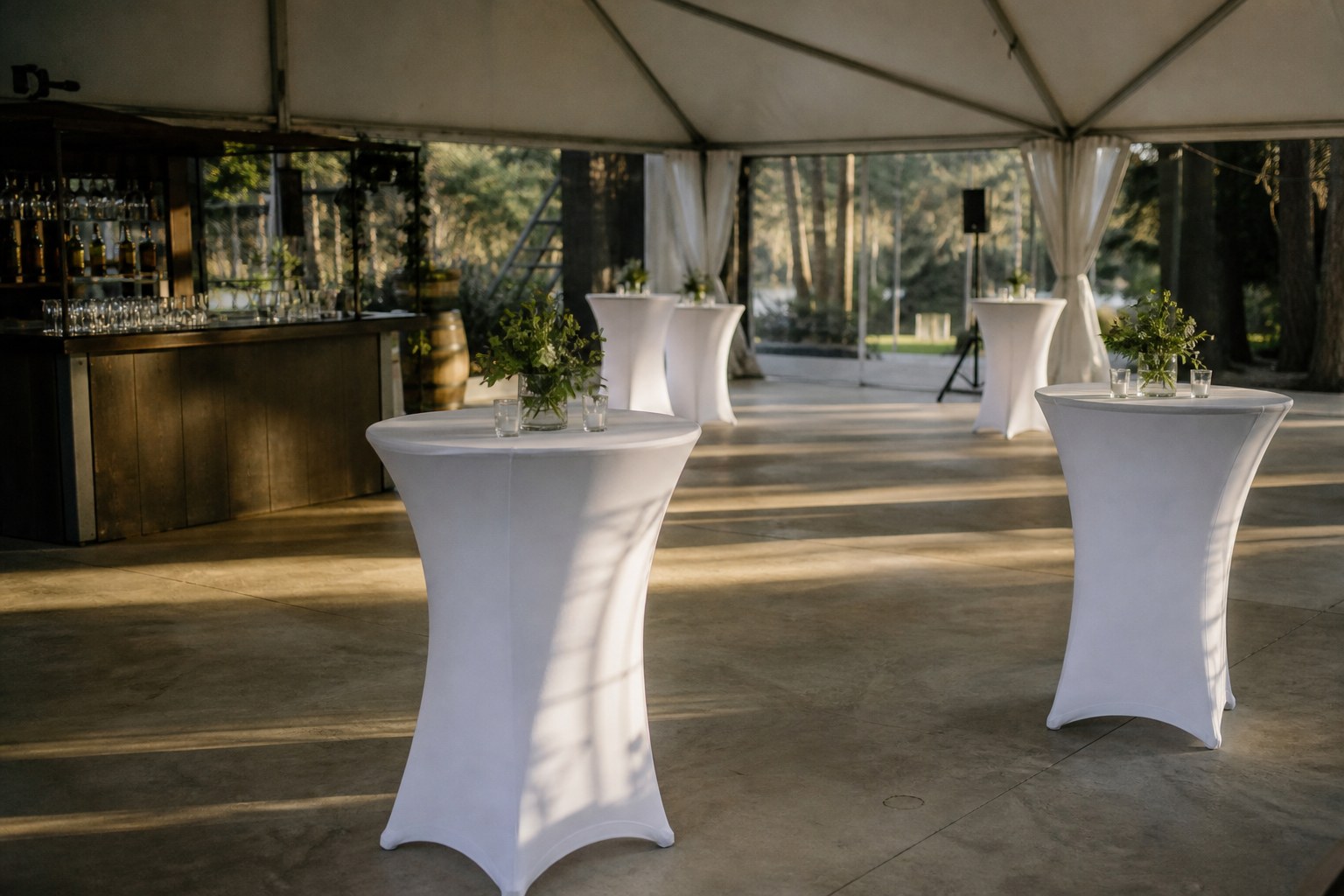
Cocktail tables generally come in a standing height and a lower, lounge-style height. High tables encourage mingling and keep people moving, while low tables suit relaxed conversation areas with sofas, ottomans or accent chairs. Many events use both: high tables near the bar and entrance, and low tables in a seating cluster.
Consider your guests. Standing for an hour is easy for some and tiring for others, so mix in a few seated spots, particularly at events with older guests. Browse the options on our table rentals page and ask which sizes and heights fit your space.
Space them so guests can move
Crowded tables are the most common layout mistake. Leave enough room between tables for guests to walk through with a drink and plate, and keep clear paths to the bar, restrooms and exits. Avoid placing a table directly in front of a doorway or beside a food station where lines form.
Staggering tables rather than lining them up in rows looks more relaxed and creates smaller conversation pockets. If your space includes a stage or dance floor, keep a clear edge around it so cocktail tables do not block sightlines or foot traffic. Accessibility also matters, and the ADA website offers general guidance on keeping routes usable for everyone.
Dress the tables with the right covers
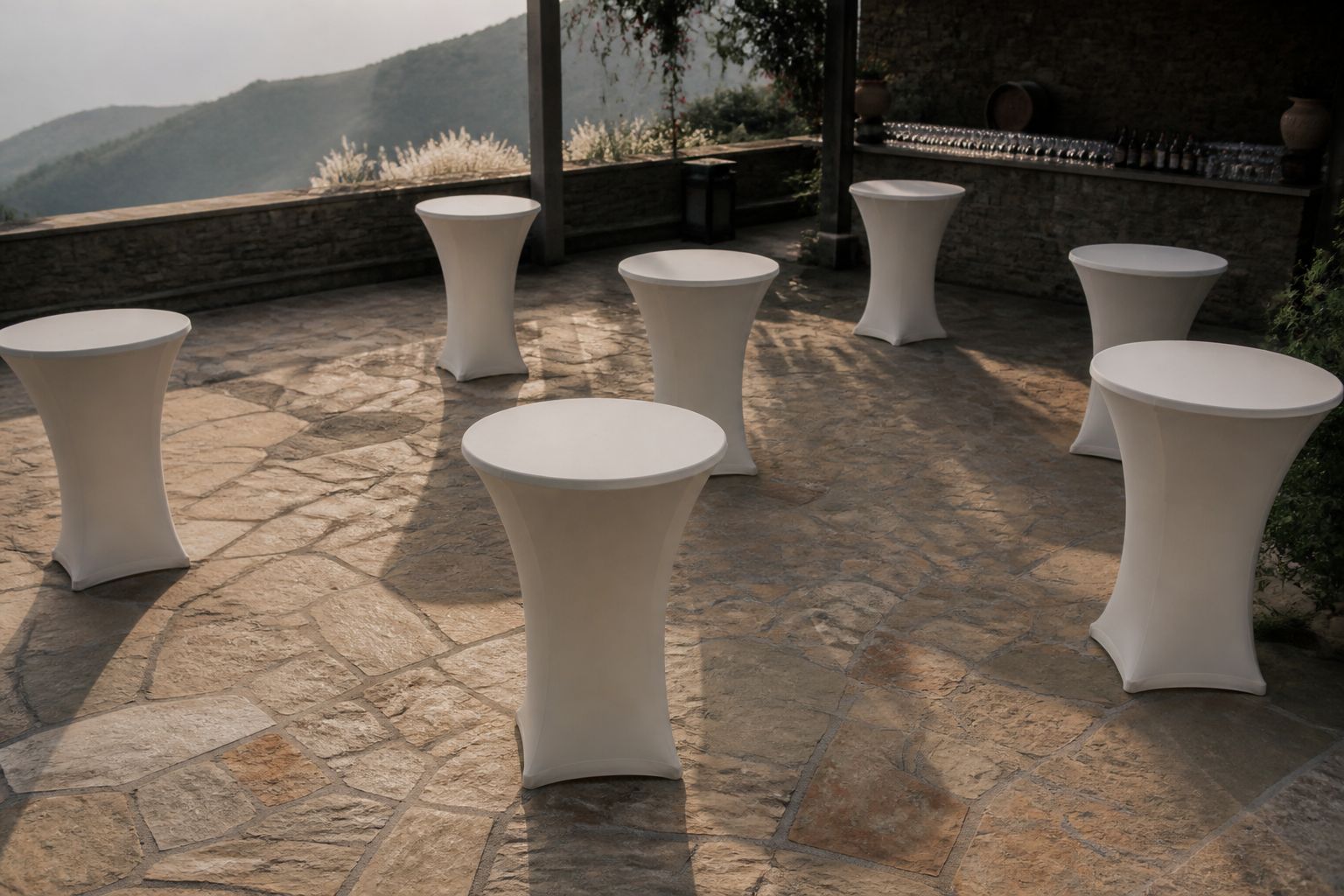
A bare table can look temporary, while a cover finishes the look. Fitted stretch covers give a clean, tailored appearance, and a floor-length tablecloth gives a softer, more formal feel. Choose a color that suits your palette and the time of day; our post on wedding linen colors explains how to match color to lighting and place settings.
Match the cover to the table height and size you actually rent, because the wrong dimensions look loose or ill-fitting. You can see available coverings on the linens and tabletop page, and your rental team can confirm which options fit the tables on your order.
Think about the tabletop
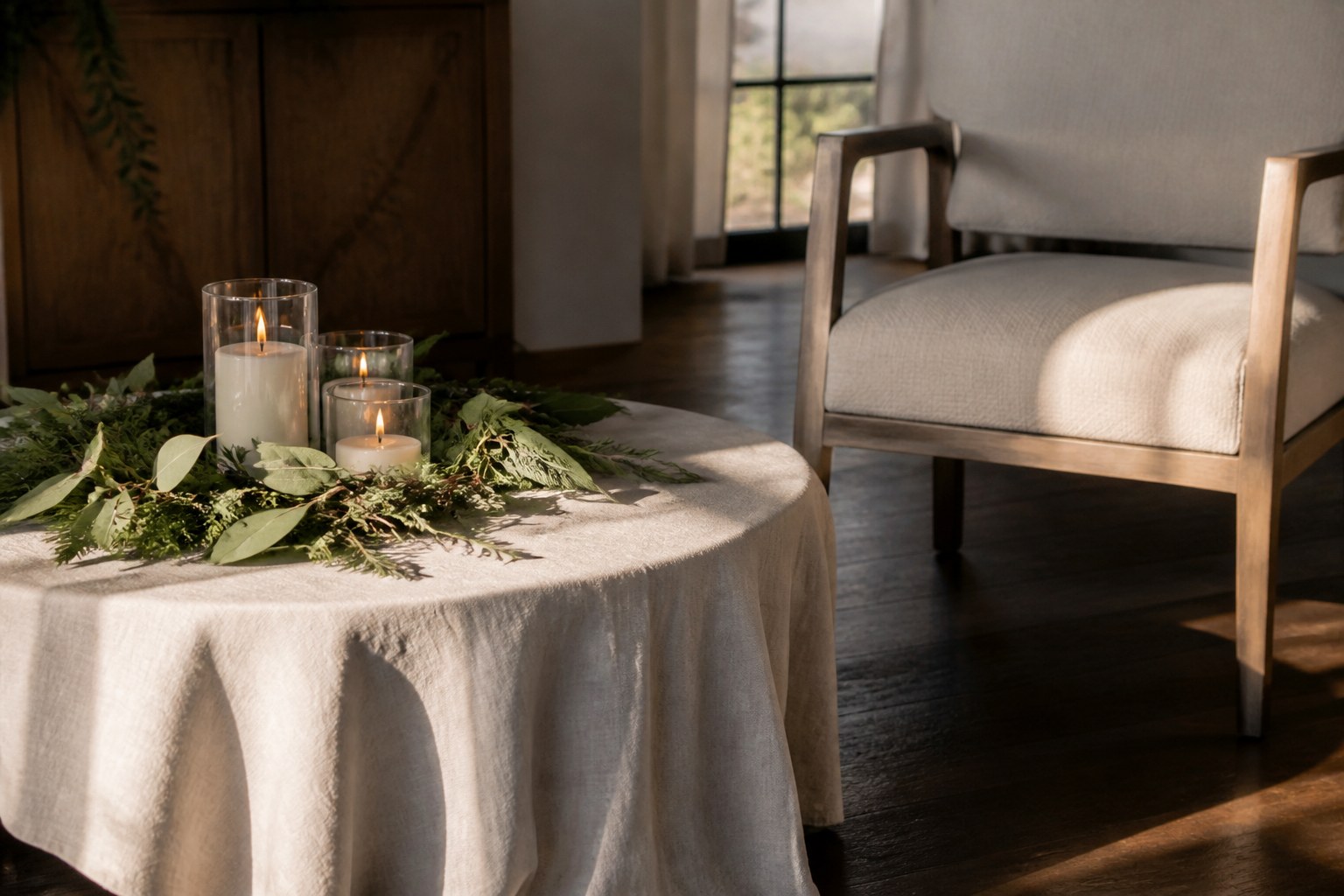
Cocktail tables are small, so keep the centerpiece compact. A low floral arrangement, a few candles or a simple greenery bundle leaves room for glasses and plates. Avoid tall arrangements that block conversation, and be careful with open flames outdoors or under a tent; ask your venue what is allowed.
If food is passed or served at stations, consider adding a few spots for guests to set down empty glasses. A small tray or a nearby bus station keeps tables from filling up with clutter.
Plan for weather and surfaces
Outdoor events add practical questions. Tables need level ground to stay stable, and soft lawn can make standing tables wobble. If your cocktail area is on grass, ask your rental team whether flooring or another solution is recommended; our guide to event flooring options for outdoor venues covers the choices.
Wind can also affect lightweight covers and décor, so ask how the tables will be secured and place them under cover when rain is possible.
Match tables to the type of event
A corporate mixer, a wedding cocktail hour and a fundraiser each use standing tables differently. At a networking event, nearly everyone stands, so tables serve as anchor points for conversation. At a wedding, the cocktail hour is short and guests head to dinner, so a moderate number of tables near the bar and appetizer stations is usually enough.
A fundraiser with a silent auction may need tables near the bid displays so guests can pause and write. Our post on silent auction layout explains how to plan that flow.
Pair cocktail tables with the bar and food
The bar and food stations determine where guests naturally gather, so place cocktail tables near them without blocking lines. Leave room around the bar for ordering and for servers to move, and spread tables so groups do not collect in a single corner.
If you are planning bar placement, read our guide to bar station layout and consider how cocktail tables will support that plan.
Plan for the clean-up cycle
Standing tables collect glasses, napkins and plates quickly. Ask your caterer or event staff how often they will clear tables and where they will take used items, and place trash and recycling containers at the edge of the cocktail area rather than in the middle.
A quick sweep every fifteen to twenty minutes keeps the space looking tidy and prevents guests from setting drinks on the floor or on unsuitable surfaces.
Frequently Asked Questions
How many cocktail tables do I need for 100 guests?
It depends on how many guests will be standing at once. For a mixer where most people stand, plan tables for a large share of the group; for a seated dinner with a cocktail hour, you need fewer. Give your rental team your guest count, schedule and floor plan for a recommendation based on the space.
Can I use cocktail tables for a seated meal?
They are designed for standing or light snacking, not for a full plated dinner. Use them for the cocktail hour or a mingling area, and rent standard dining tables for seated courses.
Do cocktail tables need linens?
Not always, but a cover usually makes the table look finished. Fitted stretch covers and short or floor-length cloths are both common, and your rental team can confirm which fit your table size. For accessibility planning, general guidance is available from the ADA website.
Bring your guest count and layout to the quote
Cocktail tables are simple, but the right quantity, height and placement make a gathering feel effortless. Share your guest count, venue type and schedule so your rental team can suggest a layout that works.
Ready to plan your standing-room setup? Request a quote with your date and guest count, call us at (239) 768-6393, or contact our team to talk through tables, linens and layout.