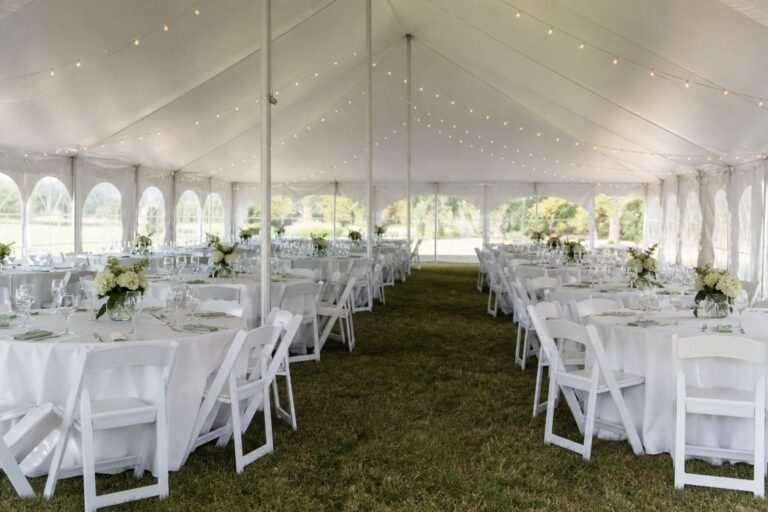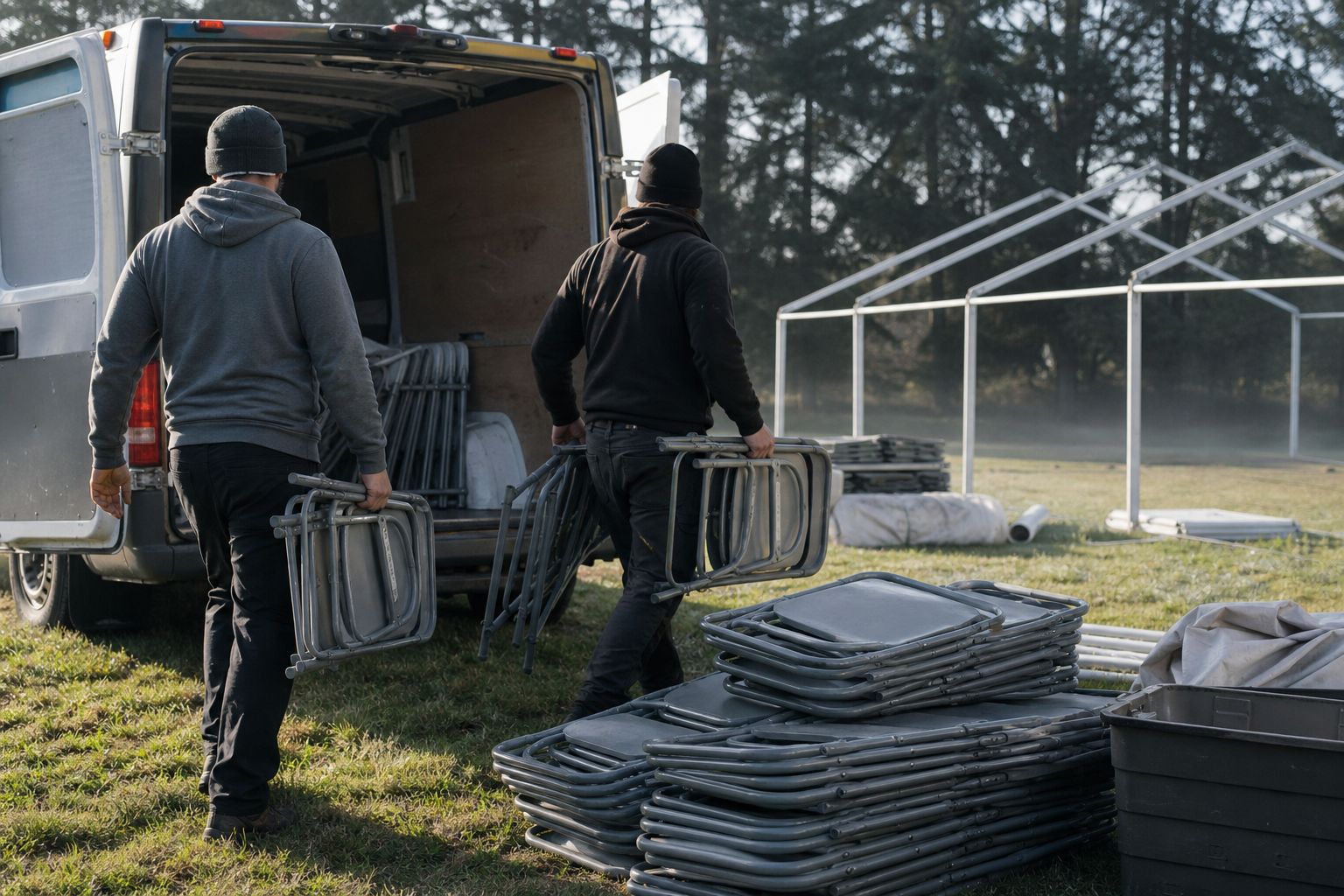
Understand a typical event rental setup and breakdown timeline, who handles each step, and what to confirm with your rental team before the event.
Understanding a typical event rental setup and breakdown timeline helps hosts plan the rest of their event schedule around it instead of being surprised by how much time delivery, assembly, and teardown actually take. Setup and breakdown are rarely instant, especially for larger tented events, and the timeline depends on tent size, guest count, and how many separate rental categories (tent, tables, chairs, flooring, lighting, linens) are involved.
Most hosts only think about the event itself, but the setup window before guests arrive and the breakdown window after they leave both need dedicated time in your overall event schedule, coordinated with your venue's access hours.
Setup usually starts well before your event date
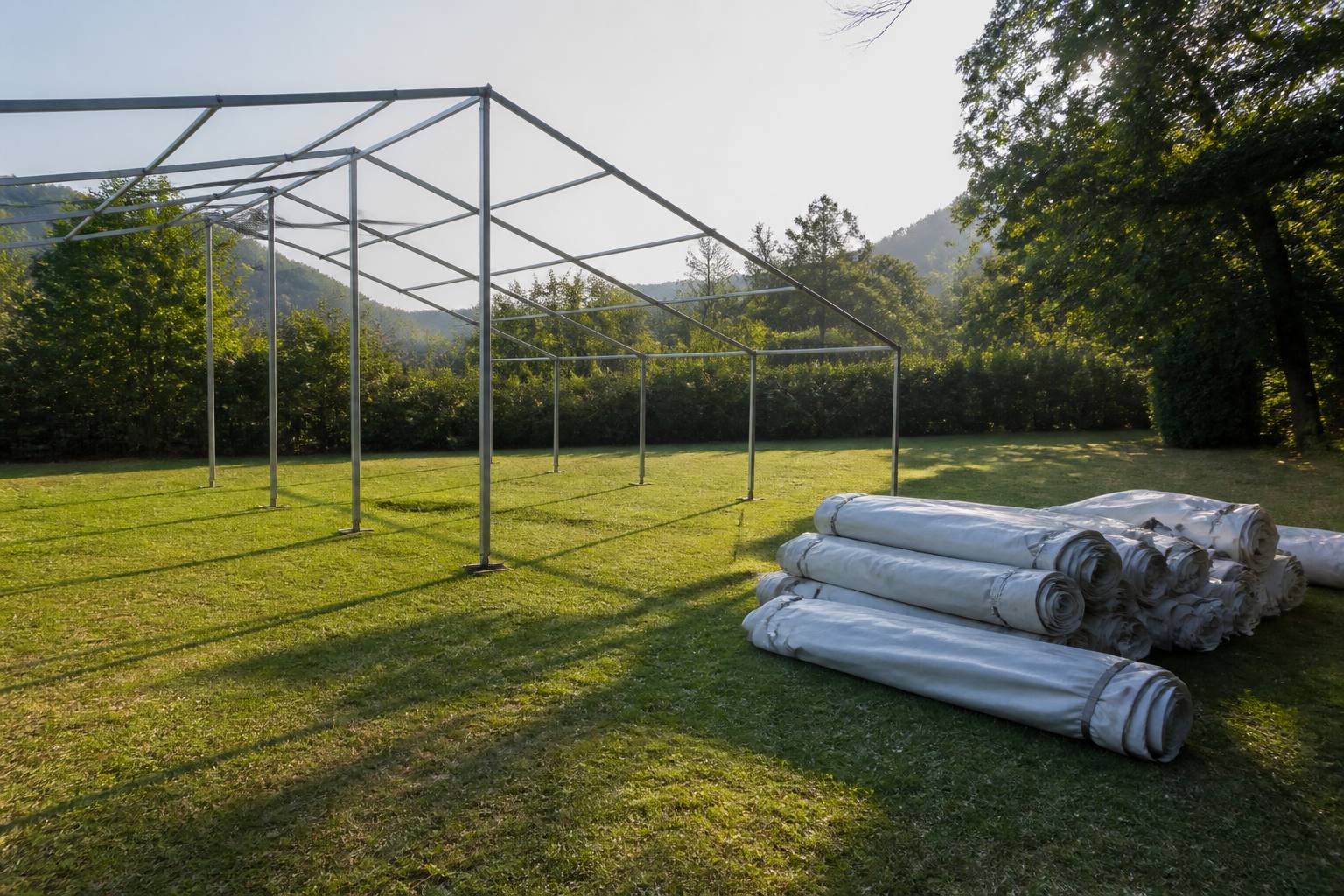
For larger tented events, setup often begins one to several days before the event itself, particularly for tent installation, subflooring, and any electrical or lighting work that needs time to be tested before guests arrive. Smaller deliveries, such as tables, chairs, and linens without a tent, are more commonly scheduled for delivery the same day or the day before the event, since they require less assembly time. If a tent is part of your plan, review our party and event tent rentals early so installation time is built into your schedule.
Ask your rental team for a specific setup schedule broken down by category (tent and flooring first, then tables and chairs, then linens and final touches) so you know which parts of the space will be ready and when, especially if you or your venue need to coordinate other vendors, like caterers or florists, around the same setup window.
Confirm venue access hours before you finalize a timeline
Every setup and breakdown plan depends on when your venue actually allows vendor access, and this detail is sometimes overlooked until the week of the event. Some venues restrict setup to a narrow window on the event day itself, while others allow tent installation and other major setup a day or more in advance. Confirm your venue's specific access hours for both setup and breakdown with the venue directly, then share that window with your rental team so they can build a realistic schedule around it.
This step matters just as much as the delivery-day logistics covered in planning your rental delivery, since a mismatch between venue access hours and your rental team's setup needs is one of the most common sources of event-week stress.
Know who is responsible for each step
A clear setup and breakdown plan should specify who handles each task: your rental company typically delivers, assembles, and later collects tents, tables, chairs, and flooring, while catering staff usually handle food service equipment separately, and florists or decor vendors often need access after the rental setup is complete but before guests arrive. Understanding this division of labor in advance prevents two vendors showing up to the same space at the same time, or a gap where nobody is scheduled to complete a specific task.
If your event has multiple vendors working in the same space, consider asking your planner or venue coordinator to build a shared setup-day schedule that shows each vendor's arrival and working window, so everyone can work around each other efficiently.
Breakdown has its own timeline, separate from setup
Breakdown is often planned less carefully than setup, but it deserves the same attention. Ask whether your rental company breaks down and collects items the same night as your event or returns the following day, since this affects how quickly your venue space needs to be cleared and whether any items need to be secured overnight. For outdoor tented events, same-night or early-next-day breakdown is common, particularly if the venue needs the space available for another event or for the property's normal use.
If your event runs late into the evening, confirm whether your rental team's breakdown crew will be on-site immediately after the event ends or scheduled for a separate visit, since a late-night breakdown crew working around departing guests requires different coordination than a next-morning pickup.
Build buffer time into your overall schedule
Weather delays, late deliveries from other vendors, or last-minute layout changes can all push a setup timeline later than originally planned. Building a buffer of at least a few hours between the end of setup and the start of your event gives your team room to finish final details, like linens and lighting adjustments, without rushing right up until guests arrive.
General event-preparedness guidance from Ready.gov reinforces this same principle for any outdoor gathering: build in buffer time and a clear contingency window rather than planning to the minute, because on-site conditions rarely match a plan exactly.
Understand what "delivery" includes versus full setup
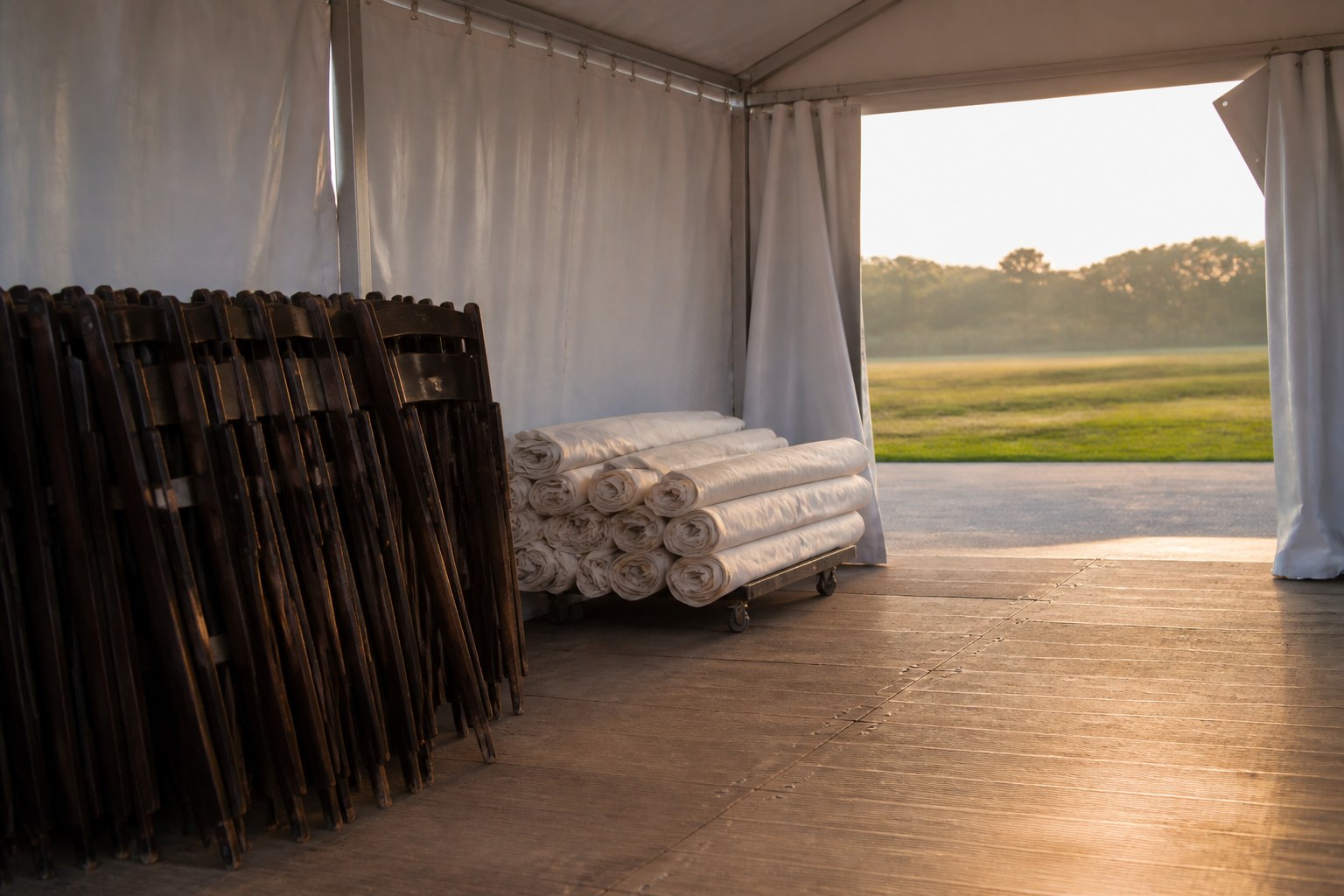
Not every rental order includes full setup as part of the delivery. Some smaller orders are delivered as a drop-off, where tables, chairs, or linens are left on-site for the host or venue staff to arrange, while larger orders, particularly anything involving a tent, typically include full setup and breakdown by the rental crew as part of the package. Confirm exactly which services are included for each category in your order, since assuming full setup is included when it isn't can leave hosts scrambling to arrange furniture themselves on the morning of the event.
Ask what happens if weather delays setup
Outdoor setup, particularly tent installation, can be delayed by active rain or lightning in the area, both for crew safety and because certain tent components are harder to install correctly in wet or windy conditions. Ask your rental team how they handle a weather delay on a scheduled setup day: whether they build in buffer days for tented events during unpredictable seasons, and what the backup plan looks like if setup has to be pushed by several hours or to the following day.
This question matters most for events scheduled during Southwest Florida's wetter months, when afternoon storms are common enough that a multi-day setup window is often safer than planning a single tight setup day immediately before the event.
Communicate the timeline to your venue and other vendors
Once your setup and breakdown timeline is finalized with your rental team, share it with your venue coordinator, caterer, and any other vendors working the event, so everyone is working from the same schedule rather than separately assuming their own arrival windows. A shared timeline reduces the chance of two vendors arriving at the same access point at once, or a gap where the venue is left unstaffed during a critical setup window.
Plan for a final walkthrough before guests arrive
Once setup is complete, build in time for a final walkthrough with your planner or a trusted point of contact to confirm everything matches your plan before guests start arriving. This is the moment to catch anything that needs a quick fix, a linen that needs straightening, a chair that needs repositioning, or a lighting adjustment, while there's still time to address it without disrupting the event itself.
A short, dedicated walkthrough window, even just twenty to thirty minutes, is far less stressful than discovering a setup issue after guests have already arrived and the event has started.
Frequently Asked Questions
When should setup planning begin?
Setup usually starts well before the event date; confirm venue access hours before finalizing the schedule.
What is the difference between delivery and full setup?
Ask who is responsible for each step and confirm what delivery includes, because delivery alone may not mean the team places and arranges every item.
Why does breakdown need its own timeline?
Breakdown is separate from setup and needs its own schedule and venue access window. Confirm whether collection is planned for the same night or the following day.
Bring your full timeline into the rental conversation
When you book your rental package, share your venue's access hours, your event start and end time, and any other vendors working in the same space. That information lets your rental team build a realistic setup and breakdown schedule instead of a generic timeline that may not account for your venue's specific restrictions.
Ready to plan your event's setup and breakdown schedule? Request a quote with your venue's access hours, call us at (239) 768-6393, or contact our team to build a full setup-day timeline before you confirm your date.