Learn when to add solid, clear, or mesh tent sidewalls for wind, rain, and sun protection, and how to plan them alongside your event's rain backup plan.
Tent sidewalls turn an open-air tent into a more controlled environment, and choosing the right type matters as much as choosing the right tent size. Sidewalls can block wind and rain, let in natural light while still offering weather protection, or keep insects out on a warm evening, but each type trades off differently between protection, visibility, and airflow.
Sidewalls are not an all-or-nothing decision. Most tented events use a mix of sidewall types around different sides of the tent, matched to wind direction, sun exposure, and how open or enclosed each side of the event should feel.
Solid sidewalls for wind and rain protection
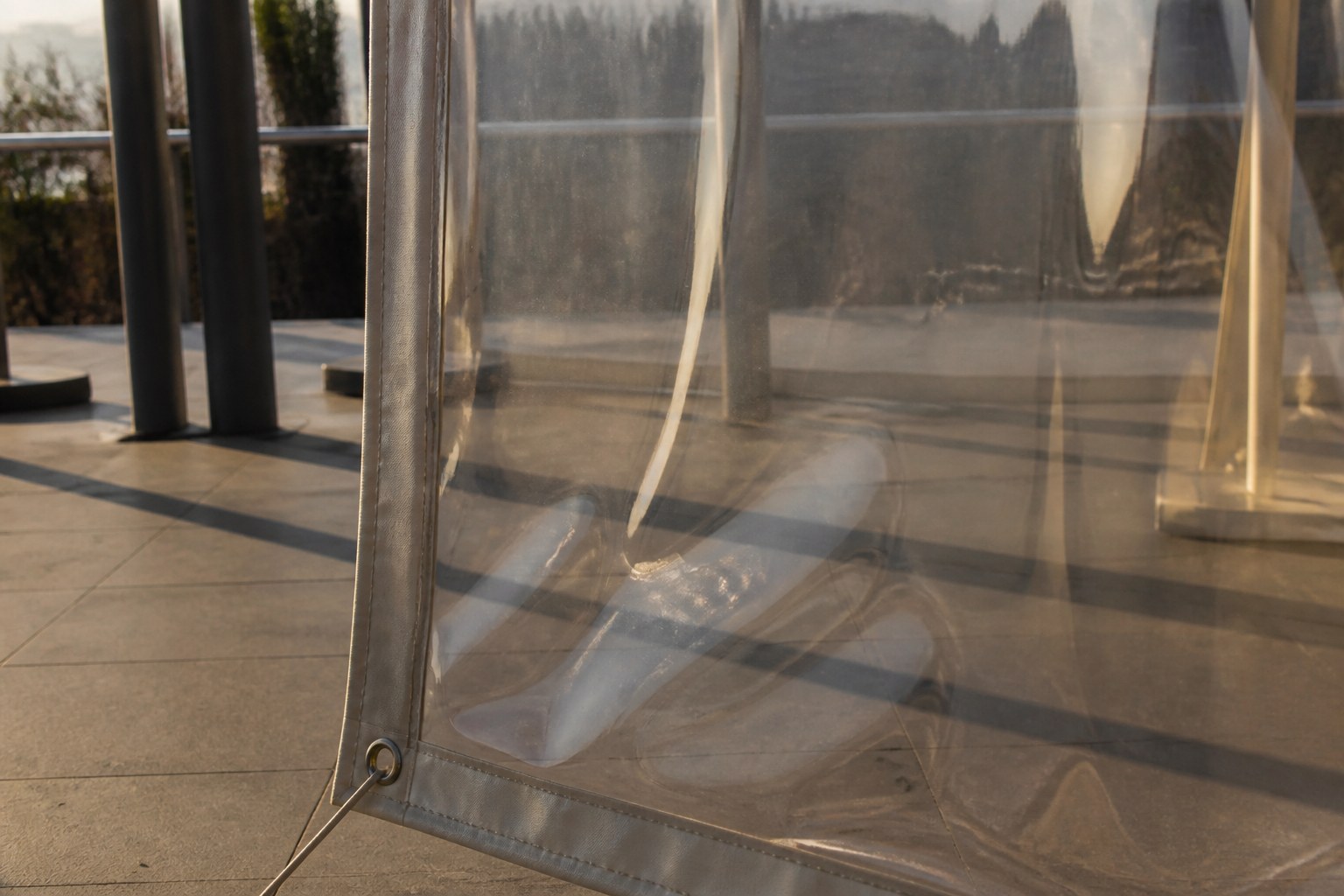
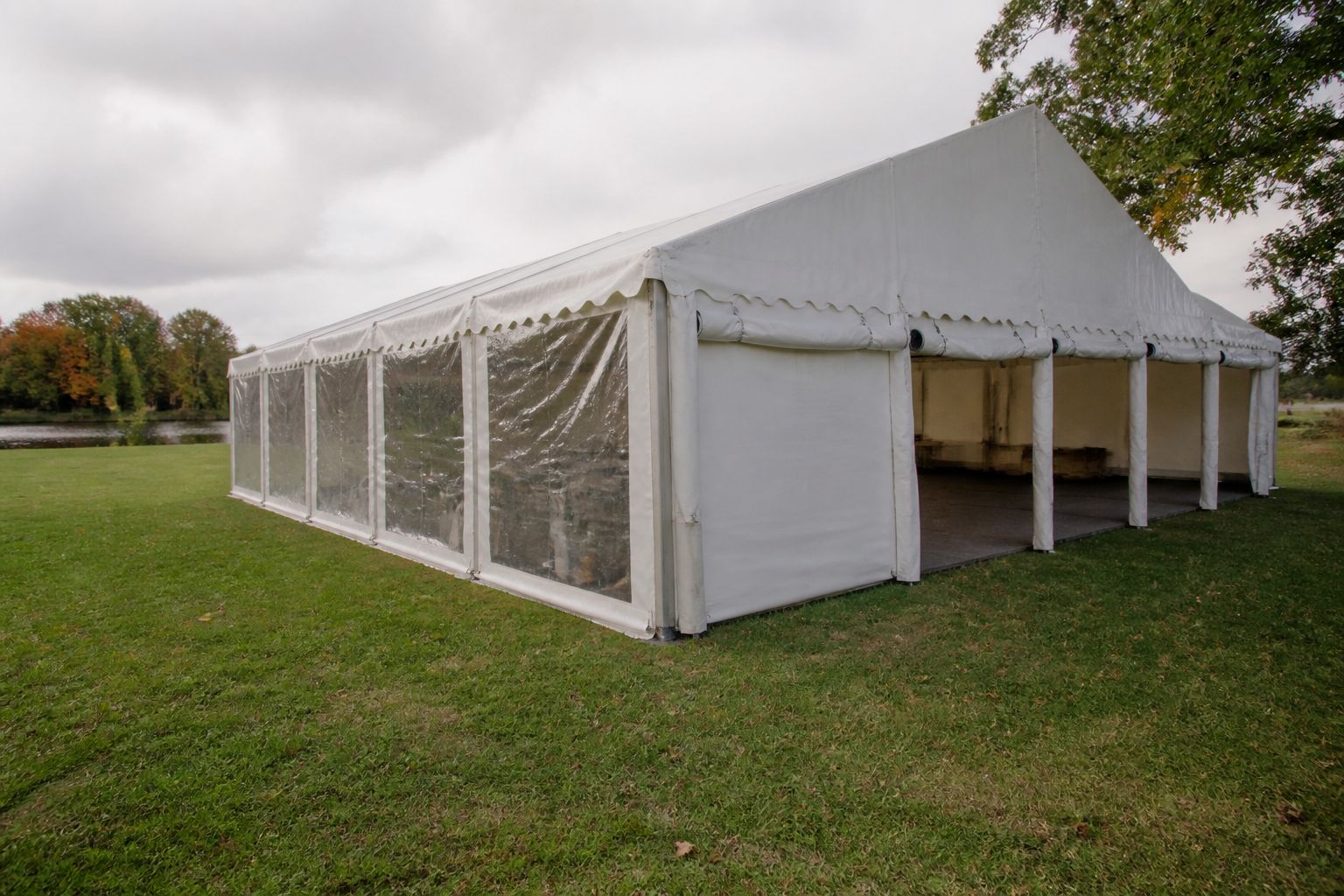
Solid fabric sidewalls provide the most complete protection from wind-driven rain and are the standard choice for the side of a tent facing prevailing wind or an open, exposed area. They fully block sightlines and airflow on that side, which is useful for weather protection but also means guests seated near a solid wall lose the open, airy feel that makes tented events appealing in the first place.
Because solid sidewalls block wind most effectively, they are usually prioritized for at least one side of the tent when rain or gusty conditions are a realistic possibility, even if the rest of the tent stays open or uses clear or mesh panels.
Clear sidewalls for light and visibility with weather protection
Clear vinyl sidewalls offer a middle option: they block wind and rain like solid walls, but let in natural light and preserve sightlines to the surrounding venue, whether that's a garden, waterfront, or landscaped courtyard. This makes them a popular choice for the sides of a tent facing a scenic view, since guests can still see outside while staying protected from weather.
Clear sidewalls do trap more heat than mesh or open sides on a warm, sunny day, since they let sunlight through without the airflow that keeps a fully open tent side cooler. For daytime events in warm weather, balance clear sidewalls with adequate fans, air conditioning, or shade elsewhere in the tent layout.
Mesh sidewalls for airflow and insect control
Mesh screen sidewalls are the right choice when the priority is airflow and keeping insects out, rather than blocking wind or rain. They work well for warm evening receptions where guests want the open feel of an unwalled tent but need some barrier against bugs as the sun goes down. Mesh sidewalls offer little protection against wind-driven rain, so they are generally not the right choice for the side of a tent most exposed to incoming weather.
Plan sidewalls around wind direction and sun exposure
Rather than choosing one sidewall type for the entire tent, most experienced planners assign sidewall types by side of the tent, based on the venue's typical wind direction, sun path over the course of the event, and which views are worth keeping open. A common approach is solid walls on the windward side, clear walls on the side with the best view, and mesh or open sides where airflow matters most, such as near a dance floor or bar.
Confirm sidewall placement with your rental team using an actual site plan or venue photo, not just a general description, since wind direction and sun exposure can vary significantly even across different areas of the same property.
Watch the forecast and know your changeover window
Sidewalls can typically be added or adjusted shortly before an event if the forecast changes, but this depends on having the right panels already on-site and enough setup time before guests arrive. Ask your rental team how much lead time they need to add or remove sidewalls if weather conditions shift in the days before your event, especially for outdoor events across Southwest Florida, where afternoon storms can develop with relatively short notice during the wetter months.
Monitoring conditions through a reliable source like the National Weather Service in the days leading up to your event gives you and your rental team enough lead time to finalize sidewall placement rather than making last-minute changes on event morning. Coordinate your sidewall plan with your event's broader rain backup plan so both pieces of weather protection work together instead of being decided separately.
Understand how sidewalls attach and how long installation takes
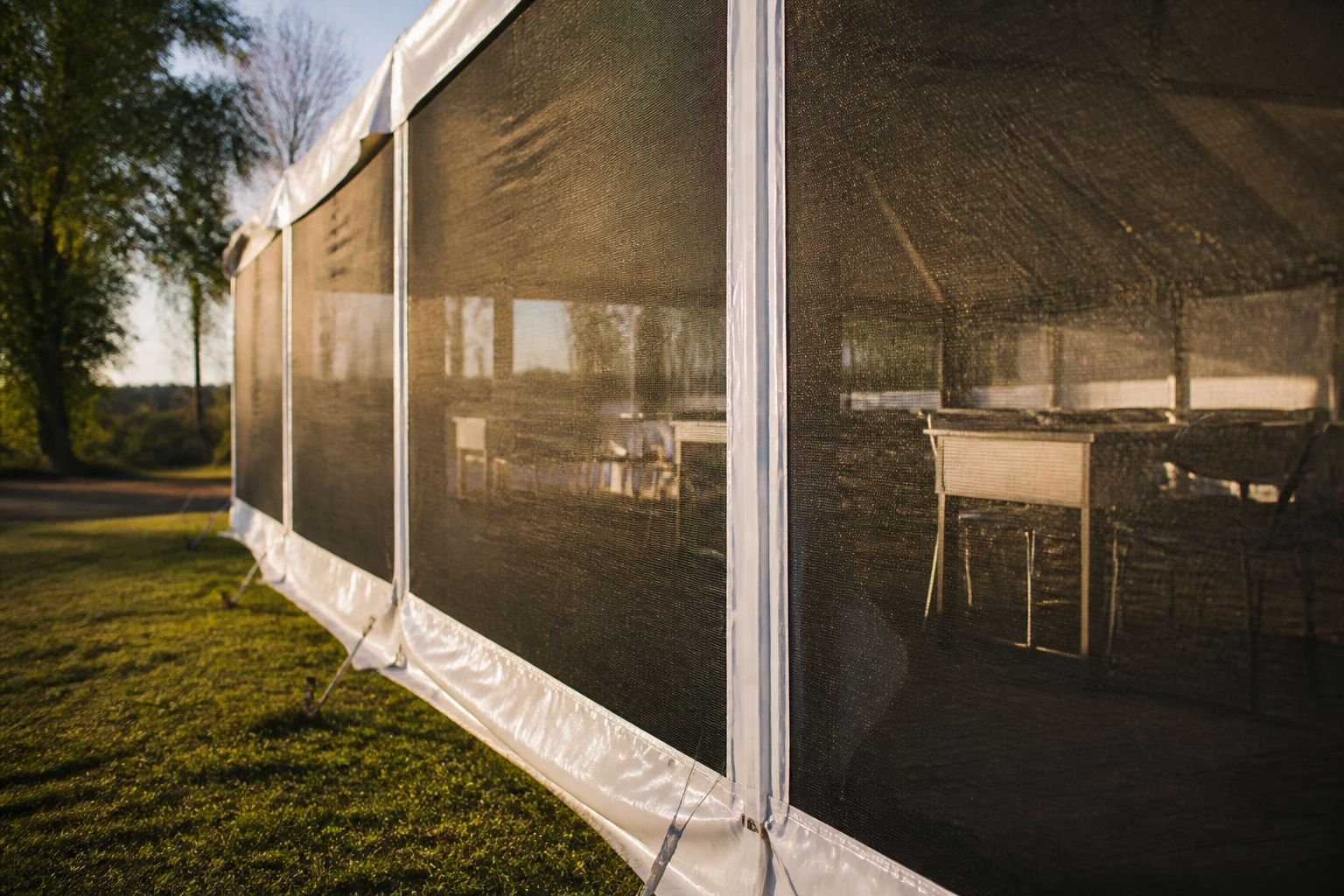
Sidewalls typically attach to the tent frame using a track, rope-and-stake system, or zippered connection, depending on the tent style, and installation time varies accordingly. A full set of sidewalls around a large tent can take a meaningful amount of crew time to install correctly, particularly if the ground requires additional staking to keep the base secure against wind. Ask your rental team how long sidewall installation adds to their overall setup timeline so it's accounted for in your event-day schedule rather than assumed to be instant.
Sidewalls also affect temperature and comfort, not just weather
Beyond wind and rain, sidewall choice has a real effect on how comfortable a tent feels for guests over the course of an event. Fully enclosed solid sidewalls trap heat more than open or mesh sides, which matters for warm-weather daytime events unless the tent is paired with adequate fans or portable air conditioning. Conversely, a tent left fully open on a cool evening can feel underdressed and drafty for guests once the temperature drops after sunset.
If your event spans both daytime and evening hours, consider a sidewall plan that can be adjusted partway through, such as starting with open or mesh sides during a warm afternoon cocktail hour and adding solid or clear panels as temperatures drop in the evening. Confirm with your rental team whether your chosen sidewall style supports this kind of mid-event adjustment before assuming it's possible.
Sidewalls interact with lighting and decor placement
Once sidewalls are installed, they change where lighting fixtures, uplighting, and drapery can be mounted, since solid and clear panels create a surface that other decor elements can attach to or bounce light against, while open or mesh sides do not offer the same mounting options. If your lighting and decor plan depends on treating the tent walls as a backdrop, confirm your sidewall plan with your lighting vendor before either is finalized, so the two plans are built around the same tent configuration rather than adjusted separately after the fact.
Match sidewalls to your guest experience goals, not just the forecast
Even on a day with no rain in the forecast, sidewalls affect the overall feel of an event. A fully open tent creates a more casual, connected-to-the-outdoors atmosphere, while sidewalls, even clear ones, create a more defined, enclosed room feeling that some hosts prefer for a formal reception. Neither approach is right or wrong; the decision should reflect the atmosphere you want as much as the practical weather considerations.
If you're unsure, ask your rental team what similar events at your specific venue have used in the past, since they often have direct experience with how a particular site's wind patterns and layout have played out for previous clients.
Frequently Asked Questions
What sidewall types are described?
The article describes solid sidewalls for wind and rain protection, clear sidewalls for visibility with weather protection, and mesh sidewalls for airflow and insect control.
What site details guide selection?
Consider wind direction, sun exposure, the forecast, and the time available for any changeover; share those details with the rental team.
How do sidewalls affect lighting and decor?
Sidewalls change the light entering the tent and where lighting and decor can be positioned, so coordinate them with the lighting plan.
Bring your venue layout into the rental conversation
Share your venue's wind exposure, sun direction, and any views you want to preserve with your rental team when you request tent sidewalls. That detail lets them recommend the right mix of solid, clear, and mesh panels by side of the tent instead of a single default option that may not fit your specific site.
Ready to plan sidewalls for your tented event? Request a quote with your venue and weather concerns, call us at (239) 768-6393, or contact our team to talk through your sidewall options before the big day.