Plan tent air conditioning rental and fans for a hot Florida event: how cooling works under a tent, what affects comfort and what to ask before you book.
A tent provides shade, but shade alone does not make a space comfortable in Florida heat and humidity. Fabric tents can trap warm air, especially with sidewalls down or a crowd of guests, and humidity makes the heat feel heavier. Planning tent air conditioning rental or fans in advance is one of the most helpful comfort decisions a host can make for a spring, summer or early fall event.
The goal is practical comfort during the event. Coordinate water, shade and rest breaks for guests and staff. Tent fans and air conditioning do not replace the caterer’s food-temperature controls.
Fans or air conditioning: what each does
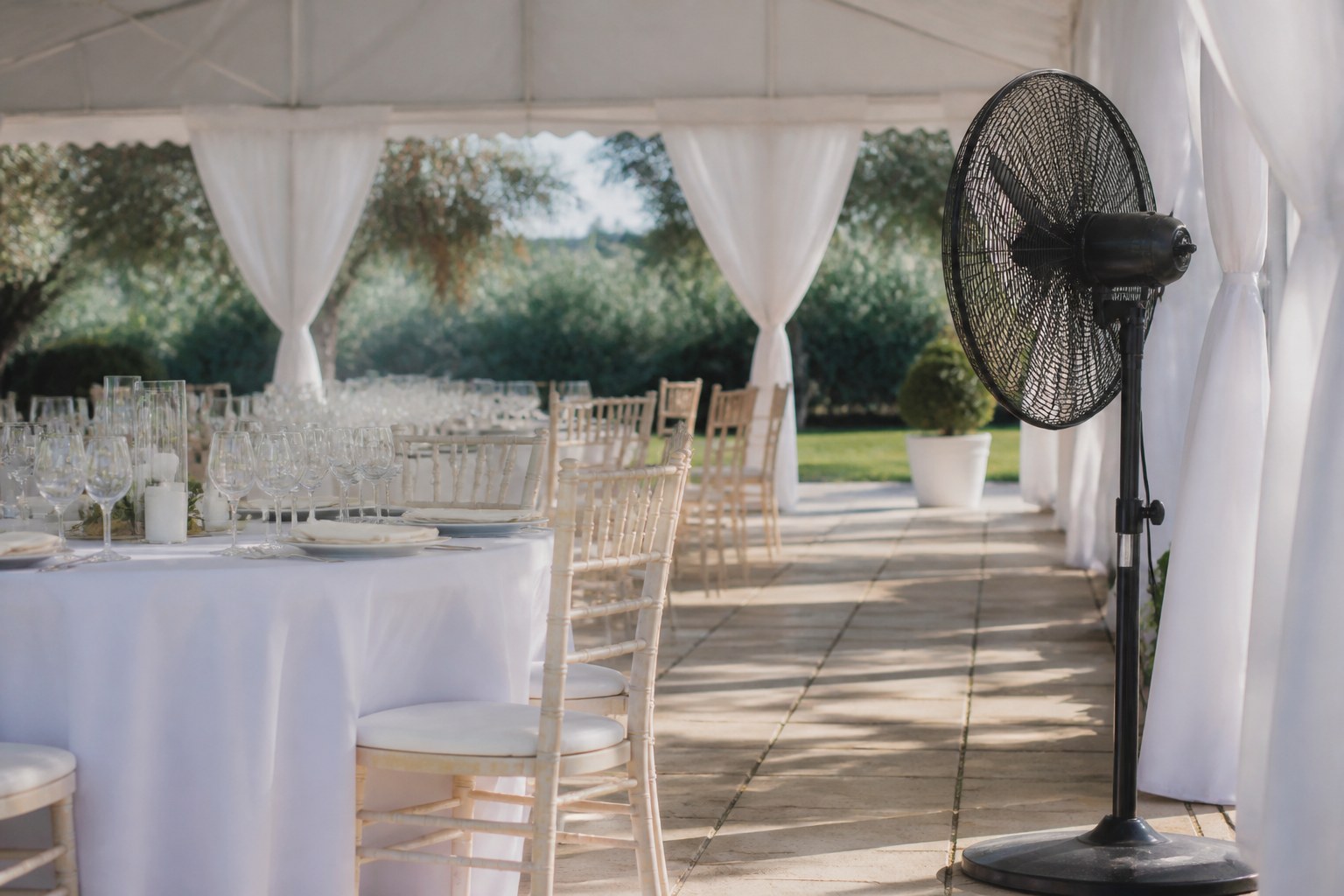
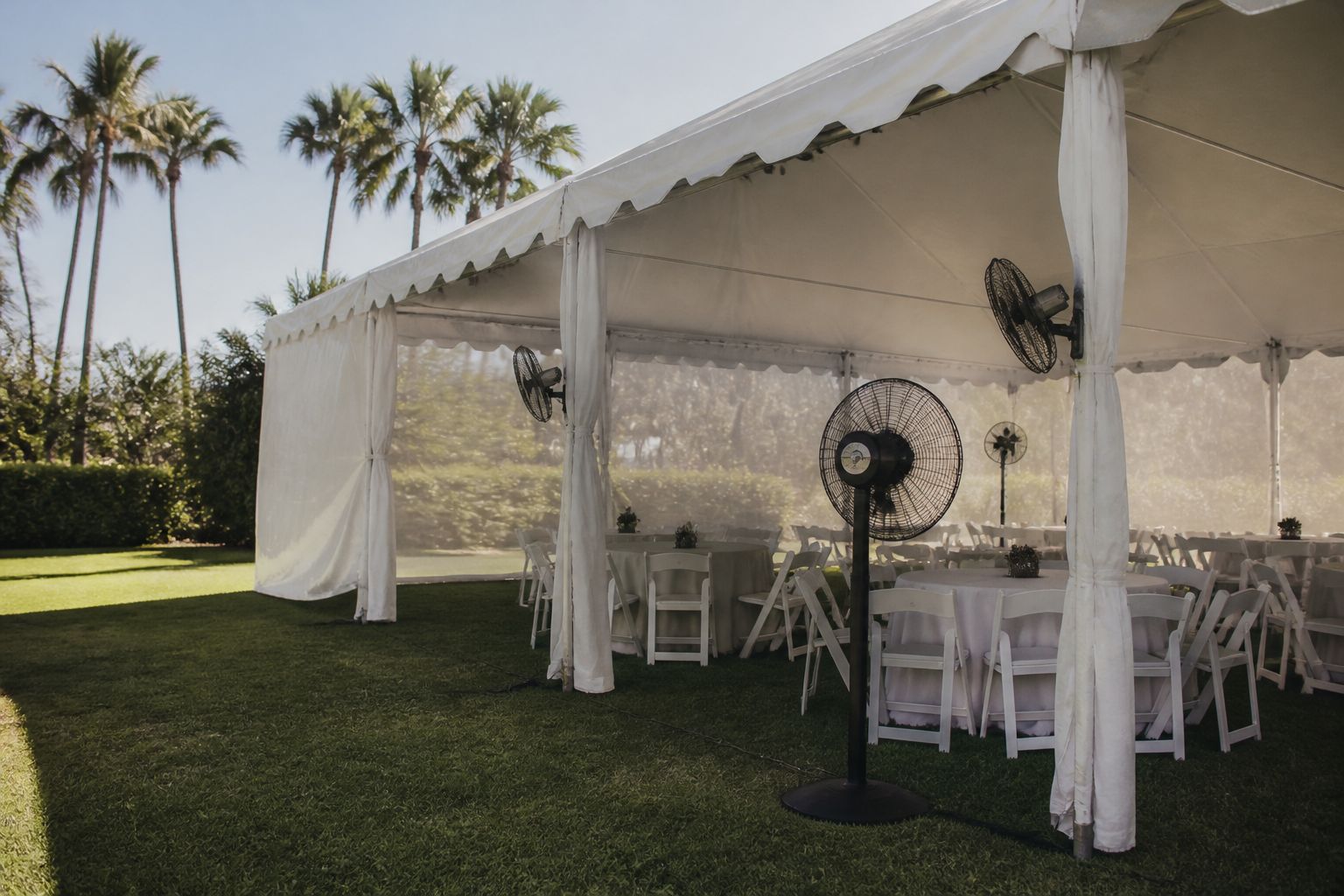
Fans move air, which helps guests feel cooler by evaporating moisture from the skin. They suit open or partly open tents, shorter events and mild days. Clip-on fans attach to tent poles or frames, and pedestal fans stand on the floor and can be positioned where people gather.
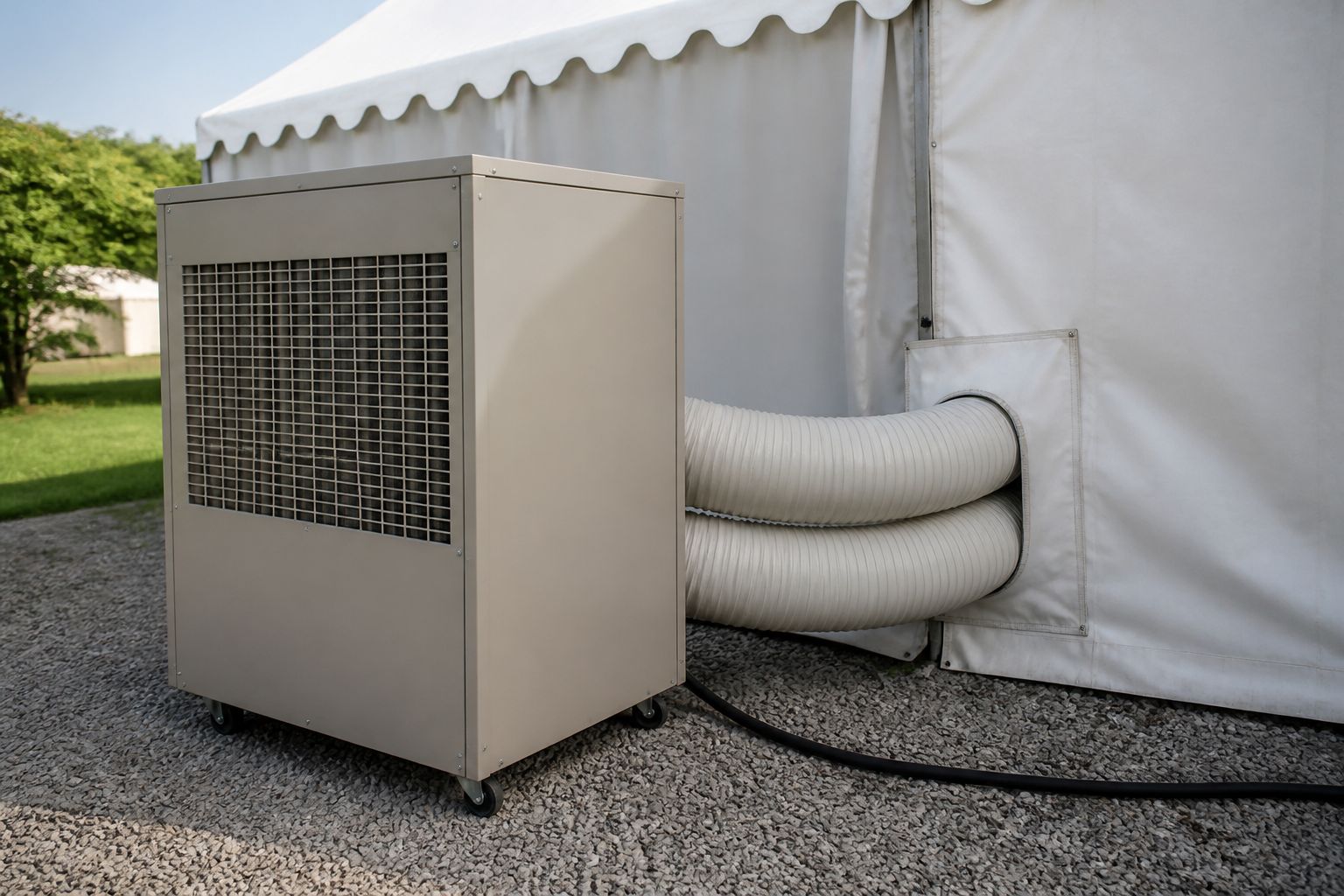
Air conditioning actually lowers the temperature of the air, which matters more in a closed tent, a large crowd or intense heat. Portable units are available in different capacities, and the right size depends on the tent, guest count and conditions. See what is offered on our temperature control rentals page.
Tent size and enclosure change the answer
Cooling a small tent is a very different job from cooling a large clearspan structure. The bigger and more open the tent, the more difficult it is to maintain a cool temperature, and cooling a fully open tent with air conditioning wastes most of its effect.
Enclosure matters. Air conditioning generally works best with the tent closed, which affects views, airflow and lighting. Our guide to tent sidewalls and weather protection explains the panel styles, including mesh and screen options for air movement.
Plan for power
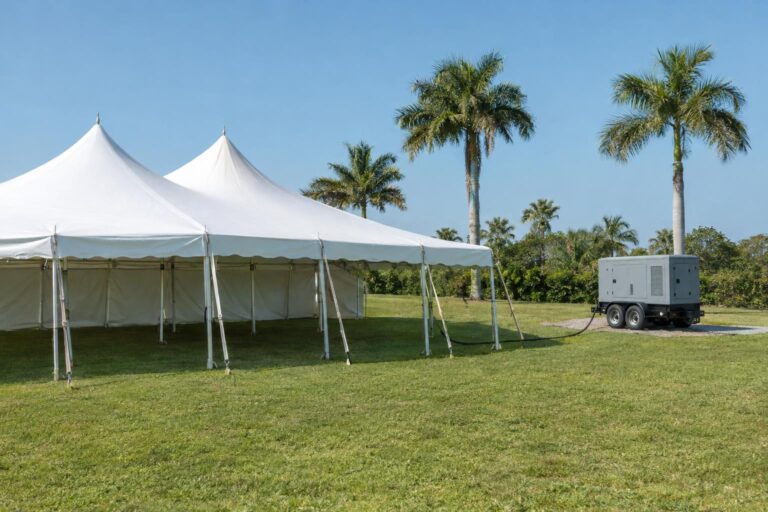
Cooling equipment draws electricity, and air conditioning draws far more than fans. Before you choose, find out what power is available at the venue and where the outlets are. If power is limited, a generator may be needed; our post on planning power for an event covers how to think about that.
Share the equipment list with your rental team so they can confirm that circuits, cords and placement are workable. Never run extension cords where guests walk without proper covers.
Place equipment where it helps
Position fans to move air across where guests sit or stand, not directly into food, candles or lightweight décor. Keep equipment off main walkways, and secure cords so nobody trips. Air conditioning units usually sit outside the tent with ducting leading in, so ask where there is space for them.
Think about noise. Large units can be loud enough to interfere with speeches or music, so tell your rental team if sound quality is a priority.
Protect guests and staff from heat
Cooling equipment is helpful, but it is not a substitute for basic heat safety. Provide water, shade, seating and breaks, and watch for signs of heat illness among guests, performers and crew. The Centers for Disease Control and Prevention publishes heat-safety guidance at cdc.gov, and the National Weather Service at weather.gov issues local heat advisories.
If your event is during the hottest part of the day, consider moving the program to the morning or evening, or planning breaks in a cooler indoor space.
Combine cooling with layout and décor
Think about how guests will use the space. Dance floors, buffets and bars generate heat and crowding, so they may need more air movement than a quiet seating area. Avoid clustering heavy decor or drapery that blocks airflow.
If you are also planning lighting, consider heat from fixtures and equipment. Read about tent lighting ideas to plan both together.
Time your event to the heat
In Florida, the hottest hours are typically early to mid-afternoon. If you have flexibility, consider a morning or evening program to limit time in peak afternoon heat. Review equipment needs for the actual site and expected conditions. Events that must happen at midday benefit most from a combined plan of shade, airflow and, where practical, air conditioning.
Think about when guests arrive, when the food is served and when activity peaks. Plan the strongest cooling for those moments.
Consider the guests who feel the heat most
Older guests, young children, pregnant guests and anyone with a health condition can struggle in the heat. Seat them in the coolest part of the tent, close to fans or an air-conditioned area, and keep water within reach. Make sure there is a shaded or cool spot where anyone can take a break.
Formalwear and heavy layers also add to discomfort, so a note on the invitation about the outdoor setting helps guests dress sensibly.
Ask about setup, noise and service
Portable air conditioning needs careful setup with ducting and secure placement, and large units can be loud. Ask your rental team how long setup takes, where equipment will sit, what the noise level is likely to be and whether someone will be available if a unit needs attention during the event.
A short pre-event walkthrough lets you test the equipment and adjust before guests arrive. For other planning that depends on setup time, see our guide to setup and breakdown timelines.
Compare the options before you decide
A good way to choose is to describe the event and ask for two or three options. For example, a plan with fans and mesh sidewalls may suit a short afternoon party, while a closed tent with air conditioning may suit a long evening reception in summer. Comparing options side by side helps you weigh comfort against power needs, noise and appearance.
Ask your rental team what they recommend for Southwest Florida humidity and afternoon storms. Then decide how much cooling the event really needs, and keep the plan flexible in case the forecast changes closer to the date. Whatever you choose, confirm the setup details in writing so everyone is prepared.
Finally, plan a quick check on the day. Arrive early enough to feel the temperature inside the tent, confirm that fans point where you expect and that guests will not sit in a direct blast of air. A few small adjustments before the first guest arrives usually matter more than any later change.
Frequently Asked Questions
Do I need air conditioning for a tent in Florida?
It depends on the season, time of day, guest count and tent size. Fans can be enough for shorter or smaller events, while air conditioning helps for large crowds, closed tents or the hottest months.
Can air conditioning cool an open-sided tent?
Not effectively. Cooling works best in an enclosed space, so tents with open sides usually rely on fans and shade.
How do I keep guests safe in the heat?
Provide water, shade and seating, and plan for breaks. The CDC publishes heat-safety information for events and outdoor activity.
Bring your date and tent details to the quote
Cooling is easiest to plan when your rental team knows the date, time of day, guest count and tent configuration. Ask what they recommend and what power will be needed.
Ready to keep guests comfortable? Request a quote with your date and venue, call us at (239) 768-6393, or contact our team to talk through cooling options.