Plan event tent lighting with bistro string lights, chandeliers, uplighting and pathway lighting for a tented reception, plus how to plan power and placement.
Good tent lighting for events does more than let guests see their plates after sunset. It sets the mood for a reception, draws attention to the parts of the tent you want guests to notice, and keeps walkways and service areas safe once the sun goes down. Because a tent is a temporary structure without built-in fixtures, every light source has to be planned, mounted, and powered as part of the rental, not added as an afterthought.
Start lighting decisions early in the planning process, at the same time you are finalizing the tent size and layout. Lighting needs change depending on whether the tent has solid walls, clear sidewalls, or no sidewalls at all, and the mounting points available on the tent frame will shape which fixtures are realistic.
Match the lighting style to the mood you want
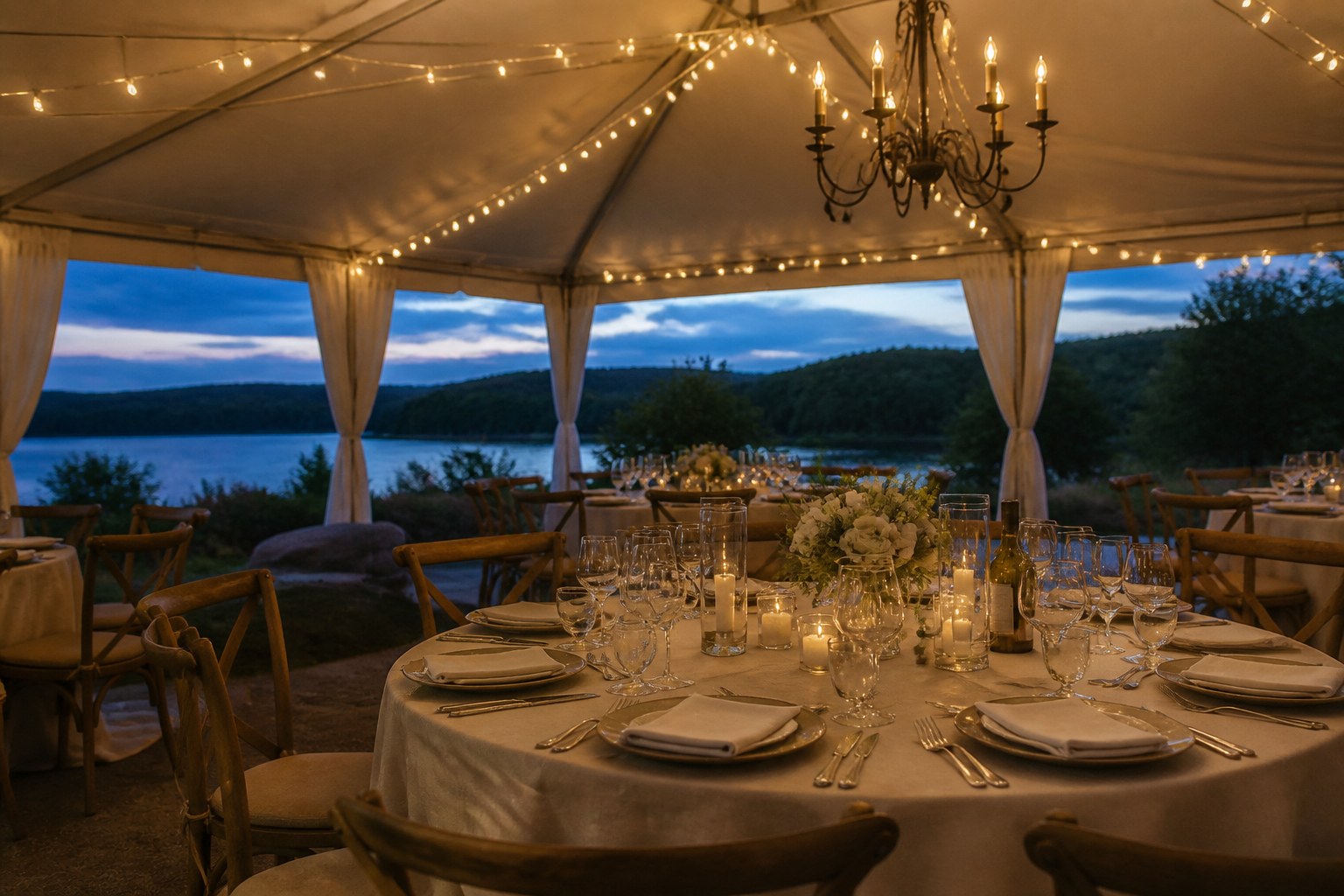
Bistro or market string lights are the most requested option for tented receptions because they create a warm, romantic glow without needing a large electrical draw. Strung in straight lines, a crisscross pattern, or a single perimeter loop along the tent's edge, string lights work well under both frame tents and pole tents and can be dimmed on most modern LED sets.
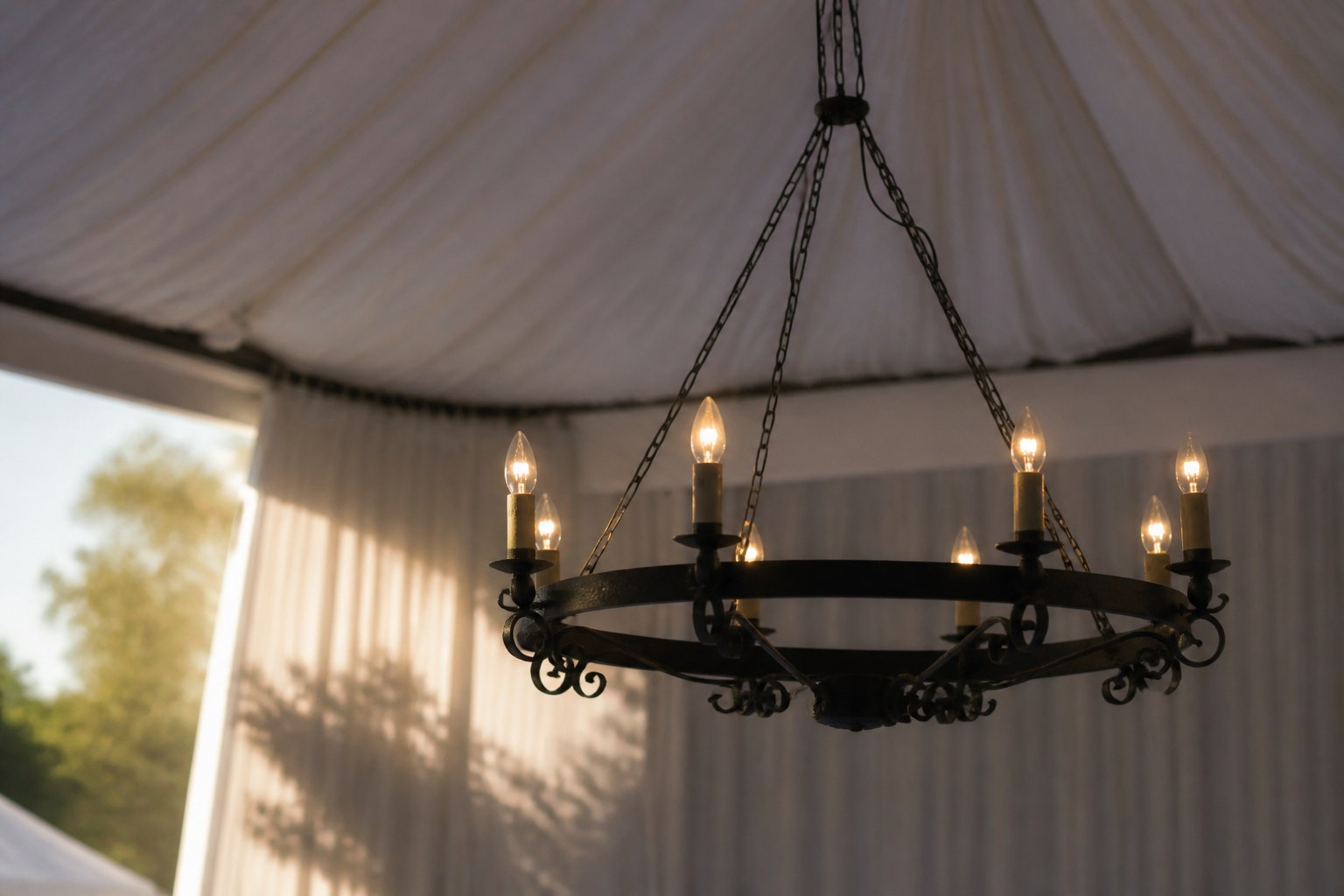
Chandeliers add a more formal, structured look and are usually reserved for the dining or dance area rather than the entire tent. They hang from the tent's center poles or a rigging point and read best over round tables or a dance floor, where guests will look up and notice them. Because chandeliers concentrate light in one place, they typically need to be paired with softer ambient lighting elsewhere in the tent so the rest of the space doesn't feel dim by comparison.
Uplighting, where small fixtures are placed at the base of the tent walls or poles and aimed upward, is useful for adding color and depth to plain tent walls without adding visible fixtures overhead. It works especially well for evening receptions that want a specific color palette reflected in the room, and it can be adjusted in intensity without affecting the main overhead lighting.
Plan power before you plan fixtures
Every lighting choice depends on available power. A small string-light package can often run on standard household circuits if the tent is close to the venue building, but chandeliers, uplighting arrays, and larger installations usually require dedicated generators or distributed power drops planned in advance. Confirm with your rental team how many circuits the lighting plan needs, where the power source will sit, and how cabling will be routed so it does not cross guest walkways.
Outdoor electrical work near a temporary structure should always follow standard life-safety guidance for temporary lighting and generators, including weatherproof connections and proper cable protection. The National Fire Protection Association publishes general guidance on temporary electrical installations for events, which is a useful reference when you are asking your tent and lighting vendor about their setup practices.
Layer light instead of relying on one fixture type
The most comfortable tented receptions usually combine two or three lighting layers: an ambient layer (string lights or a lit tent liner), a focal layer (chandeliers or pendant fixtures over key tables), and a perimeter or safety layer (pathway lights, entrance lighting, and lighting near the bar and buffet). Relying on a single light source, even a beautiful one, often leaves parts of the tent too dark for guests to move through comfortably.
Dance floors and bars deserve their own lighting consideration separate from the dining area. A brighter, more saturated lighting package near the dance floor helps energize that part of the evening, while dimmer, warmer light over dinner tables supports conversation. If your event uses a rental package that includes both dining and dance components, ask your planner to map lighting zones onto the same layout used for tables and the dance floor.
Don't forget the walk from parking to the tent
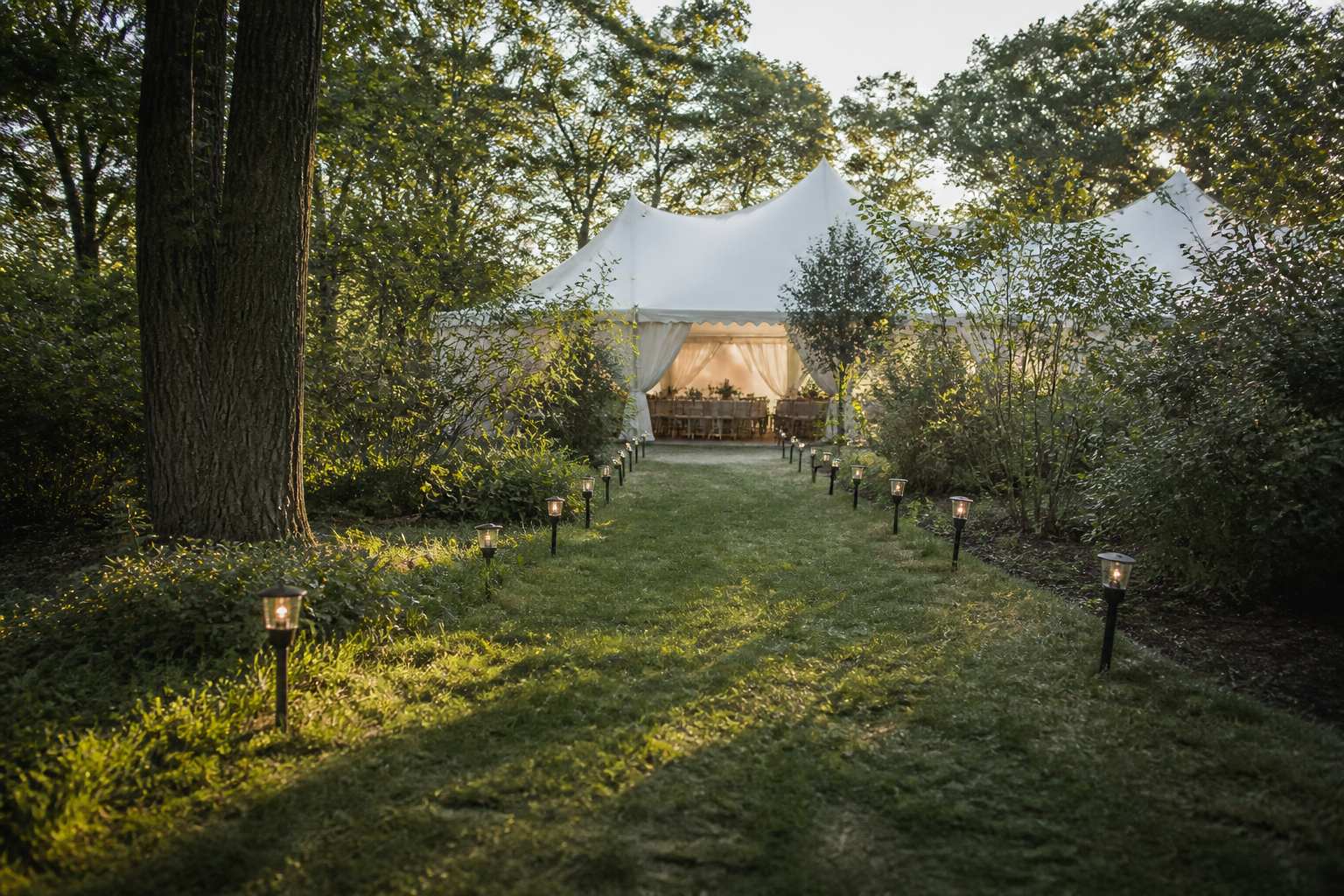
Guests need to see the ground clearly between the parking area, the venue entrance, and the tent itself, especially on grass or gravel where footing can be uneven. Pathway lighting, whether stake lights, lanterns, or a simple string of lights along a rope line, reduces trip hazards and helps guests find their way after dark without relying on phone flashlights.
If your reception venue is one of the outdoor or semi-outdoor spaces common across Southwest Florida, plan for insect activity around light fixtures during warmer months. Warmer-temperature LED bulbs attract fewer insects than cooler blue-white bulbs, and keeping major light sources away from open food service areas can help keep the dining experience comfortable.
Budget for lighting as its own line item
Lighting is easy to underestimate when you are building an event budget, because it doesn't have the same obvious per-guest cost as chairs or dinnerware. String lights are typically priced by linear foot or by section, chandeliers are priced per fixture, and uplighting is usually priced per unit with an additional charge if a dedicated technician is needed to set colors and aim each fixture. Ask for an itemized lighting quote rather than a single bundled number, so you can see where the cost comes from and adjust individual pieces if you need to trim the budget without giving up the overall look.
If budget is tight, prioritize lighting in the areas guests will spend the most time and be photographed the most, typically the dining area and any formal portraits or first-dance moments, and treat lighting in secondary areas like a coat check or overflow seating as optional.
Common tent lighting mistakes to avoid
The most frequent lighting mistake is treating it as a single decision made once, rather than a layered plan across different zones of the tent. A tent with beautiful string lights overhead but no pathway lighting outside still leaves guests navigating a dark parking area or lawn. Another common mistake is choosing a lighting color temperature that clashes with the rest of the decor; very cool white light can make a warm, romantic color palette look flat and clinical in photos, while very warm light can wash out cooler blue or silver accents.
A third mistake is underestimating how much lighting a dance floor needs once it's actually in use. A dance floor that looks adequately lit before guests arrive can feel dim once people are moving and casting shadows across it, so it's worth erring toward slightly more light in that zone than you think you'll need, since most fixtures can be dimmed down but not brightened beyond their maximum output.
Frequently Asked Questions
What lighting options are discussed?
The article discusses bistro or market string lights, chandeliers, uplighting, and pathway lighting.
Why plan power before choosing fixtures?
Every lighting choice depends on available power; confirm circuits, the power-source location, and cable routing with the rental team.
How should guest paths be lit?
Plan lighting between parking, the venue entrance, and the tent; pathway lights, lanterns, or a simple light line can help guests navigate after dark.
Bring your lighting plan into the rental conversation early
When you request a quote, describe the mood you want, the specific areas of the tent that need focused light (head table, dance floor, bar, dessert table), and whether the venue has any restrictions on hanging fixtures from existing structures. That information lets your rental team recommend a realistic mix of string lights, chandeliers, uplighting, and pathway lighting instead of a generic package that may not fit your tent's frame or power access.
Ready to plan the lighting for your tented event? Request a quote and describe your venue and timeline, call us at (239) 768-6393, or contact our team to talk through lighting options before you finalize your tent layout.