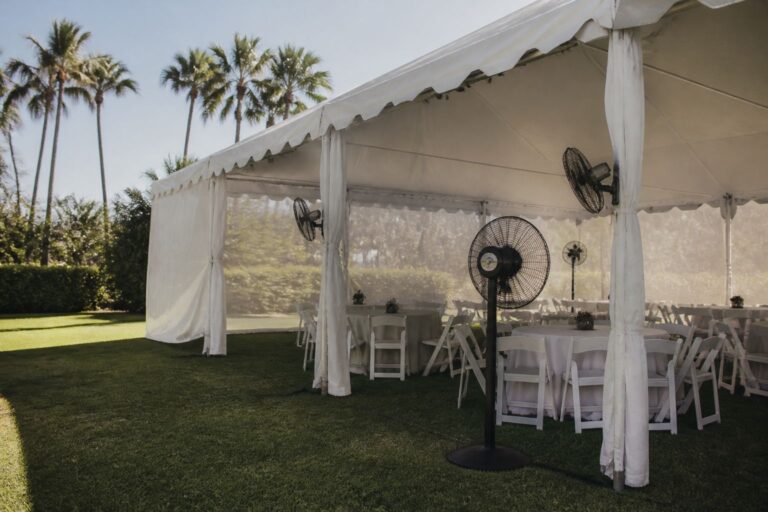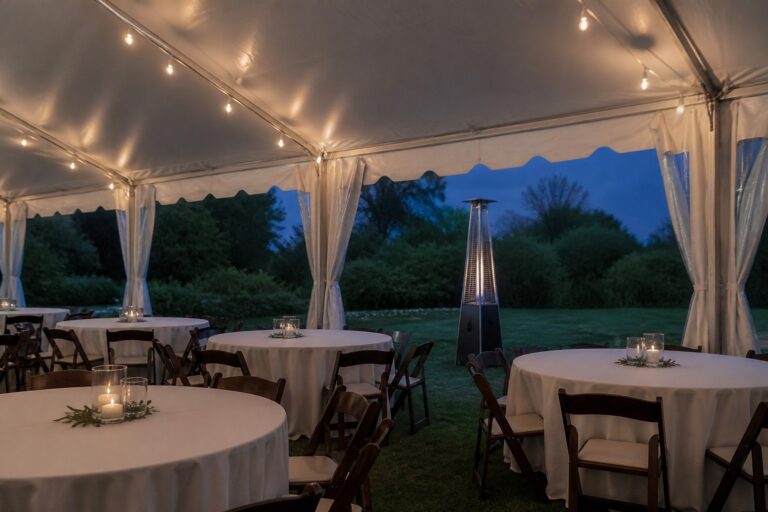
Plan event generator rental for an outdoor party or tent: list your power needs, size the generator, place it safely and ask your venue the right questions.
Many outdoor and tented events run into the same problem: there is simply not enough power where it is needed. Lighting, sound, fans, heaters, catering equipment and charging stations all draw electricity, and a venue lawn, field or parking lot may have no outlets at all. A planned event generator rental keeps the lights on, the food warm and the music running without overloading venue circuits.
Power is easy to overlook because guests do not see it when it works. It is also one of the first things to fail when planning is rushed, so it belongs on the checklist early.
List everything that needs electricity
Begin with an equipment inventory. Think about lighting inside and outside the tent, a DJ or band, microphones, projectors and screens, fans or air conditioning, heaters, coffee stations, warmers and refrigeration, ice machines, photo booths and phone-charging stations.
Ask each vendor what their equipment draws and whether they bring their own power. Caterers, bands and lighting companies often have specific requirements, and collecting them in one list lets your rental team recommend a size instead of guessing.
Match the generator to the load
Generators come in a range of sizes, and bigger is not always better. A unit that is too small trips under load, while one that is much too large burns unnecessary fuel. Our power and generator rentals include towable units in several sizes, so there is room to fit the load.
Share your equipment list and ask your rental team to size the generator. Also ask whether one unit can power everything or whether separate units for catering and entertainment make more sense, which also reduces the risk of one failure affecting the whole event.
Choose a safe location
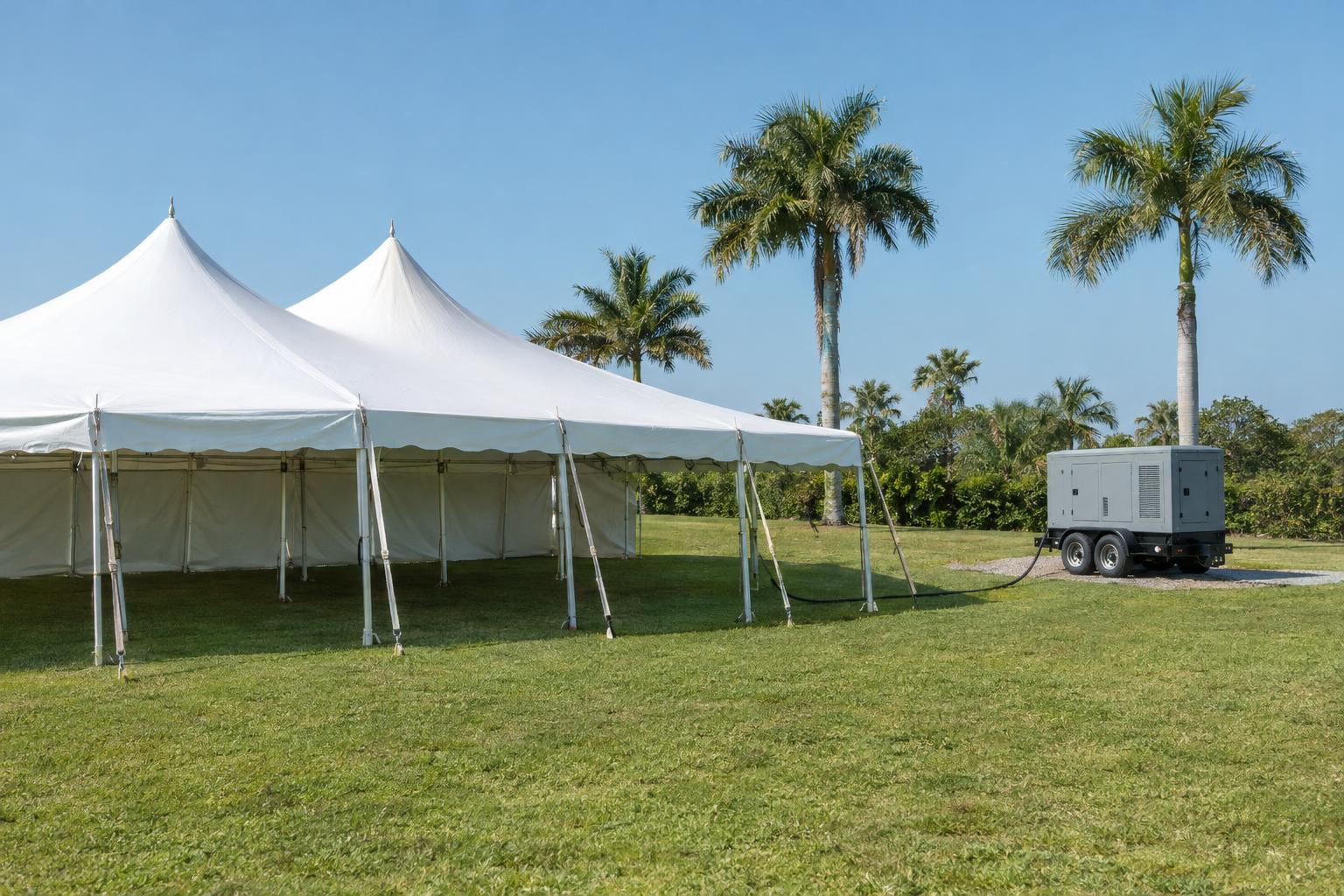
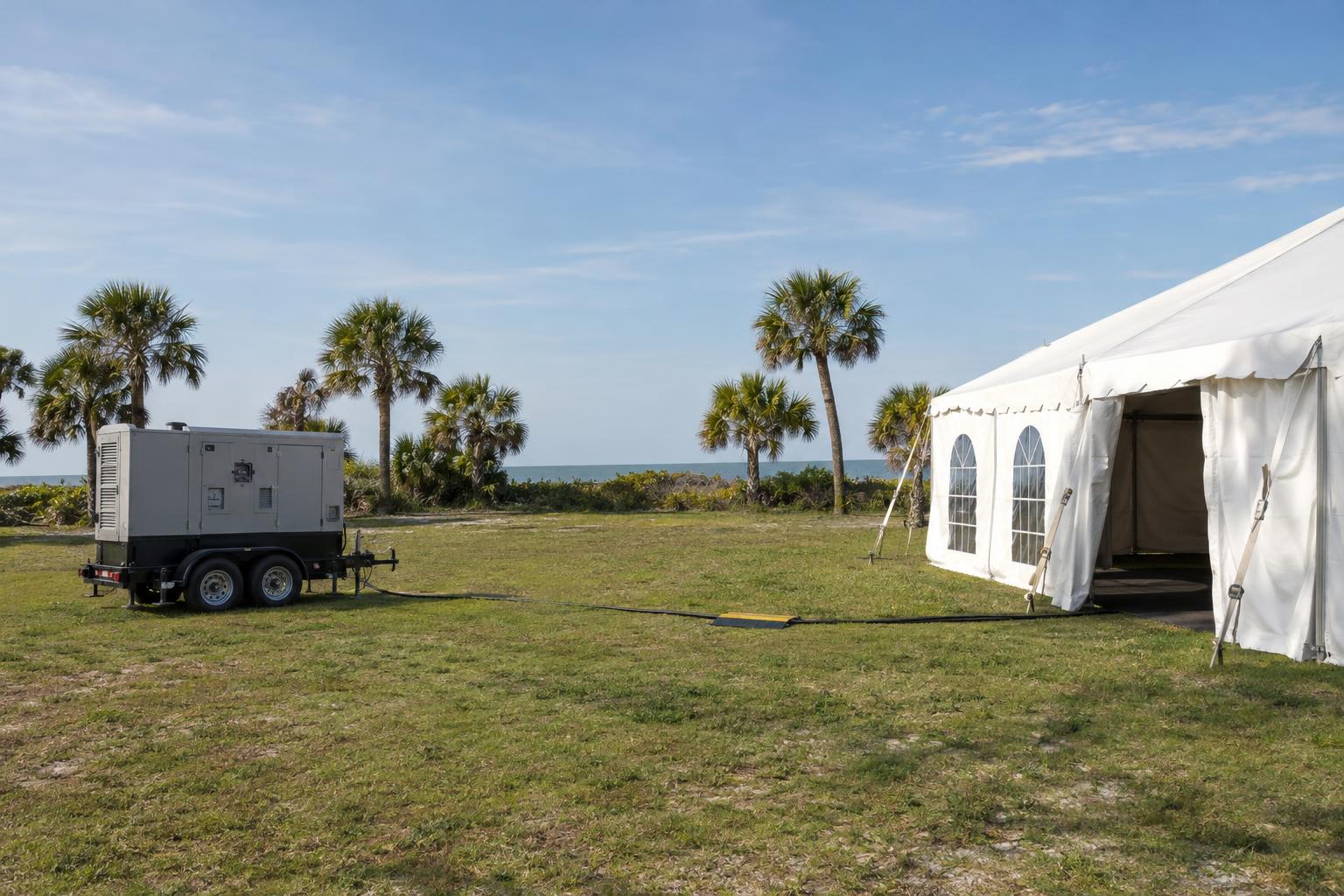
Generators produce exhaust and noise, so placement matters. Never run a generator inside a tent or any enclosed space. Keep it well away from tents, guests and air intakes, on a level surface, with clear access for refueling and service. Carbon monoxide is a serious hazard around fuel-burning equipment; the U.S. Consumer Product Safety Commission provides safety guidance at cpsc.gov.
Think about sound. A generator running beside the stage will interfere with speeches and music, so place it far enough away, or behind a barrier approved by your rental team, and run cables to the event area.
Run cables safely
Cable routing is where many setups go wrong. Cords across walkways are trip hazards, and cords across wet grass or standing water are electrical hazards. Ask how cables will be protected, whether covers or ramps are used at crossings and how connections will stay dry in rain.
Plan distribution points so power reaches the tent, stage, bar and catering area without long extension chains. Your rental team can advise on safe layouts.
Think about fuel and run time
Generators consume fuel in proportion to load and run time. Ask how long the unit will run on a tank, who handles refueling and whether a refill is needed during the event. A long evening event may need a plan for a mid-event top-up that does not disturb guests.
Confirm who is responsible for fuel charges and cleanup so there are no surprises. Fueling should be done by trained staff, away from guests and with the equipment off.
Check venue rules
Parks, private venues, neighborhoods and municipalities may have rules about generators, noise and open flame. Ask your venue about permitted locations, quiet hours, access routes and any permits that apply. Do not assume that private property is exempt from local rules.
Share the answers with your rental team so the location and schedule fit. If your event is under a tent, also read our guide to tent sizing to plan the generator location relative to the footprint.
Use separate power for sensitive equipment
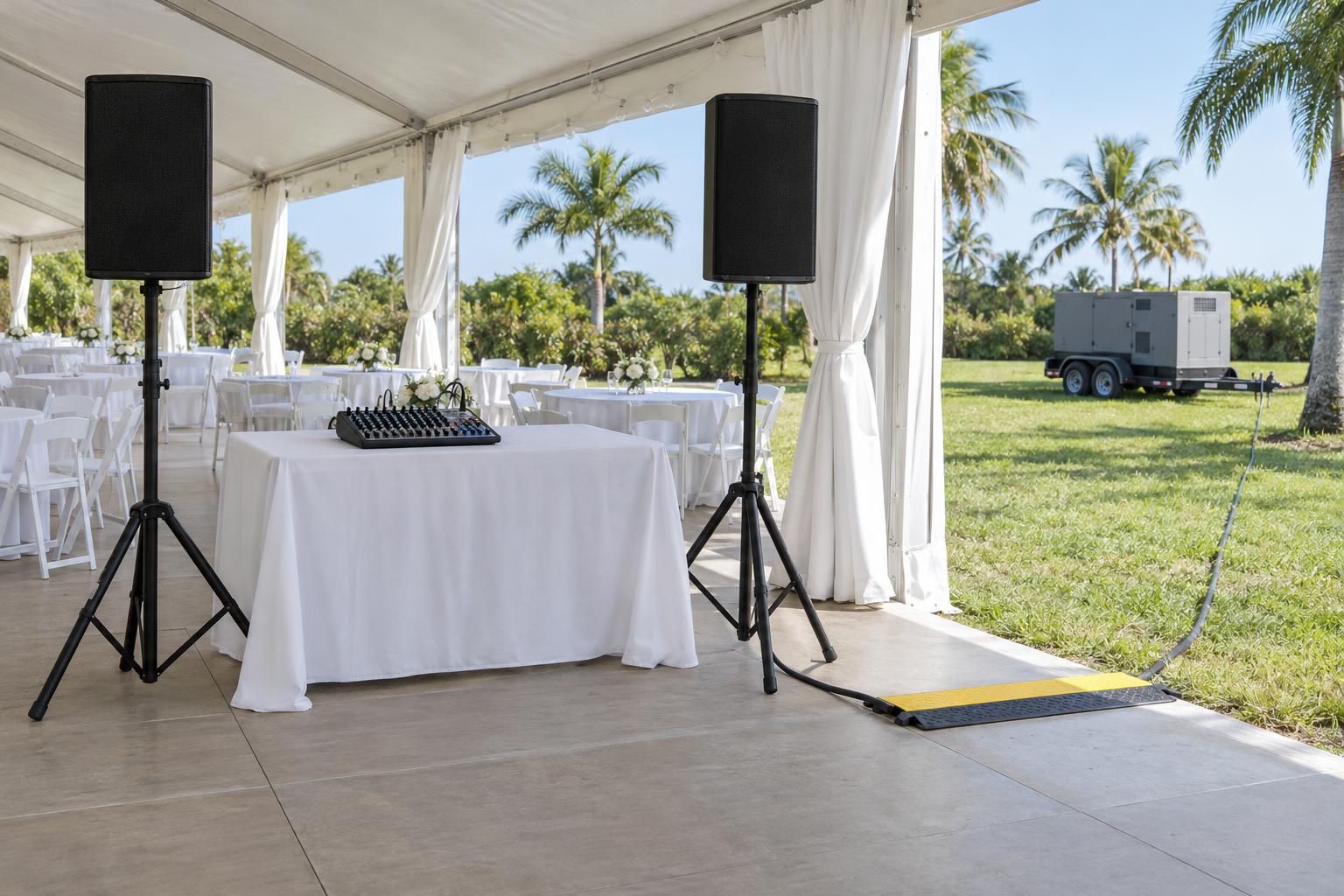
Sound systems, projectors and lighting controls can be sensitive to power fluctuations, especially when they share a circuit with equipment that cycles on and off, such as refrigeration, fans or air conditioning. Ask your vendors whether they need a dedicated feed, and discuss with your rental team how loads can be separated.
This is a good question for the person running your sound or lighting, since they know what has caused trouble at past events.
Plan for the unexpected
Even a well-sized generator can fail or run out of fuel, and venue power can trip a breaker. Ask your rental team what their contingency is, whether a service contact is available during your event and how quickly a problem can be addressed. Know where the generator shut-off is and who is authorized to use it.
For critical items such as refrigeration for food, consider what you will do if power is interrupted for an hour. A simple contingency plan costs nothing.
Coordinate with your caterer and band
Caterers and entertainers often have firm requirements about power, and some bring their own generators. Talk to them early so you do not rent more than you need or leave a gap. Ask what outlets or connections they require and where they will set up.
The more vendors that share a power source, the more important it is that someone is responsible for overall coordination. Your event planner or venue coordinator can help; see our event planner versus coordinator guide for who to ask.
Test before guests arrive
Power problems are easiest to fix before anyone is in the room. Build time into your schedule for a full test: turn on lights, sound, cooling and catering equipment together, and run them long enough to confirm the load is stable. A system that works for five minutes with half the equipment may behave differently once everything is running at full load.
Ask your rental team to be present or reachable during this test, and identify who will handle any adjustments. After the test, walk the cable routes once more to be sure nothing has shifted. A short test is cheap insurance against a long evening of trouble, and it lets vendors confirm that their equipment is receiving what it needs.
Write down the shut-off location, the service contact and the order in which equipment should be switched on, and share that note with your venue coordinator. If power does go down, a clear plan keeps everyone calm and gets the lights, sound and refrigeration back quickly, with little disruption to guests.
Frequently Asked Questions
Do I need a generator for a tent event?
If your venue has no outlets near the tent, or your equipment will exceed available circuits, a generator is usually needed. Check what power exists and what your vendors require.
How do I know what size generator I need?
Add up the power needs of every piece of equipment and share the list with your rental team. They can recommend a size and whether to split the load across more than one unit.
Is it safe to run a generator near guests?
Only if it is placed away from tents and gathering spots and handled by trained staff. Carbon monoxide is a real risk with fuel-burning equipment, and the Consumer Product Safety Commission publishes safety information.
Bring your equipment list to the quote
A reliable power plan is simple when it is built early. Share your equipment list, venue, schedule and tent layout, and ask what size and placement your rental team recommends.
Ready to plan power for your event? Request a quote with your date and venue, call us at (239) 768-6393, or contact our team to talk through your power needs.