Learn how to plan an event stage rental, from sizing for speakers or a band to steps, rails, skirting, ramps and the sightlines that guests need.
An event stage rental only works if it fits what will actually happen on it. A speaker at a podium needs very little room, while a band, a dance troupe or an award ceremony with several people needs far more. List every person and piece of equipment that will be on stage: instruments, speakers, a podium, screens, a cake table, a musician's amplifier or a DJ booth.
Think about movement too. Presenters who walk, performers who dance and guests who come up to receive awards all need extra space beyond what they occupy standing still.
Size the stage to the room
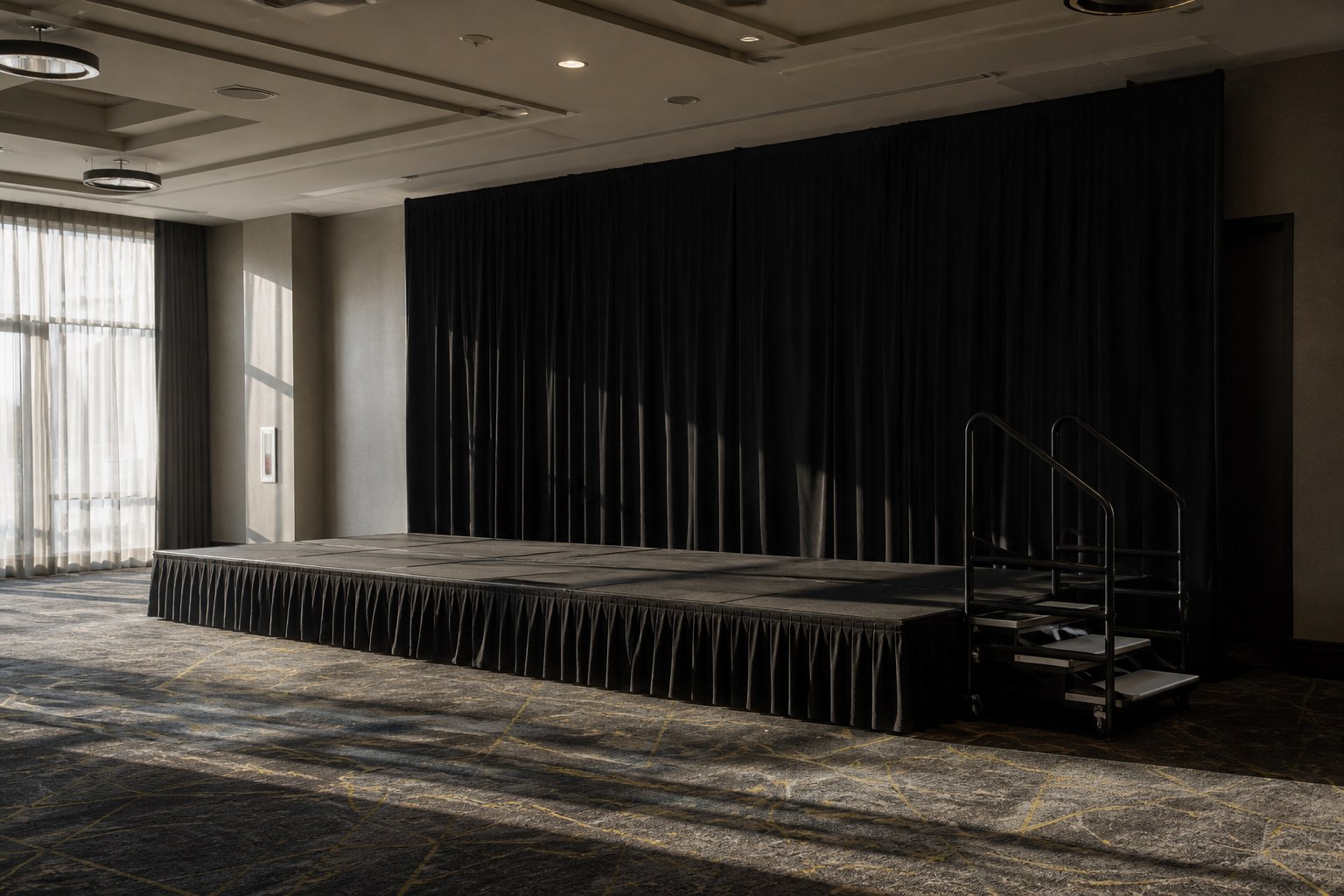
A stage that is too small feels cramped and is unsafe for performers. A stage that is too large dominates the room and removes space from guests. Look at your audience size and where they will sit or stand, then choose a size that keeps the stage proportionate to the space.
Stage decks are typically modular, so a rental team can combine sections into the footprint you need. Share your room dimensions, audience size and what will be on stage, and ask what configuration they recommend. Our staging, lighting and AV rentals show the components available.
Think about height and sightlines
Stage height determines whether guests in the back can see. A low platform can work for a small room with a short audience, while a larger crowd needs a higher stage and clear sightlines. Tall centerpieces, columns, tent poles and sound equipment can block views, so walk the room from the farthest seat.
Height also affects safety. Higher stages require railings and appropriate steps, and the stage should be rated for the load it will carry. Ask your rental team what safety components come with your configuration.
Plan access with steps, rails and ramps
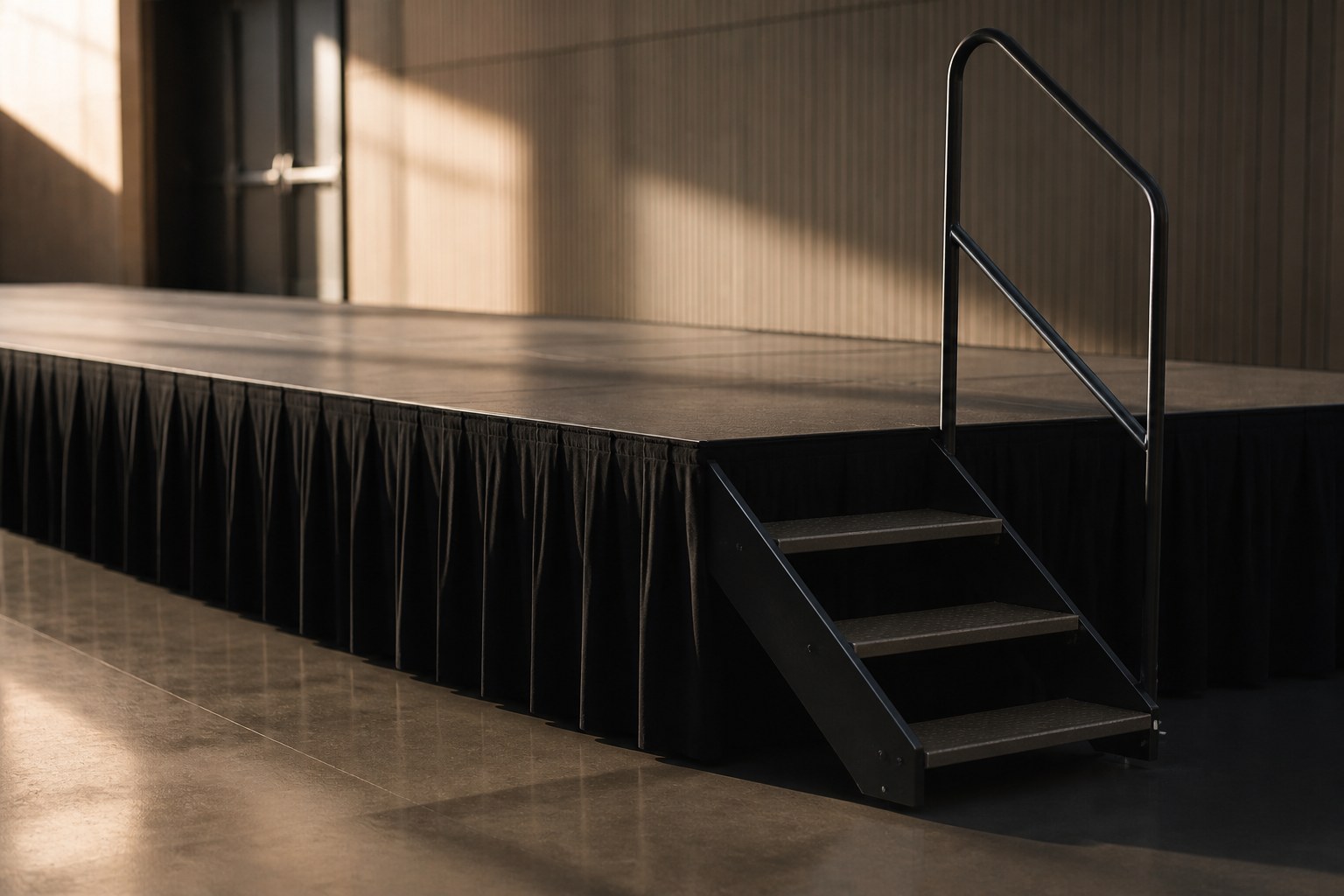
Performers and speakers need a safe way up and down. Steps with handrails, side rails and skirting are common add-ons, and a ramp provides access for anyone who cannot use stairs. Accessibility is more than a courtesy; the ADA website offers guidance on accessible routes, and your venue may have its own requirements.
Ask which access components are included in the stage package and which are optional, and make sure at least one route to the stage works for every speaker or performer on your schedule.
Finish the front and sides
Skirting hides the framing and legs and makes a stage look finished, and it can also keep cables and equipment out of sight. Choose a color that fits your event, such as black for a neutral look or a color matched to your branding. Add a backdrop if you want a defined visual frame; for ideas, read our guide to pipe and drape backdrops.
If the stage is outdoors or under a tent, make sure the surface is level and the footing is stable. Our flooring rentals include tent flooring and dance floors that can help with a lawn setup, so ask what suits your site.
Coordinate power, sound and lighting
A stage is only useful if the equipment on it works. Plan where power will come from, how cables will run safely and where sound and lighting will be controlled. Cables across walkways create a trip hazard, so ask how they will be covered or routed.
For outdoor events, power may come from a generator, which raises its own planning questions; our post on planning power for an event covers them. Share your performer or speaker technical needs early.
Leave room for load-in and teardown
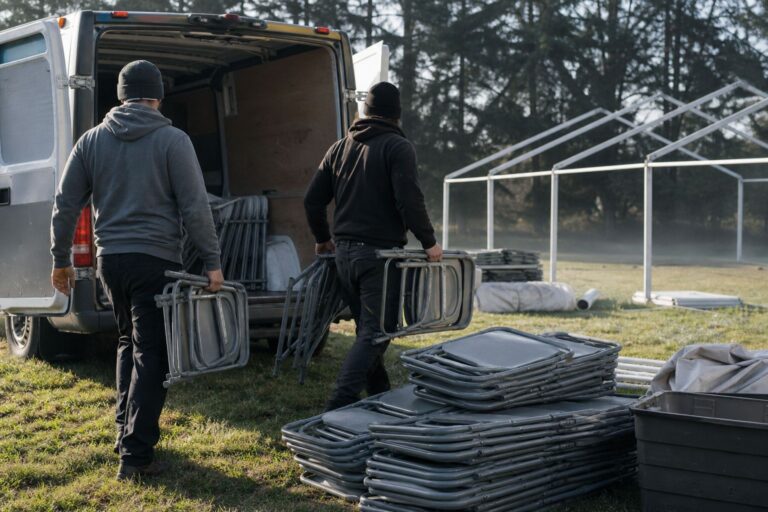
Stage pieces are bulky, and the crew needs access to the room. Confirm loading doors, elevators, ramps and clear pathways, and ask your venue about delivery windows. A stage that is installed after other rentals are in place can slow down the whole setup, so agree on an order of operations.
Build in time for sound checks and rehearsals after the stage is installed and before guests arrive.
Plan for the show, not just the stage
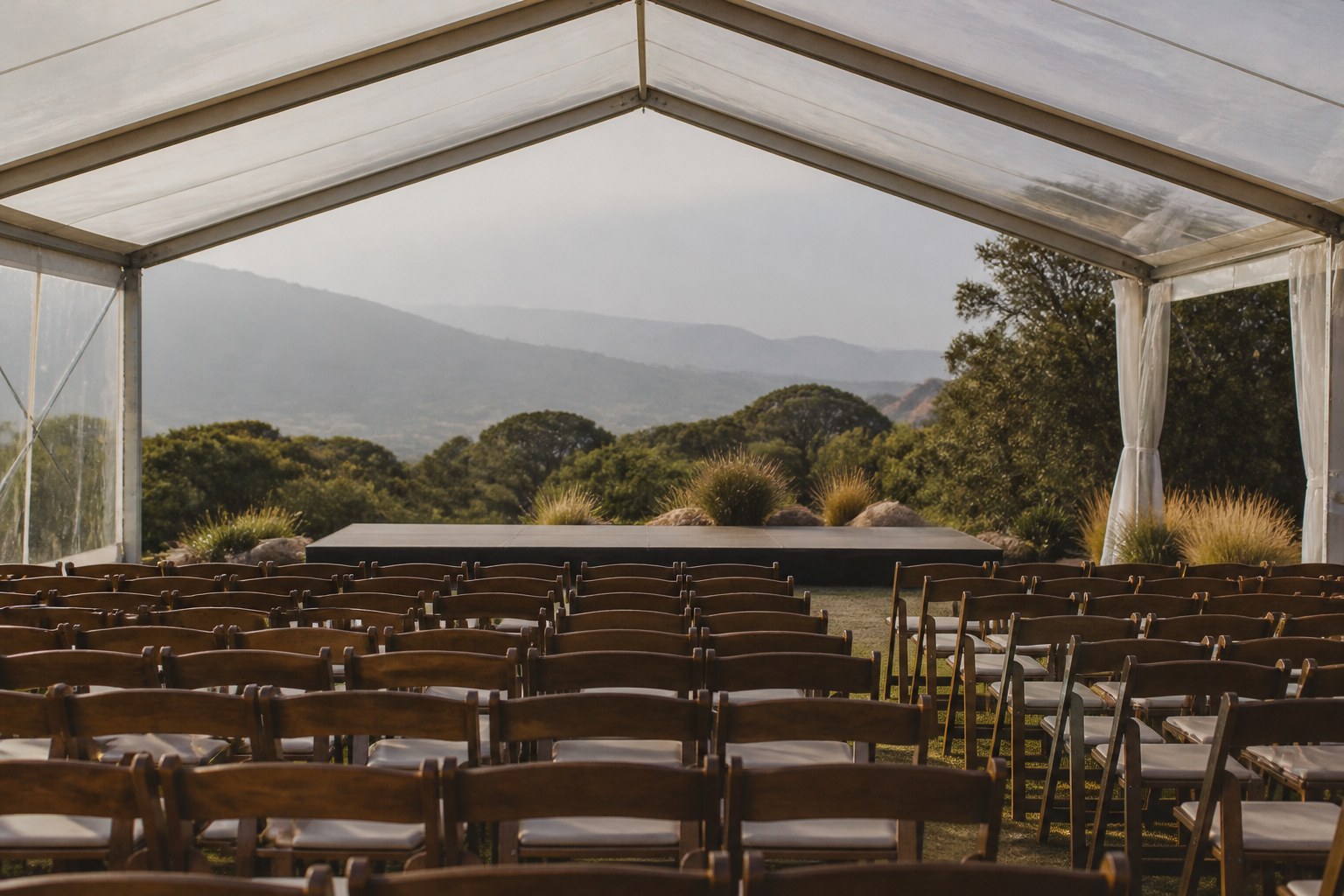
A stage is a tool for a program, so build the schedule first. Who speaks, who performs, how long each segment lasts and how the transitions work all affect the design. Short transitions favor easy access from the side or front, while a long program may justify steps on both sides.
Rehearse the movements if you can, even briefly. A walk-through with the emcee, the performers and the technical lead will reveal bottlenecks long before guests arrive.
Match the stage to the type of event
A wedding stage might hold a band or DJ, a head table or a small ceremony platform. A corporate event may need a podium, a screen and room for a panel. A school or community event may need a platform for awards. Each use has different priorities for height, finish and access.
Tell your rental team the type of event, not only the stage size, because the way a platform will be used shapes the safety features they recommend.
Keep equipment and people safe
Stages carry weight from people, instruments and gear, so use only what the rental team recommends for your setup. Keep walkways clear around the stage, do not allow guests to climb on it and secure cables so performers do not trip. For outdoor stages, ask about weather limits for wind and rain and decide in advance who will make the call to pause the program.
Placing a clear sign or having staff nearby on the day helps keep the area controlled.
Think about the audience experience
Beyond the structure, think about how the stage feels to guests. Lighting that highlights the performers, sound that carries evenly to the back of the room and a backdrop that photographs well all shape the experience. A stage that is perfectly built but poorly lit or hard to hear still disappoints.
Walk the room with your sound and lighting contacts before the event and check sightlines from several seats, including the back corners and the sides. Small adjustments, such as moving a speaker, shifting a table or rotating the stage slightly, can improve what hundreds of people see and hear. Your rental team can help you adjust the layout accordingly.
Frequently Asked Questions
How big should a stage be for a band?
The answer depends on the number of musicians and the equipment they bring. Ask the band or DJ for a stage plot or a list of equipment, and share it with your rental team so they can recommend a footprint.
Do I need a ramp?
If anyone who will use the stage cannot use steps, you need an accessible route. Your venue may also have requirements. General accessibility guidance is available from the ADA website.
Can a stage be used on grass?
It can, provided the ground is level and stable. Soft or uneven turf may need leveling or a base, so describe the surface to your rental team and ask what they recommend.
Bring your plan to the quote
A stage is easiest to plan when you know who will use it and what they need. Share the schedule, the people and equipment on stage and the room or lawn dimensions, and your rental team can recommend a safe configuration.
Ready to plan your stage? Request a quote with your date, venue and program, call us at (239) 768-6393, or contact our team to talk through size, access and setup.