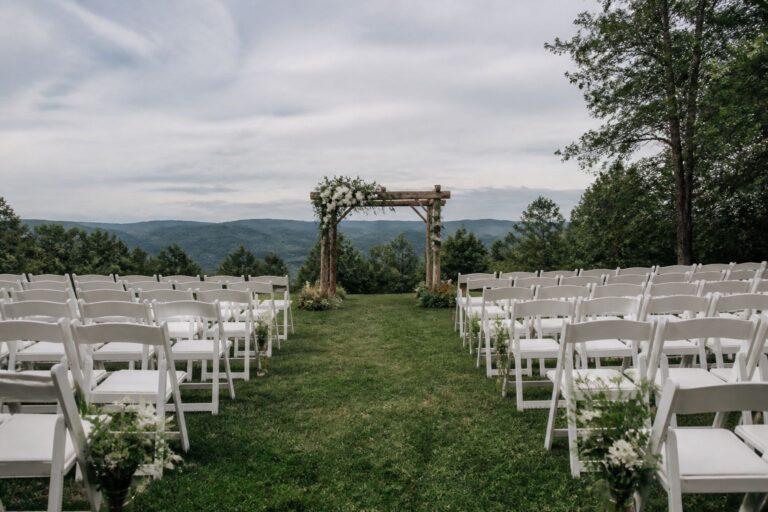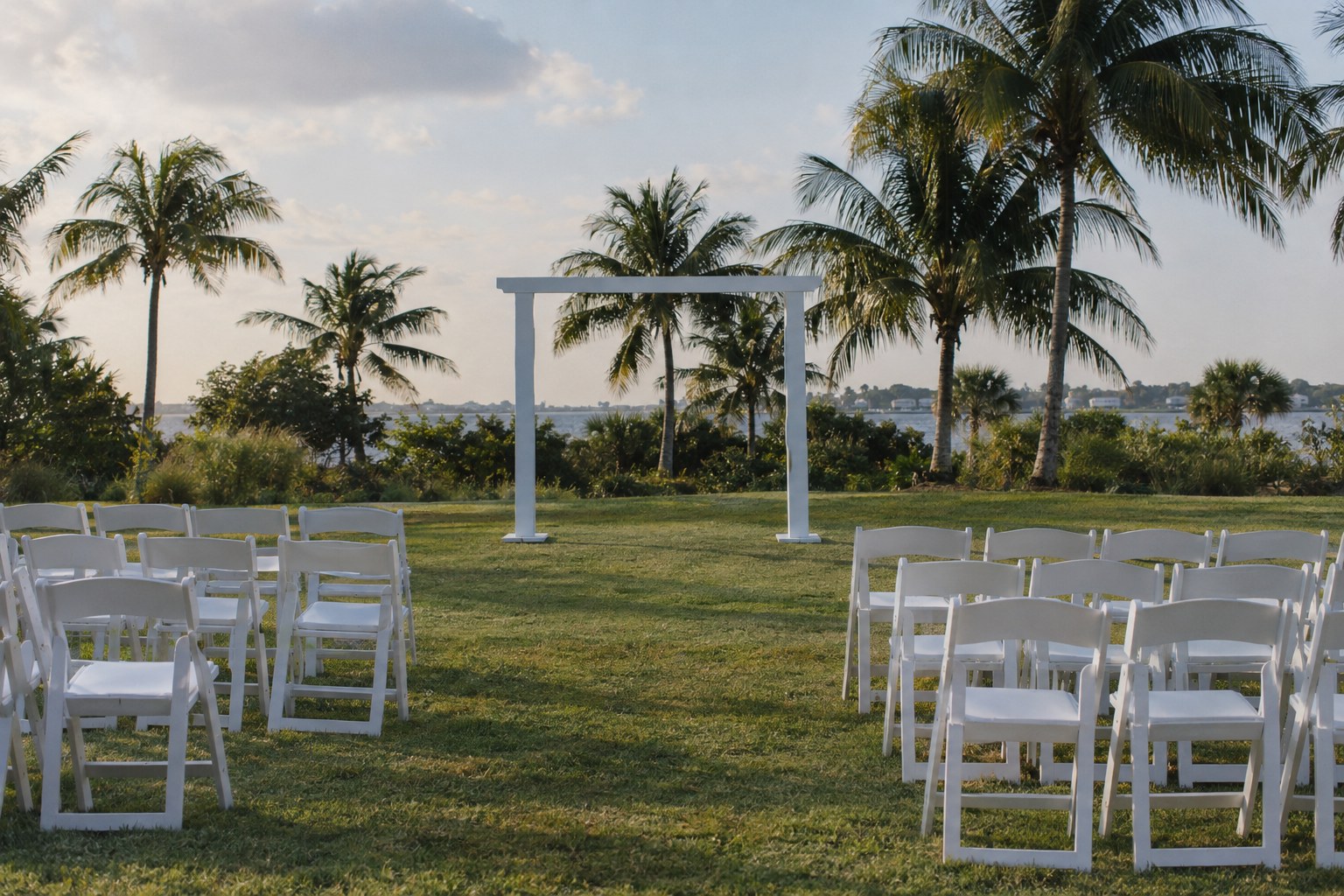
Choosing a wedding arch rental for a Southwest Florida ceremony: styles, scale, wind and sun, sand or lawn footing, florist coordination and setup timing.
Every guest at your ceremony will look at the same spot for the whole service, and so will every camera. That spot is the reason a wedding arch rental is worth planning with care. The right frame gives the couple a place to stand, gives the photographer a clean focal point and tells guests where the moment happens.
Picking one is less about trends and more about fit: the size of your aisle, the number of chairs, the ground underfoot and the light at ceremony time. Here is how we suggest working through it for a Southwest Florida wedding, from the first sketch to the final setup.
Start with the ceremony spot, not the arch
Walk the ceremony area, or study the venue photos, before you look at a single style. Note where the sun will sit at your ceremony time, where the nearest shade is and what stands behind the couple. A palm line, a water view or a plain wall each ask for a different kind of backdrop.
A busy background calls for a simpler frame. A plain background lets you choose something more dramatic. Deciding this first keeps you from falling for an arch that disappears into the scenery or fights with it.
Wedding arch rental styles in plain terms
Most ceremony frames fall into a few families. Round or circular frames feel modern and soft. Classic arched frames suit traditional ceremonies. Square or rectangular frames read clean and architectural. Freestanding panels, screens and walls work as backdrops when you want more coverage than an open frame gives.
Browse the decor and entertainment rentals to see what is currently offered, then ask your rental team what is available for your date. Style names vary, so photos and a conversation will tell you more than a label will.
Match the scale to your aisle and guest count
An arch that looks grand in a showroom can look lost on a large lawn, and a huge structure can crowd a small courtyard. As a rough starting point, many couples look for a frame that clearly fits the couple, the officiant and any florals without crowding them.
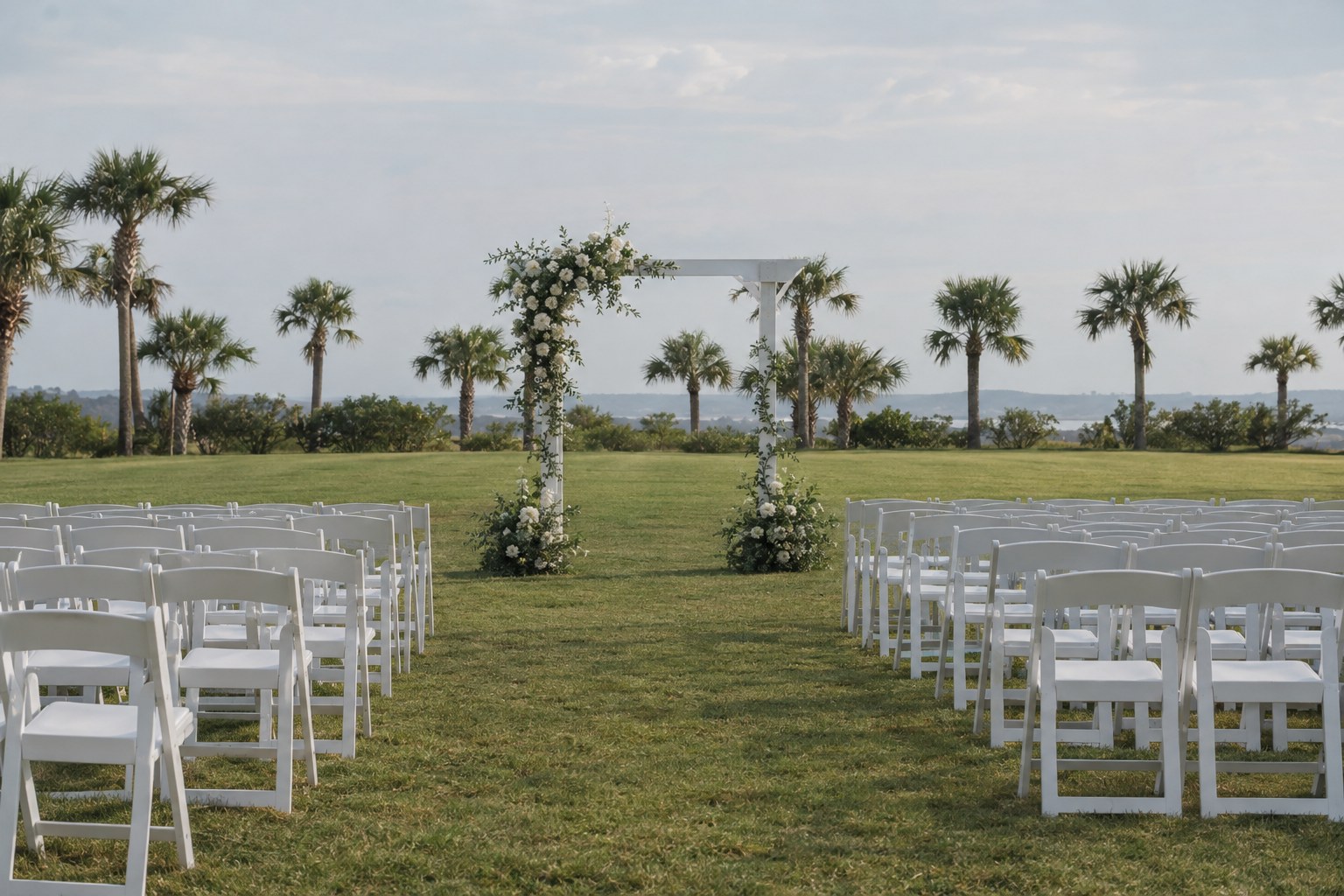
Think about the whole picture, not just the frame. A long aisle with a large guest list usually benefits from a taller or wider backdrop that carries to the back row. A small ceremony can feel warmer with a smaller piece. Ask your rental team to help you compare options against your guest count and aisle length.
Plan for Florida wind, sun and afternoon storms
Open frames catch wind, and breezes off the Gulf or across an open field can be steadier than you expect. Ask your rental team how a given arch performs outdoors and what it needs to stay upright. Whatever you drape or hang on it adds surface for the wind to push on, so mention your florist's plans early.
Check the forecast for ceremony day with the National Weather Service, since afternoon storms in Southwest Florida can build quickly. If rain is possible, decide ahead of time whether the ceremony moves under a tent, indoors or stays put. Having a backup spot chosen in advance keeps the day calm, and it lets your rental team and florist plan for either option instead of scrambling at the last minute.
Footing on sand and lawn
Ground matters more than people expect. A frame on a beach or sandy lot can lean or settle if it is not set up for that surface, and soft or sprinkler-soaked lawn can shift heavy bases. Tell your rental team exactly what surface the ceremony is on and ask how they plan to keep the piece stable.
Ask the venue about underground sprinkler lines, irrigation schedules and whether stakes or weights are allowed. Never assume a method that works at one venue will be accepted at another. Your rental team can confirm what is practical for your site and date, and it helps to share a few photos of the ceremony area when you ask.
Light, photos and the best time of day
Photographers think about light as much as flowers. Late afternoon sun behind an arch can create glare or a glowing edge, depending on the angle. Midday sun is harsh and flat. A ceremony in open shade or at a slightly later time often photographs more softly.
Share your ceremony time and the arch location with your photographer before you lock in a layout. They may suggest turning the frame a few degrees or shifting the aisle so faces are lit evenly. White and light frames reflect more light, while darker ones can look heavy in bright sun.
Greenery, draping and your florist
Many couples add flowers, greenery or fabric to the frame. That part is a coordination note for your florist, who designs and installs the floral work. Ask your florist what they plan to attach, how heavy it will be and what time they need access to the arch.
Then tell your rental team what will be added, so the base and setup account for it. If you want a softer look without flowers, pipe and drape backdrops can provide a simple fabric surface behind the couple. Ask about color options and what works with your ceremony layout.
Sightlines and seating around the arch
The best arch in the world is wasted if the third row cannot see through a post. Check that chairs face the center of the frame and that no support leg blocks the couple from the aisle. Wide aisles and a gentle curve to the seating often open up views.
Our guide to ceremony seating and guest flow goes deeper on aisle width and row spacing. Leave room beside the frame for the officiant, the wedding party and any readers, and make sure everyone can walk out without crossing the photographer.
Reuse the arch at the reception
If the ceremony and reception are at the same venue, an arch can move from the aisle to a head table backdrop, a photo spot or an entrance. Ask your rental team whether that move is possible and how much time it needs, because it depends on the piece, the crew and the schedule.
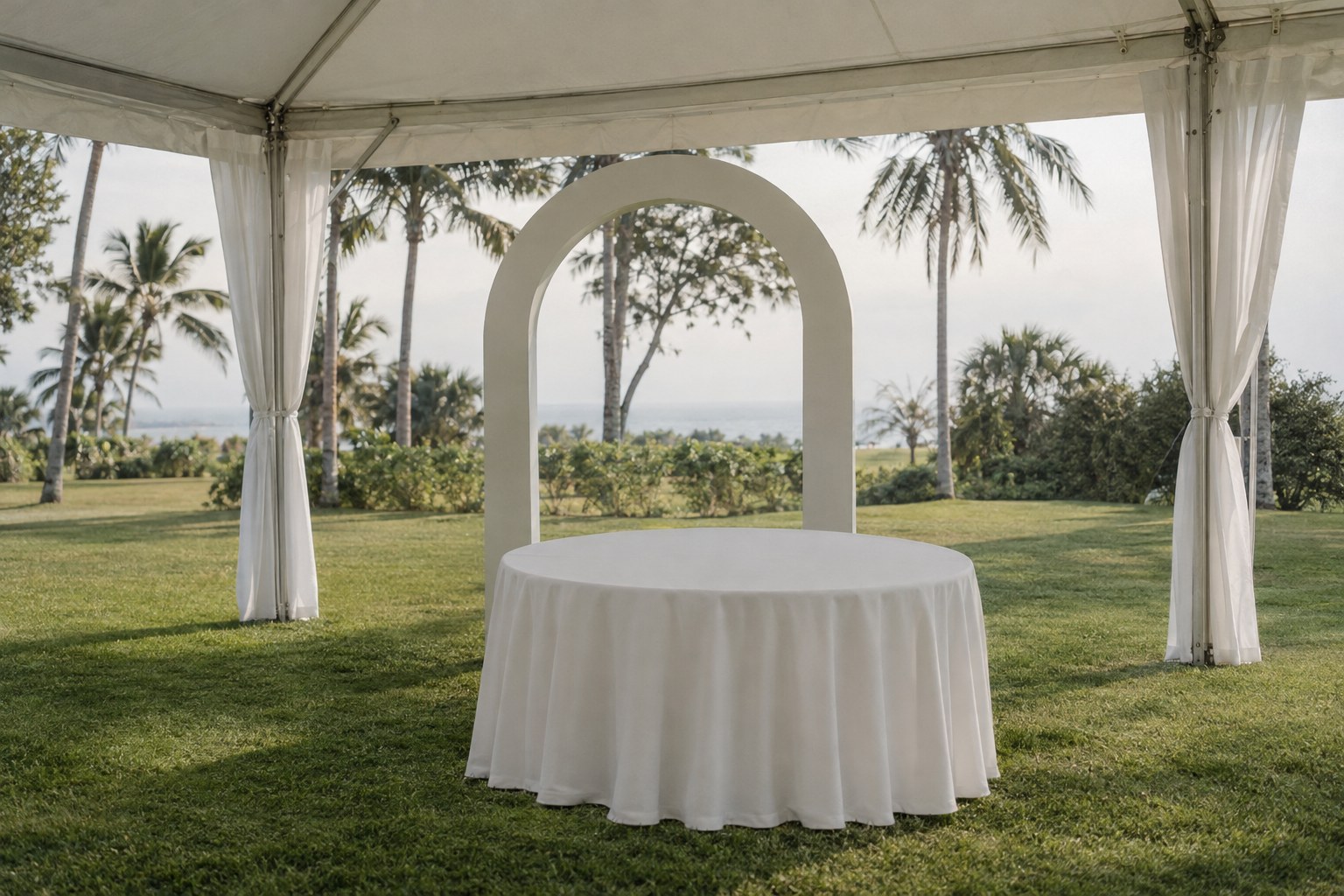
Build the changeover into your timeline. If guests move to cocktail hour after the ceremony, that gap is often when frames get relocated. Our wedding planning services can help you map that timing against your caterer, florist and venue.
Setup timing and who does what
Ask your rental team when the frame arrives, who sets it up and when it needs to be in place for your florist to start. Aim for the arch to be finished well before guests arrive, so there is time for small adjustments and photos of the empty ceremony space.
Write out one clear timeline and share it with your florist, venue contact and photographer. That small step prevents the most common problem, which is two vendors each assuming the other one is placing the arch.
Frequently Asked Questions
How big should a ceremony arch be?
It depends on your aisle, guest count and setting. A common starting point is a frame clearly wider than the couple and officiant together. Ask your rental team to compare sizes against your layout.
Can an arch be used on sand or grass?
Often yes, but the setup method depends on the surface and the venue's rules. Tell your rental team the ground type and ask how they will keep the piece stable.
Who decorates the arch with flowers?
Your florist designs and installs floral or greenery pieces. Share their plans with your rental team so the setup can account for the added weight and wind.
Can the same arch be used at the ceremony and reception?
It can sometimes be reused as a reception backdrop. Ask your rental team about timing and crew availability for the move.
Choose your ceremony backdrop with our team
Once you know your venue, guest count and ceremony time, we can help you choose a frame that fits. Request a quote with your date and location, or contact our team to talk through your ceremony layout. You can also call us toll-free at (800) 421-2393.