See how pipe and drape rental creates backdrops, vendor booths and room dividers, plus how to measure, choose colors and plan setup for your event.
Pipe and drape is a simple system: adjustable upright poles, horizontal crossbars and fabric panels that hang between them. It looks plain on paper, but it solves a lot of event problems. A pipe and drape rental can turn an open room into defined spaces, hide a storage corner, frame a stage or give a table a polished backdrop.
Because the pieces are modular, the setup can be sized to a single photo backdrop or extended to dozens of feet of divider. That flexibility is why it shows up at weddings, trade shows, school events, fundraisers and corporate meetings.
Common ways to use it
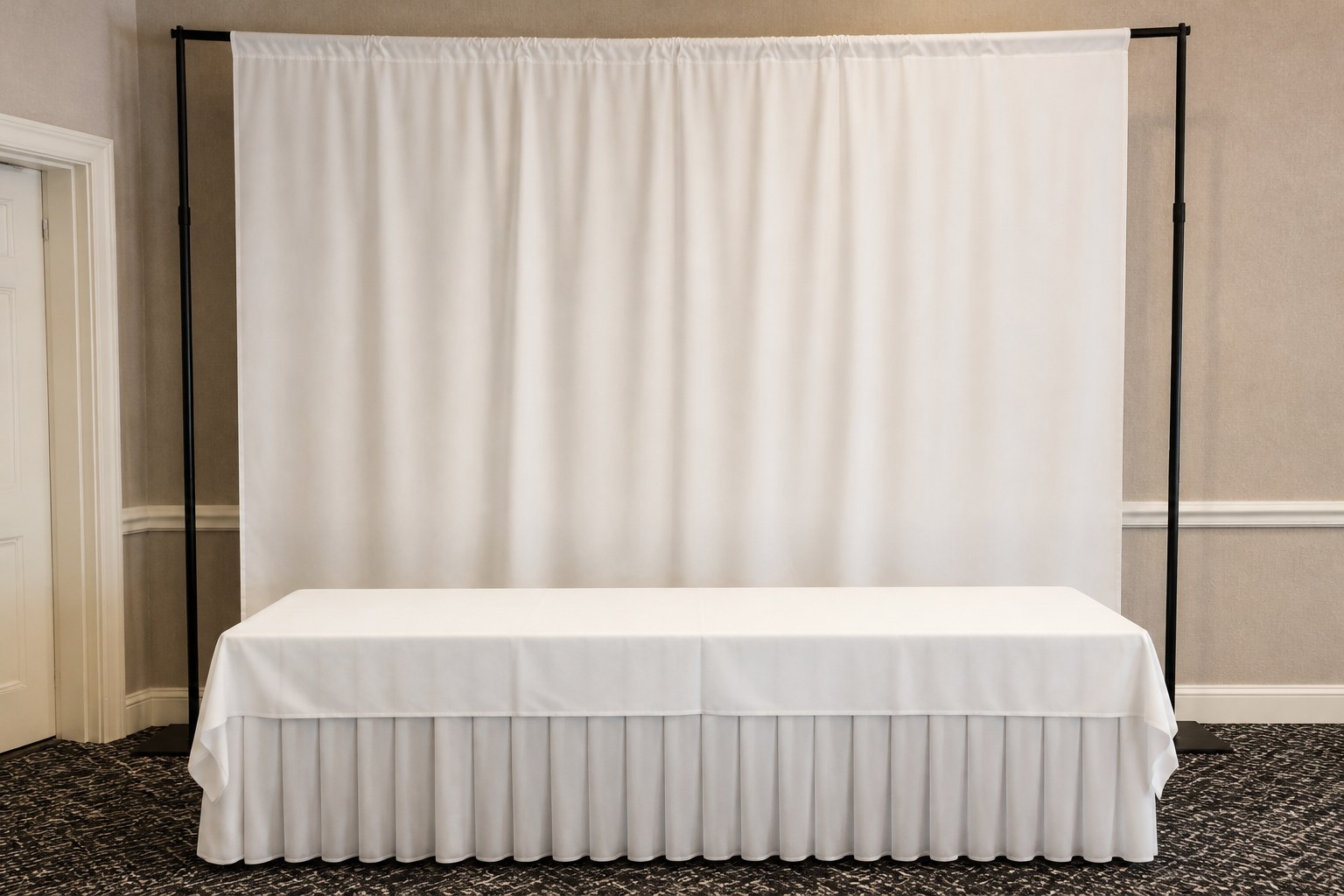
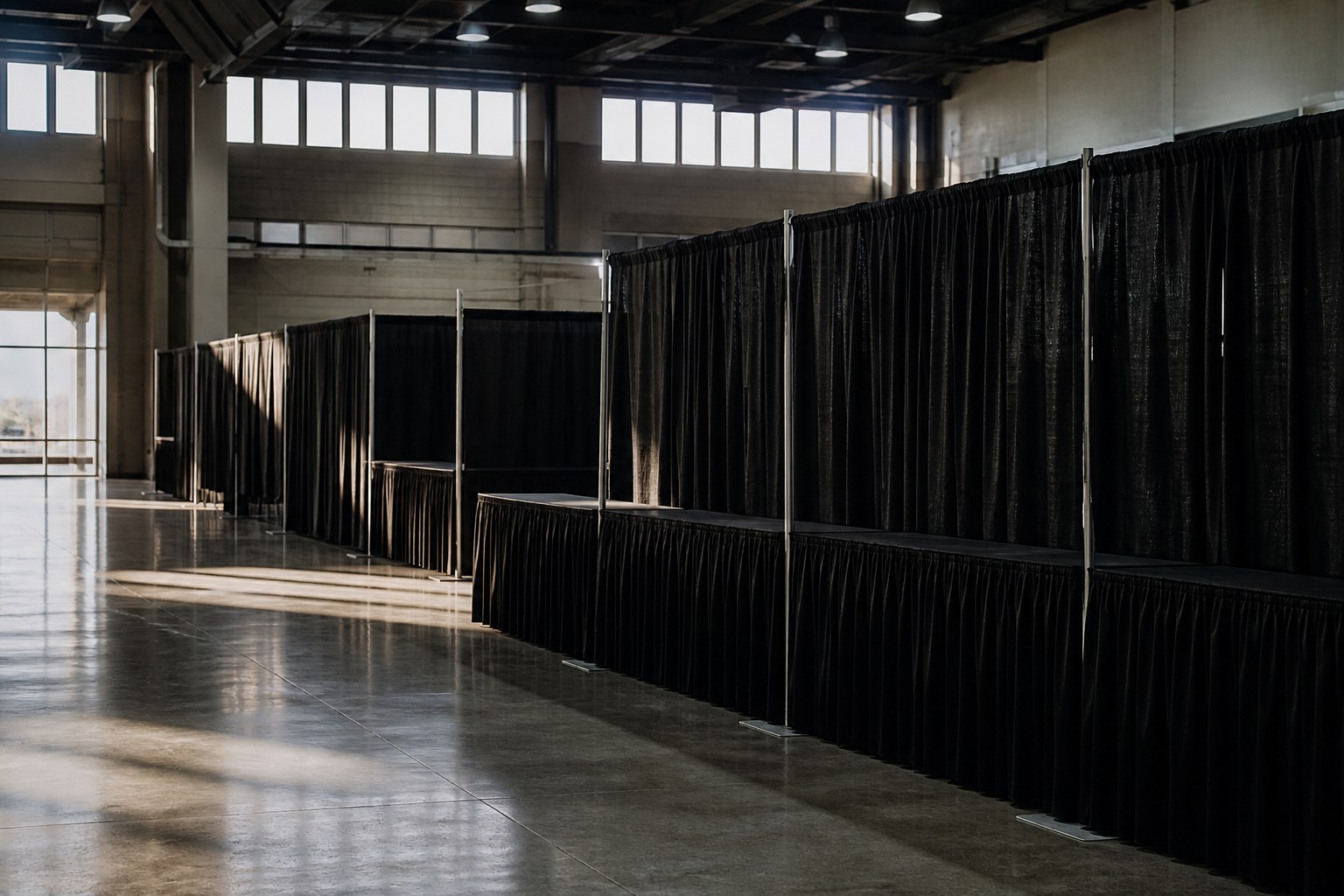
The most familiar use is the vendor or exhibitor booth, with a back wall and short side walls that give each participant a defined space. Weddings and parties often use a draped backdrop behind a head table, sweetheart table, cake display or photo area.
It also works as a room divider. A large hall can be split into a registration area, a seating area and a staging space, or a back-of-house prep area can be hidden from guests. Our staging, lighting and AV rentals include pipe and drape components, so you can plan them alongside stage and sound equipment.
Measure the space before you choose sizes
Start with the width of the area you want to cover and the height you want the drape to reach. Walk the room and note obstacles such as columns, outlets, vents, sprinkler heads and doorways, since the drape cannot block exits or safety equipment.
Booths and backdrops come in a range of dimensions, and the best size depends on your room and purpose. Share a rough sketch or photos of the room with your rental team and ask which configuration they recommend.
Choose colors that suit the event
Drape color changes the mood of a space. Black is the classic neutral for trade shows and stages because it recedes visually and makes products, signs and lighting stand out. White and ivory feel softer and more formal for weddings and receptions, and colored drape can match a brand or a theme.
Think about the lighting in your room, since warm or colored lights shift how fabric looks. Ask whether swatches or photos of the available colors can be shared before you decide. If you want a more decorative backdrop, take a look at the decor and entertainment rentals for arches, floral walls and other options.
Think about safety and venue rules
Draping used indoors is often subject to fire-safety rules. Many venues require fabric treated for flame resistance and may require it to be kept clear of exits, alarms, sprinklers and lighting. Ask your venue what they require and confirm the details with your rental team before ordering.
General fire-safety guidance for temporary structures and assembly spaces is available from the National Fire Protection Association. Your venue manager or local fire authority makes the final call, so get their requirements in writing if possible.
Plan the setup
Pipe and drape needs a flat, stable floor and enough access to bring in long pieces. Ask your rental team about delivery access, loading routes and elevators or doors that may limit what can be moved in. For large layouts, setup can take time, so schedule it early in your day rather than at the last minute.
If the backdrop will carry signs, banners or lighting, say so in advance. Hanging things from the frame can affect stability, and your rental team can advise on what the structure can safely support.
Coordinate with the rest of the event
Draping affects sound, light and traffic. A backdrop behind a speaker can improve how a stage looks on camera, while a divider can change how a room sounds and where guests naturally walk. Think through the flow of the event with the drape in place.
For layouts that include a stage, ask your rental team how platforms, steps and backdrops will fit together so sightlines and access stay clear.
Use drape to hide what guests should not see
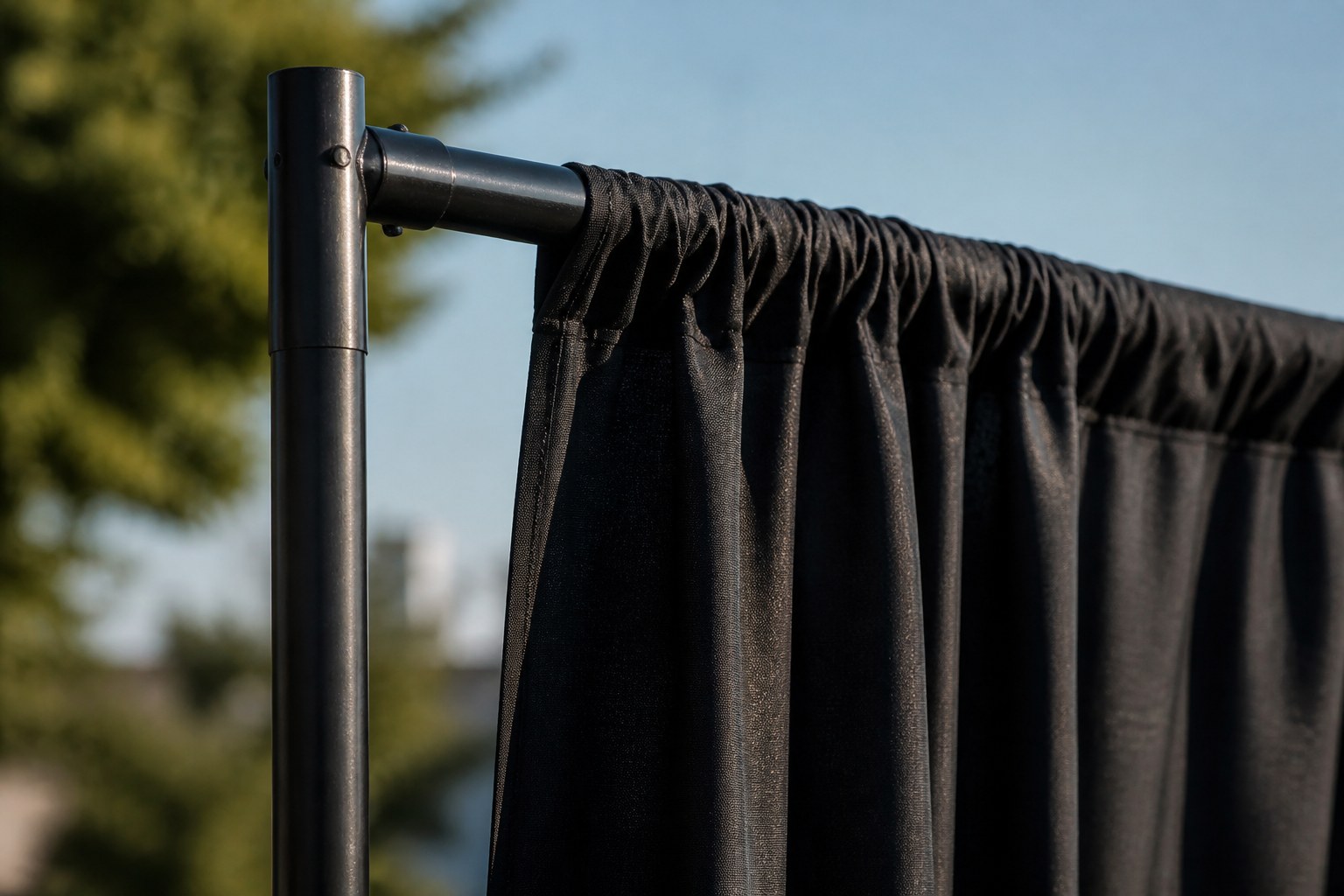
Not every use of drape is decorative. At many events, an unattractive area such as a staging corner, equipment storage, catering prep or a cluster of cables sits close to guests. A short run of drape can screen the area, give staff a private workspace and keep the room looking intentional.
When you plan a screen, leave room behind it for the work that happens there, and make sure the drape does not block an exit path or a safety feature.
Create a photo backdrop
A simple backdrop behind a photo area is among the most popular uses. Choose a color that suits the group and the lighting, keep the width generous enough for a group photo and leave space for the photographer to stand back.
Smooth, wrinkle-free fabric photographs best, so ask how the panels are hung and whether they will be steamed or pressed. For other backdrop ideas, such as arches and floral walls, look at the decor and entertainment page.
Plan booth layouts for a fair or expo
If you are organizing a vendor event, think about traffic flow. Place booths so visitors can circulate in a loop, avoid dead ends and keep wider aisles near entrances. Consider where vendors will need power and tables, and how they will receive deliveries.
Provide a clear booth numbering or labeling system. Vendors appreciate knowing the exact dimensions and what is included, including whether tables, chairs or electrical access come with the space.
Ask about fabric, finish and condition
Not all drape looks the same. Fabric weight, sheen and pleating change how a backdrop reads in photos and how it hangs on the frame. Heavier fabric tends to look richer and block light and sound better, while lighter fabric moves more in a breeze and can show wrinkles. Ask your rental team to describe what they offer and whether they can show photos of an installed setup.
Also ask about the finish of the poles and bases, since these show at the edges of a booth or backdrop. A clean, uniform look makes the whole space appear planned, and it is a small detail that guests notice even if they cannot say why. Mention any branding or color requirements as early as possible so there is time to arrange matching pieces.
Allow time for decorating after the frame is up
Once the frame and drape are installed, vendors and decorators still need time to hang signs, set tables and arrange displays. Build that time into the schedule instead of assuming everything is ready the moment the crew leaves. If you are running a vendor event, publish arrival and setup windows so booth holders know when they may enter, and let them know what the structure can and cannot support.
Frequently Asked Questions
Can pipe and drape be used outdoors?
It can in the right conditions, but wind is the main concern because fabric acts like a sail. Ask your rental team whether the setup needs extra weight or bracing, and whether your outdoor location is suitable.
How long does setup take?
It depends on the size and complexity of the layout. A simple backdrop is quick, while a full set of booths or a long divider takes longer. Give your rental team your layout and venue access times so they can plan the crew and schedule.
Does my venue need to approve the drape?
Often, yes. Many venues have rules about flame-resistant fabric and clearance around exits and sprinklers, so ask before you order. General guidance on fire safety is available from the National Fire Protection Association.
Bring your floor plan to the quote
The more your rental team knows about your room, the better the recommendation. Share the space dimensions, the purpose of the drape and your venue's rules, and ask what configuration they suggest.
Ready to plan backdrops, booths or dividers? Request a quote with your date and venue, call us at (239) 768-6393, or contact our team to talk through your layout.