Planning a winter event under a tent in Southwest Florida? Learn how heaters, sidewalls and layout work together, and what to confirm before you book.
Southwest Florida winters are mild by national standards, but an outdoor event after sunset can still feel cold to guests dressed for a warm afternoon. Between November and March, evening temperatures can drop quickly once the sun is down, and a breeze off the water or an open field makes it feel cooler still. That is why party tent heater rental becomes a real planning question for receptions, fundraisers and holiday gatherings held under a tent.
The goal is not to make a tent feel like a living room. It is to keep guests comfortable enough to stay at their tables, enjoy the food and linger through the evening. A short conversation about heating at the start of planning costs far less than the discomfort of guests leaving early because they are cold.
Start with the event time, not the forecast
Look at when your event actually starts and ends before deciding anything. A ceremony at four in the afternoon followed by a reception that runs until ten spans several very different temperature windows. Guests who are comfortable during cocktail hour may be reaching for wraps by dessert.
If your event runs into the evening, mention the full schedule when you ask for a quote. Your rental team can suggest whether heaters belong near dining tables, around a dance floor, or at the edge of the tent where guests gather, based on how the space will be used at each point in the night.
Understand the heater types available
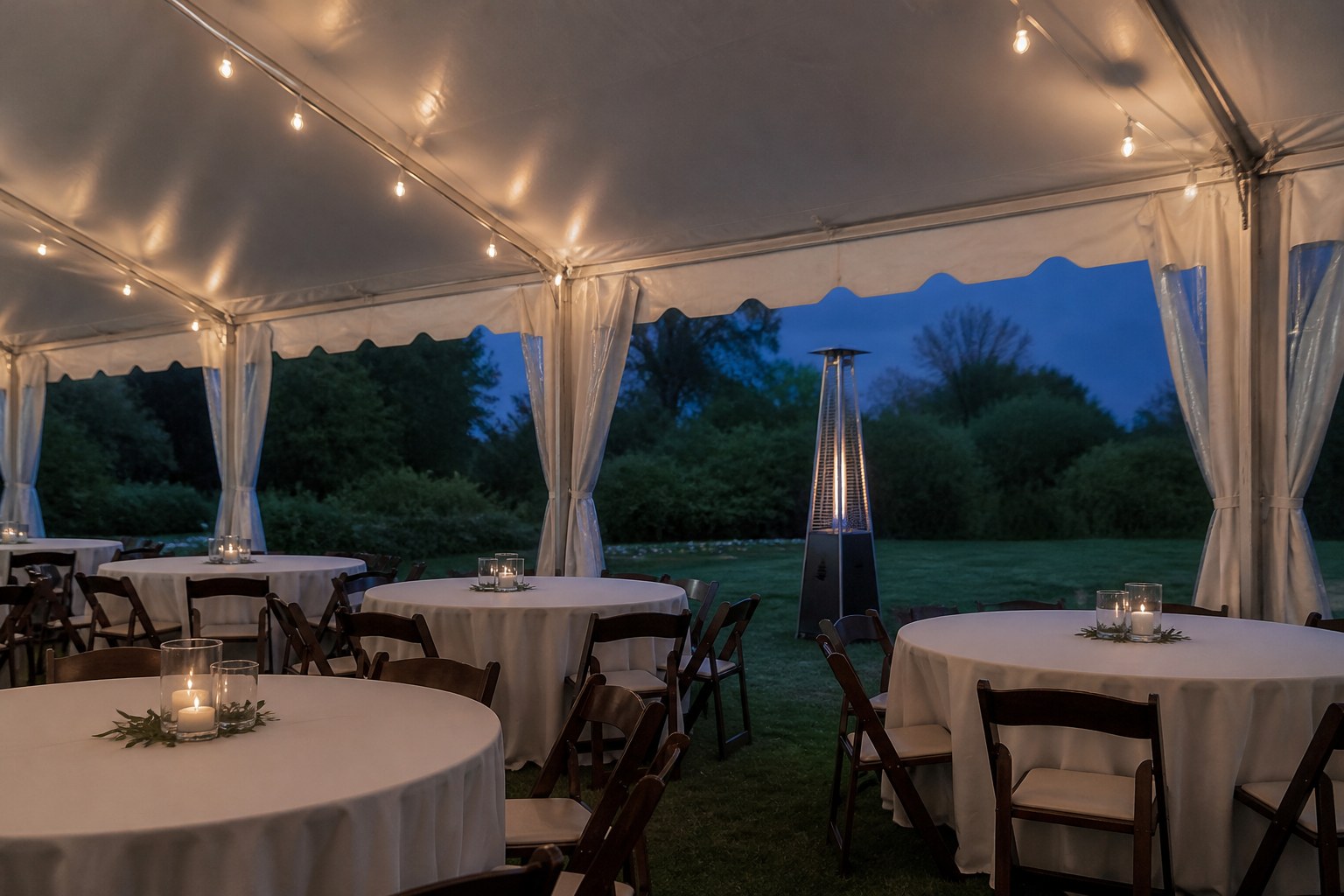
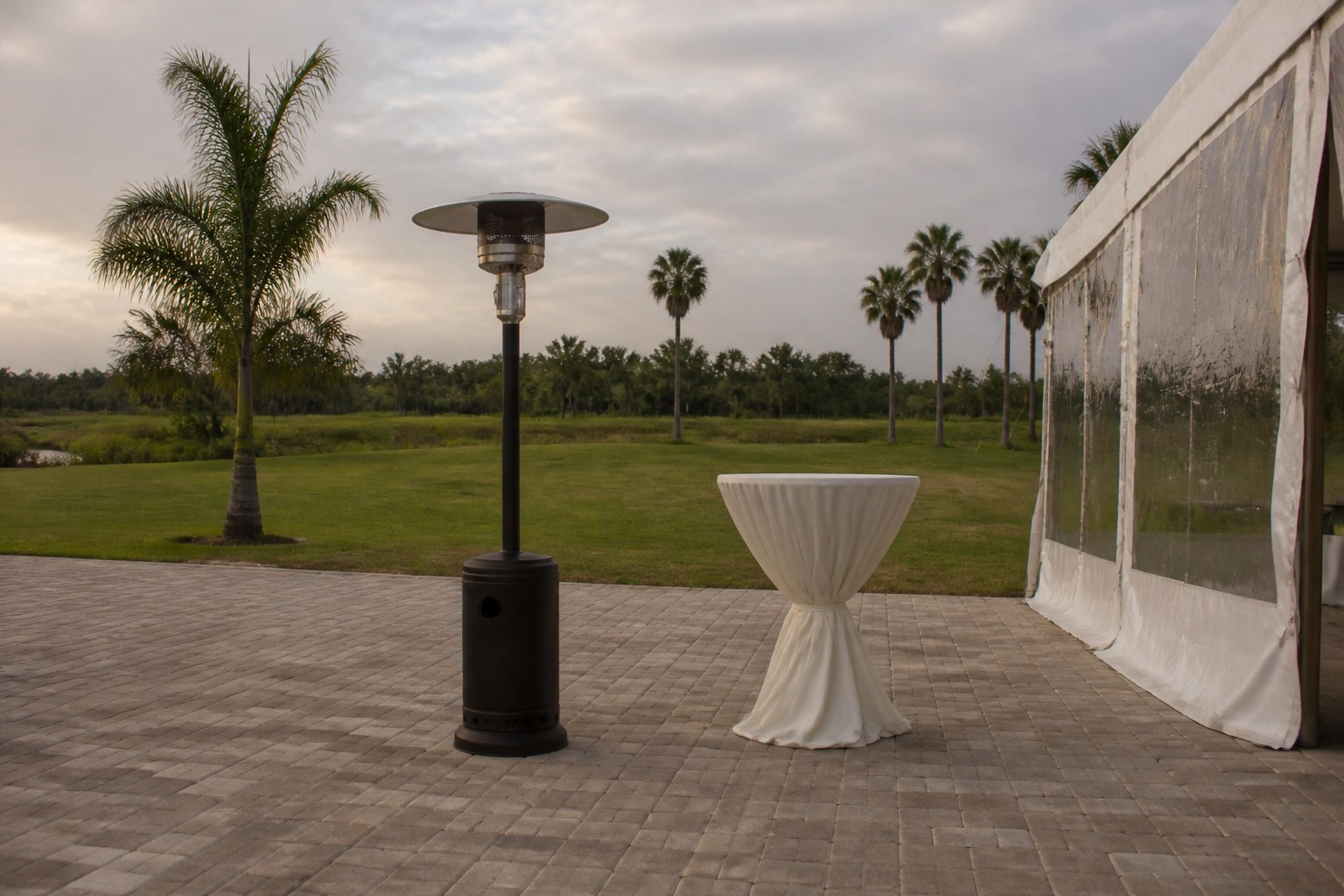
Heating equipment for events generally falls into two groups. Larger tent heaters are designed to warm the air inside an enclosed or partly enclosed tent, while patio-style heaters are meant for smaller outdoor spots such as an entry, a bar area or a cocktail zone. Our temperature control rentals include both kinds of heating equipment, along with fans and air conditioning for warmer dates.
Which type fits depends on how enclosed the space is, how many guests will be inside and where they will gather. A heater that suits a small seating area may do very little for a large open-sided tent, so describe the layout honestly when you ask what is recommended.
Sidewalls and heat work together
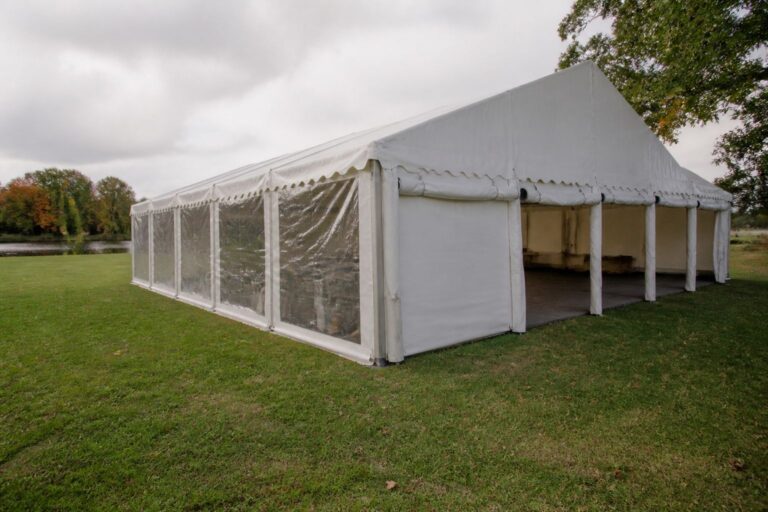
Heat escapes quickly from a tent with open sides, which is why heating and enclosure should be planned together. Solid or cathedral-window sidewalls help hold warmth and block wind, and a tent with no walls at all will rarely feel warm no matter what equipment is used. If you are comparing options, our guide to tent sidewalls and weather protection explains how the different panel styles change comfort, light and airflow.
Keep in mind that more enclosure is not always better. A fully closed tent filled with guests and warm food can become stuffy, so many hosts choose a mix: walls on the windward side and open or mesh panels elsewhere. Ask your rental team how they would balance warmth with ventilation for your guest count.
Safety comes first with any heater
Any heating equipment used around a tent needs careful placement. Heaters should sit on stable, level ground with clear space around them, away from tent fabric, decor, drapery and linens. Fuel-burning equipment also needs adequate ventilation, and it should never be moved or refueled by guests during the event.
The National Fire Protection Association publishes general fire-safety guidance for tents and temporary structures at nfpa.org, and your venue or local fire authority may have its own requirements for heating equipment and open flames. Ask your venue coordinator what they require, and share it with your rental team early so the plan is approved before setup day.
Plan guest flow around the warm zones
Heat is most useful where guests spend the most time. Dining tables, the head table and seating near the dance floor usually matter more than walkways or the tent entrance. If you have a cocktail hour before dinner, a heated gathering spot near the bar can keep early arrivals comfortable while the main area is still being finished.
Think about the people who feel the cold most, such as older guests, young children and anyone seated near an open side. Placing their tables toward the warmer part of the tent is a small decision that makes a visible difference.
Combine heat with lighting and layout
Heaters take up floor space and need clearance, so they should be part of the layout drawing from the beginning rather than added at the last minute. The same goes for power and lighting. If you are planning evening lighting as well, our post on tent lighting ideas for an evening reception covers how to plan fixtures and power together.
Share your floor plan, the number of tables and the position of any stage, bar or buffet when you request a quote. That lets your rental team recommend equipment and placement that fit your actual space instead of a generic setup.
Match the plan to the type of event
A wedding reception, a holiday party and a fundraiser all use a tent differently, so heating priorities shift. At a seated reception, the dining area matters most, and guests stay put for a long stretch. At a holiday party with a bar and mingling, warmth is needed near gathering points and the entrance. At a fundraiser with a program, the seating facing the stage deserves the most attention.
Describing the flow of the evening to your rental team, from arrival through the last dance, helps them suggest where heat will be used most. If your event includes a corporate holiday gathering, our corporate holiday party checklist covers the rest of the planning.
Dress the space for comfort, not only for heat
Equipment is one part of keeping guests comfortable. Small touches help too: warm lighting, blankets or wraps for outdoor seating, hot beverages at a station and seating placed away from drafts. A host who thinks about warmth as part of the guest experience, rather than as a single piece of equipment, usually ends up with a better evening.
Let guests know the event is outdoors under a tent so they can dress appropriately. A line on the invitation or website about evening temperatures costs nothing and prevents complaints.
Have a backup if the weather turns
Cool weather in Southwest Florida can arrive with wind or rain. Ask your rental team how they would adjust if a cold front moves through, whether sidewalls can be added on short notice, and what changes would be needed to the heating layout. The deadline for adding or changing equipment matters here, so ask when final decisions must be made.
A backup plan is worth discussing even when the forecast looks mild. For broader weather planning, see our guide to an outdoor event rain backup plan.
Frequently Asked Questions
Do I need a heater for an event in Southwest Florida?
It depends on the date and the schedule. Daytime events in the cooler months are often comfortable, but evening events can feel cold once the sun sets, especially in open or breezy locations. If your event runs past sunset between November and March, it is worth asking about heating options when you request a quote.
Can a heater make an open-sided tent warm?
Heat disperses quickly in an open space, so equipment alone has limited effect without some enclosure. Adding sidewalls on the windward side and grouping seating near the heated area usually works better than relying on heat to fill a wide open tent.
Who handles heater safety on event day?
Ask your rental team who places and sets up the equipment and what they need from the venue. Guests and hosts should not move heaters or handle fuel, and any venue rules about open flame or fuel-burning equipment should be shared with the rental team in advance. General tent fire-safety guidance is available from the National Fire Protection Association.
Bring your schedule and layout to the conversation
Heating works best when it is planned alongside the tent, sidewalls, lighting and power instead of added afterward. Tell your rental team your date, start and end times, guest count and venue, and ask what they recommend for comfort after dark.
Ready to plan a comfortable evening under the tent? Request a quote with your date and guest count, call us at (239) 768-6393, or contact our team to talk through heating, sidewalls and layout before you confirm your rentals.