Plan tents, staging, power, restrooms and shade for a Southwest Florida community festival or carnival-style event with this practical rental guide.
A community festival in Southwest Florida has a lot of moving parts: food vendors, a music corner, rides or games, a crowd that arrives all at once and a sun that does not take a day off. Good festival rental planning turns that long list into a layout you can walk through on paper before a single tent goes up.
This guide covers the rental decisions that shape a carnival-style event, from the site map to the strike. It is written for volunteer committees, school groups, churches and local organizers who want fewer surprises on the day.
Festival rental planning starts with a site map
Before you order anything, draw the grounds. Mark the entrance, the main walkway, the stage or music area, the food zone, the kids' activity zone, the restrooms and the places guests will naturally gather. Zones that sit too close together cause lines to tangle, and a quiet corner placed beside a loud stage rarely stays quiet.
Walk the site with your organizer and the venue contact, and note where the ground is flat, where it slopes and where water tends to pool. Share the sketch with your rental team early. A drawing answers more questions than a long email, and it helps them suggest what fits where. Add a few notes about parking, deliveries and where a truck can safely pull in, because the best layout still fails if equipment cannot reach it.
Vendor tents and tables that keep booths organized
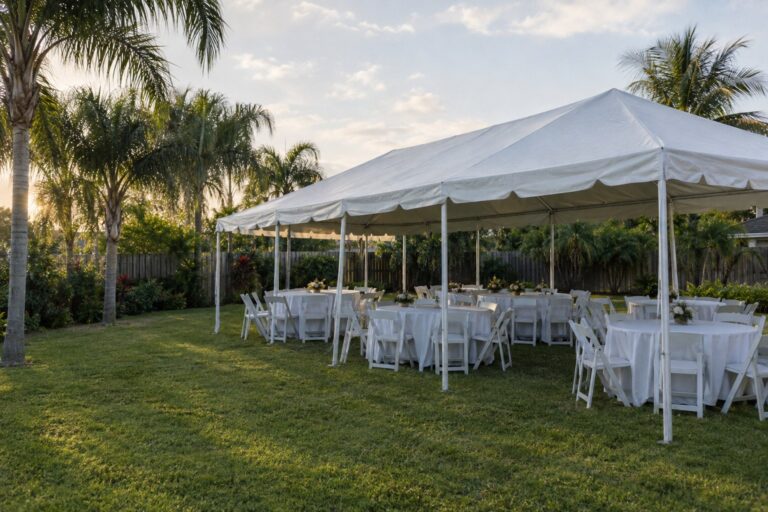
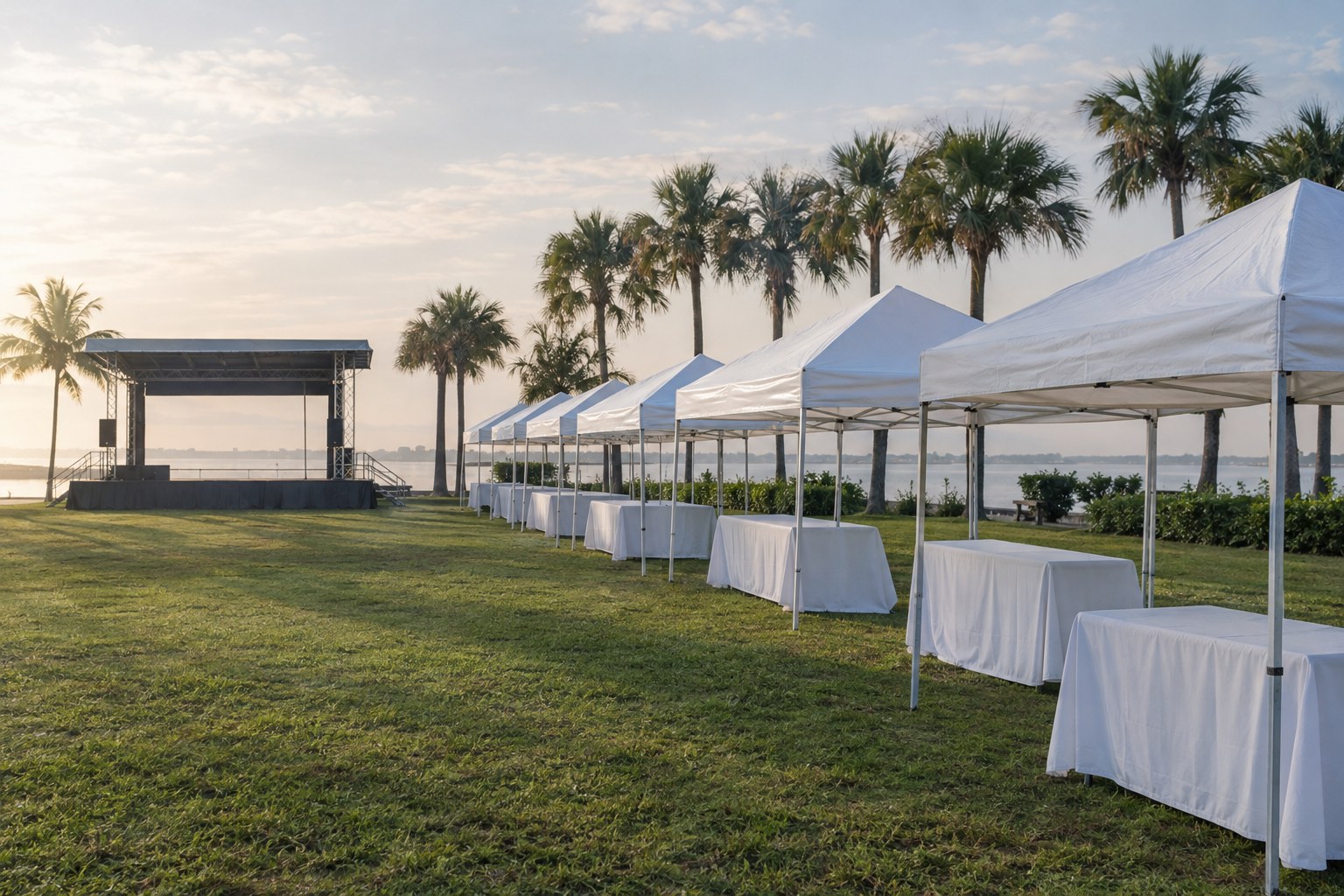
Vendors need shade, a work surface and room to move. Our tent rentals and table rentals cover most of what a booth row needs, and uniform setups make the whole festival look intentional from the street.
Ask each vendor how much frontage they need and whether they bring their own canopy. A common starting point is to plan a consistent booth footprint, then leave a walkway between rows wide enough for strollers and wheelchairs. Mixed layouts are fine, but decide who supplies what well before load-in so nothing is double-booked. Tables for registration, info and volunteer check-in are easy to forget, so add them to the list as well.
Staging for announcements and live music
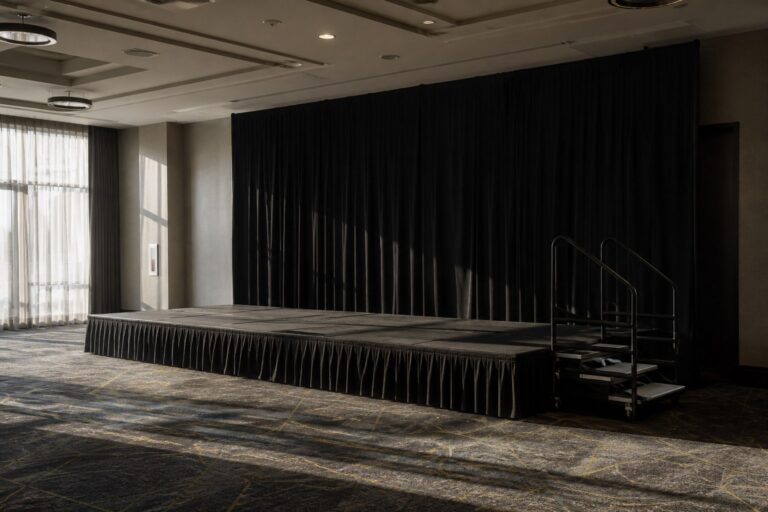
A small stage gives the emcee, band or contest host a place everyone can see. Think about which direction the stage faces, since afternoon sun in a performer's eyes or a speaker pointed at a neighbor's yard will be noticed fast.
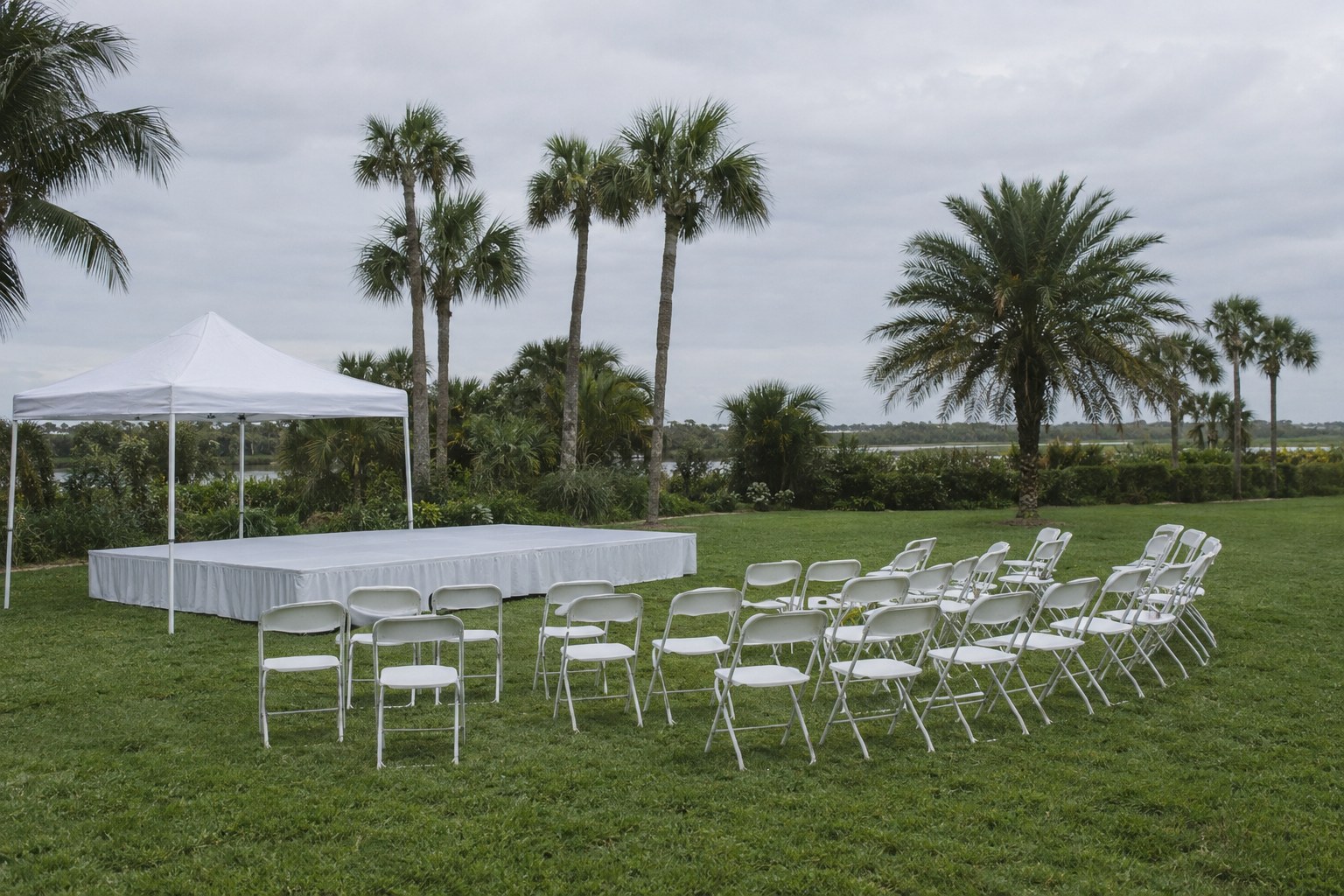
Talk through the actual program with your rental team: how many performers, whether anyone needs a covered area and how people will step up and down. Staging also needs a clear approach path and a spot for equipment cases. If a tent will cover the stage, confirm the height and the setup order together. Ask whether lighting for evening performances belongs in the same order, since it is easier to plan once than to add later.
Power distribution questions to settle early
Power is the most common gap on festival day. Make a list of everything that needs electricity: food warmers, lighting, sound, charging stations, game equipment and coolers. Then ask the venue what outlets exist and who is allowed to use them.
If the grounds do not have enough, our power and generator rentals are a place to start, and a written equipment list helps the conversation. Cord routing matters too. Ask how cables will be kept out of walkways and protected where guests cross them.
Do not guess at loads. Share your equipment list and let qualified people size the setup, and ask what support is available during the event.
Restroom trailers and guest comfort
Restrooms shape how long guests stay. A crowd that has to hunt for a facility leaves sooner, and long lines are the first thing people remember. Place restrooms where they are easy to find but not beside the food area, and light the path to them if the event runs after dark.
Our restroom trailer rentals are worth pricing out for larger gatherings. Ask your rental team what the trailers need at the site, such as level ground, space for delivery and access to water and power, and whether any accessibility options are available. Confirm the requirements with the venue as well, since some sites have their own rules for where trailers can park and how guests reach them.
Shade and cooling for long Florida afternoons
Heat and humidity decide how a festival feels in the middle of the day. Shade is the first answer, and tents over seating areas, a rest zone and the line for popular booths give guests a reason to stay.
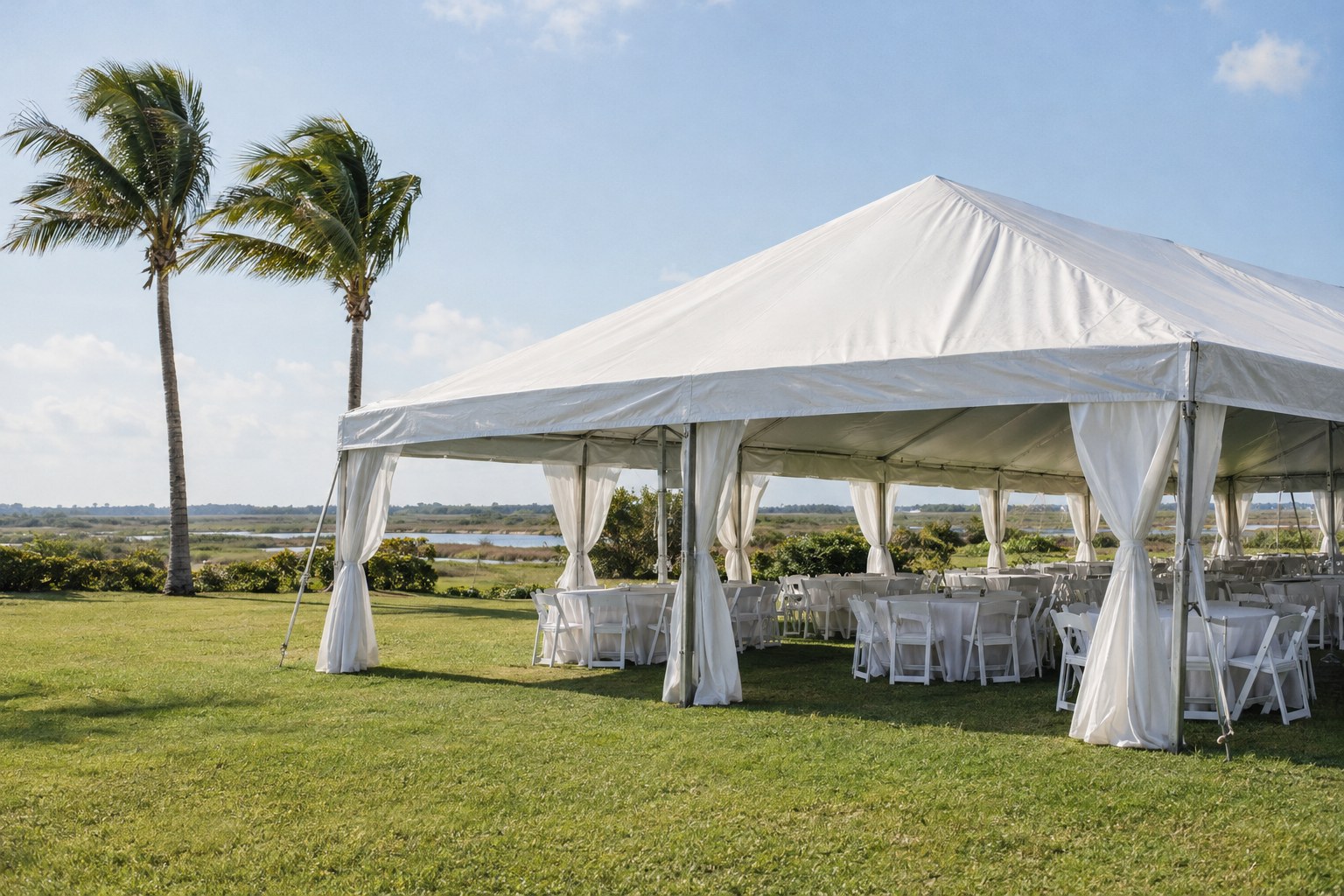
For hot dates, ask about fans or other cooling for the spots where people sit longest. Our temperature control rentals are one option to discuss. Add water stations to your plan and keep them away from the stage so lines do not block the crowd. The CDC offers general heat and health guidance that planners can use when building a heat plan.
Flooring on grass and sandy ground
Lawns look great in photos and turn rough after a few thousand footsteps. Entrances, food lines and the area in front of the stage take the most wear, and sandy or damp ground can make walking tiring or slippery.
Ask your rental team about flooring or walkway options for the busiest paths and for under tents where chairs and tables will sit. Tell them about the ground type and how recently it has rained. Surface choices depend on the site and the date, so describe the venue honestly and let the team recommend what suits it. If rain is in the forecast the week before, say so, because wet ground changes both the options and the setup.
Crowd flow, load-in and strike timing
Watch how people will move. Put popular booths away from the entrance so the line does not block arrivals, give the food zone more than one approach and confirm fire and emergency access requirements with the venue and local officials. A single wide path is easier to manage than several narrow ones. Keep trash and recycling stations spread around the grounds so the crowd does not pile up in one corner.
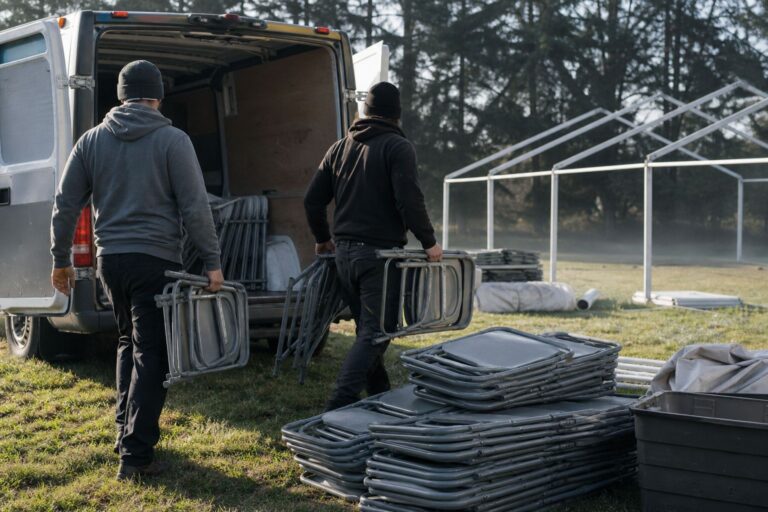
Load-in and strike need their own schedule. Vendors, entertainers and rental crews all want the same driveway at the same time, so agree on an order. Our guide to the festival and carnival event planning process shows how this fits into a larger timeline. Plan for strike after the last guest leaves, and ask the venue when the grounds must be clear.
A weather plan and who to check with
Afternoon storms are a normal part of summer and early fall here, and hurricane season runs through the end of November. The National Weather Service at weather.gov is a reliable place to watch forecasts as the date nears.
If you hear thunder or see lightning, the safest move is to get people into a fully enclosed building or vehicle, because tents and canopies are not lightning shelters. Ask the venue and the organizer what that plan looks like for your grounds.
Decide in advance who makes the call to pause or move people, how guests will be told and where they will go. Ask your rental team how tents behave in wind and what the setup needs on your site.
Rules differ by city, county and venue. Check with the organizer, the venue and local officials about permits, fire access and site rules, and share their answers with your rental team. Do not assume anything is allowed or not allowed until you have asked.
Frequently Asked Questions
How early should we start planning festival rentals?
As soon as you have a date and a site. Popular weekends fill up, and a draft site map gives your rental team enough to start a conversation. Ask what timing works for your dates.
Do we need a tent for every vendor?
Not always. Some vendors bring their own canopy, and some zones, like a stage area or rest area, may need one tent for several uses. List who supplies what, then ask your rental team how to fill the gaps.
Who decides where tents and power can go?
The venue and local officials set the rules, and your organizer coordinates them. Share the site map with all three and with your rental team before you finalize anything.
What if the weather changes the plan?
Write a simple weather plan ahead of time, including who decides, how guests are told and where they go. Ask your rental team what options exist if wind or storms are in the forecast.
Ready to map out your festival?
A festival comes together when the layout, the power, the shade and the schedule all agree with each other. If you are planning one in Southwest Florida, send us your site sketch and equipment list through our quote request form, or reach out on our contact page. You can also call (800) 421-2393 and talk it through with our team.