Plan catering equipment rental for a buffet or served event: service tables, warming gear, beverage stations, linens and caterer coordination.
Food gets the attention at a catered event, but the equipment around it decides whether guests eat in a smooth line or stand in a crowd. If you are lining up catering equipment rental for a buffet, a served dinner or a self-catered party, the rented pieces are the part you can plan from your desk weeks ahead.
One note before we start: we supply rental equipment, delivery and setup. We do not provide food or catering, so everything below is about coordinating the equipment side with your caterer or whoever is cooking. Your caterer knows the menu and the pans. Your rental team knows what can be set up where. Bringing them into the same conversation saves a lot of surprises.
Map the food flow before you order anything
Start with a simple sketch of how a guest moves: arrive, pick up a plate, move down the food, grab a drink, find a seat. Every rented item should support one step in that path. If you cannot say what a table is for, it probably does not belong on the order yet.
Ask your caterer whether the meal is a buffet, a family-style meal, stations or a plated dinner. A plated dinner needs far less guest-facing serving space but more staging room behind the scenes. A buffet is the opposite. Settle that first and the rest of the equipment list gets much shorter to figure out.
Service tables: how many and how long
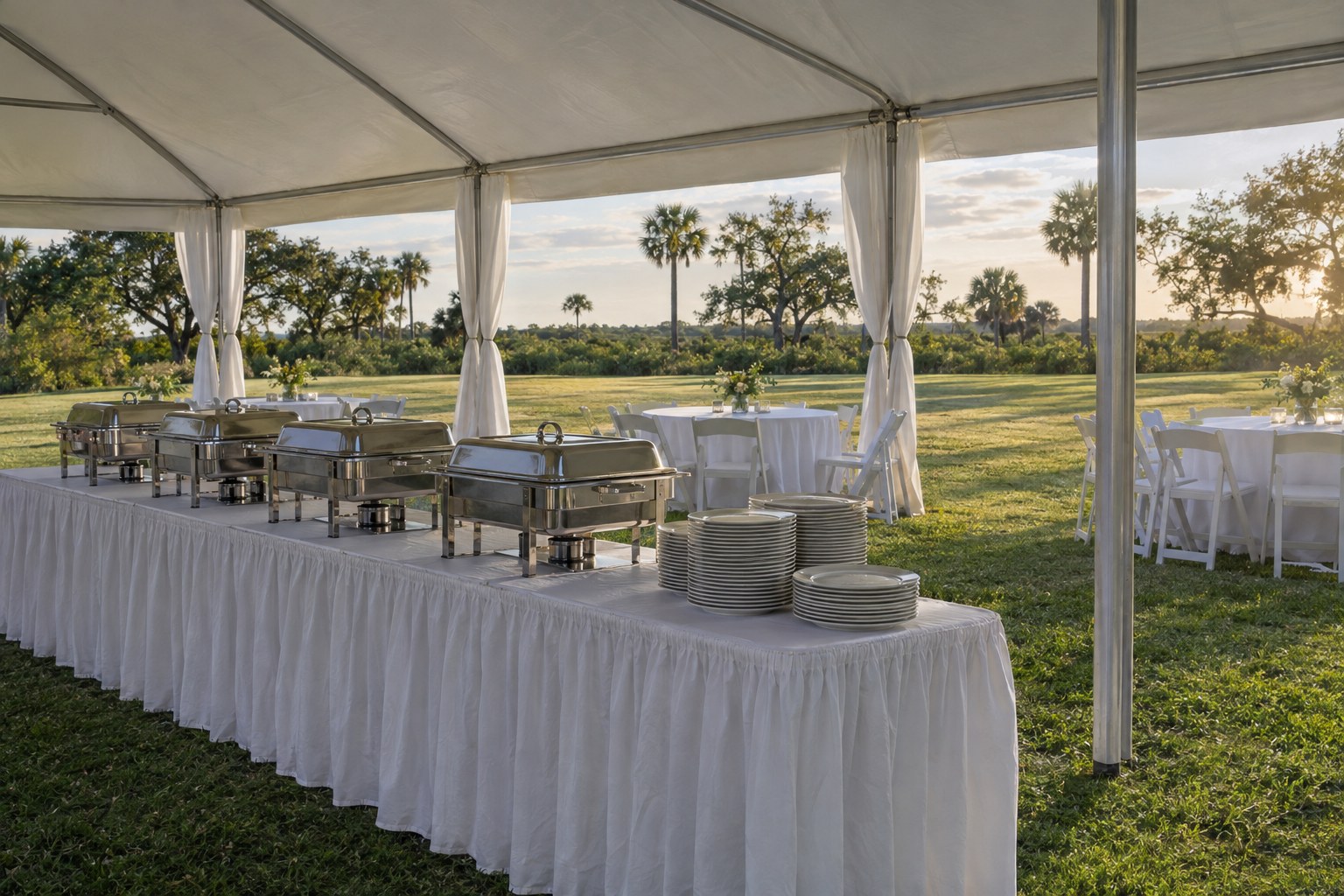
Buffet tables are usually long rectangles, and the number you need depends on how many guests are eating at once and how many dishes the menu includes. Many planners start with a double-sided line for larger groups so two lines can move at once, then adjust once the caterer shares the full menu. Browse the table rentals to see the shapes and styles available, and ask your rental team what fits your guest count and date.
Think about line length too. A single long line looks tidy on paper, but guests waiting at the end can be standing in afternoon sun. Splitting the line, or opening tables by group, shortens the wait without needing more food. Leave a clear walking lane on both sides so guests carrying full plates are not squeezed past seated friends.
Catering equipment rental: chafing and warming questions
Warming equipment for a buffet usually means chafing-style setups that keep pans of food hot while guests serve themselves. The specifics are a conversation for you and your caterer. Some caterers bring their own pans and warmers, and some expect the host to line up equipment through a rental company.
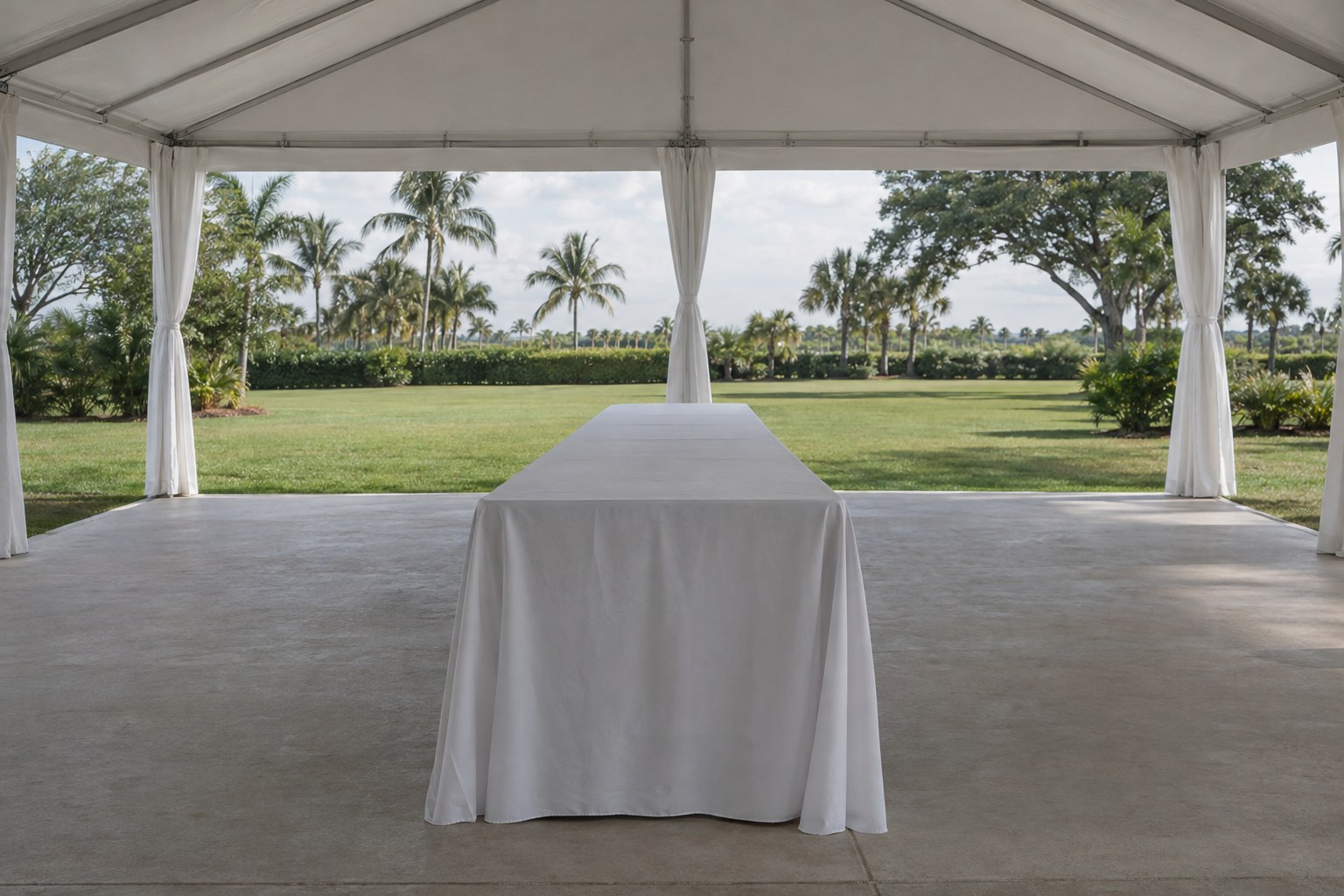
Ask your caterer which items they supply, which they expect from you, and how many pans the menu will need. Then check the bars and catering rentals for what is on offer, and ask your rental team to confirm availability for your date. Do not assume an item is included unless it appears on your written quote.
Also ask how the caterer plans to keep food at a safe temperature through a long service window. The CDC food safety pages are a good reference for the basics, and your caterer should already follow them.
Beverage stations that keep the line moving
Drinks cause more lines than most hosts expect. If water, tea and coffee sit at the end of the food line, guests clog the end of the line while the rest of the room waits. Put beverages on their own table, away from the food, so guests can grab a drink at any time.
In Southwest Florida's heat, plan on guests visiting the drink station often, especially at an outdoor afternoon event. Ask your rental team about cart or bar options, and ask for layout ideas that keep the station away from the food line. If alcohol will be served, any licensing and service questions belong with your venue and your bartender or caterer, not with the equipment list.
Prep and staging tables behind the scenes
Guests never see these tables, but your caterer depends on them. Prep tables give the kitchen team a clean surface for plating, garnishing and refilling pans. Staging tables hold backup trays, bussing bins and supplies so nothing sits on the grass or the ground.
Ask your caterer how many working surfaces they want and how long they need to be. A common starting point is at least a couple of plain rectangular tables per service area, but your caterer may want more for a plated meal or a multi-course dinner. Plain tables are fine here, since they will be covered or hidden from view anyway.
Linens for service tables
Service tables should look finished, and they also take the most spills. Floor-length or generous-drop linens hide table legs, boxes and extension cords underneath, which keeps the buffet tidy. Your linen and tabletop rentals include options to match your guest tables or contrast with them.
Ask your caterer whether they prefer a particular color for the food tables, because dark or patterned linens hide drips better than white. Order a few extra linens for the staging area if your caterer wants them covered, and ask your rental team how linens should be returned after a messy event.
Leave room behind the tent or venue kitchen
The work area is where a good buffet is won or lost. Caterers need room to move, refill and clean without walking through the guest area. At a tent event, that often means a separate back-of-house space beside or behind the main tent.
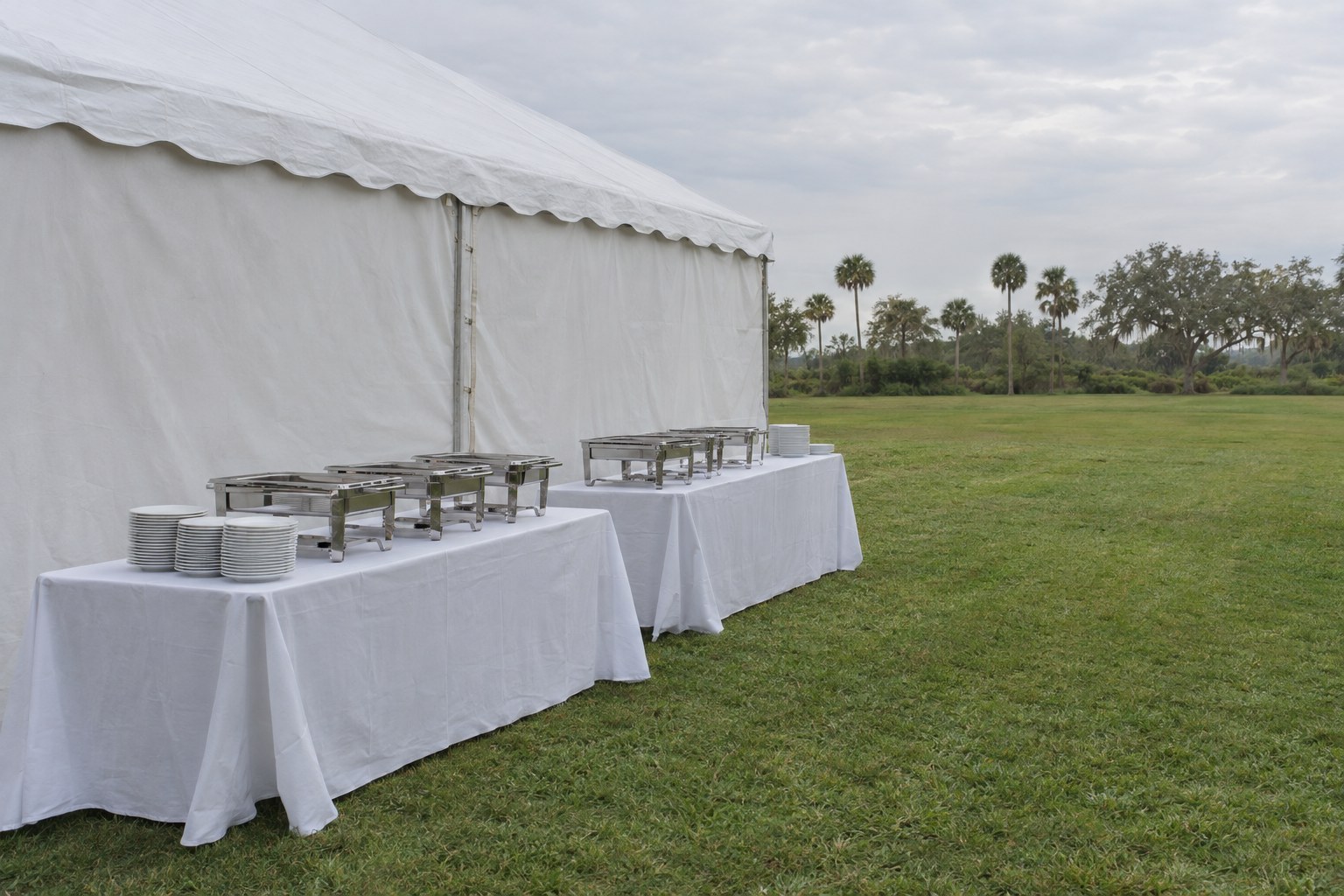
If the event is inside a venue, ask where the kitchen is and how food will travel to the buffet. At a lawn or sandy venue, ask your rental team about ground conditions, since heavy tables on soft ground can settle unevenly. Build time into your setup schedule for the work area to be ready before the caterer arrives. Afternoon storms are common in summer and early fall, so also ask about covering the work area, not just the guest space.
Power and heat-source questions to confirm
Some warming setups use fuel and some use electricity, and each brings its own questions. Ask your caterer exactly what they plan to use, then check with your venue about what is allowed on the property and where. Many venues have their own rules about open flame, extension cords and cooking under a tent.
For safety guidance on fire and heat sources, NFPA is a respected standards organization. Check with the venue, the city or county, and your rental team on what applies to your event. If power is needed, ask early about outlet locations and whether a separate source may be needed. Do not plan on running everything from one outlet.
Cleanup and breakdown with the caterer
Decide before the event who clears service tables and when the equipment is ready for pickup. Ask your rental team how food-soiled pans and linens should be handled before pickup. Ask your rental team what condition equipment must be in when it comes back, and whether anything needs to be rinsed, emptied or bagged.
Plan trash and recycling carts for the work area as well. At a fundraiser or large gathering, a good fundraiser plan includes a clear end-of-night sequence so food, tables and linens leave in the right order.
Frequently Asked Questions
Does Creative Events provide the food or the caterer?
No. We provide rental equipment, delivery and setup. Your caterer provides the food and decides how it is served, so share your equipment list with them early.
How many buffet tables do I need?
It depends on your guest count, the menu and whether you want a single or double-sided line. Ask your caterer for the dish count and ask your rental team to suggest a layout for your venue.
Should I rent equipment or let the caterer bring theirs?
Either can work. Some caterers bring their own pans and warmers, while others expect the host to rent them. Ask your caterer for a written list of what they bring so nothing is duplicated or missed.
Can I use warming equipment under a tent?
Confirm with your caterer, your venue and your rental team before the day of the event. Rules vary by venue and by heat source, so get the answer in writing.
Plan your buffet equipment with our team
Once you know your guest count, menu style and venue, we can help you match tables, linens and bar carts to your caterer's needs. Request a quote with your date, location and guest count, or contact our team to talk through your layout. You can also call us toll-free at (800) 421-2393.