Compare event flooring rental options for outdoor and uneven venues, from tent flooring to dance floors and carpet, and plan flooring around your tent.
Event flooring rental solves a problem that is easy to overlook until the week before an event: the natural ground at most outdoor venues is not flat, dry, or stable enough on its own to safely support tables, dance floors, and heavy guest traffic. Grass lawns, gravel lots, and sloped lawns can all look fine on a sunny afternoon site visit and still create real problems if rain, heavy foot traffic, or heeled shoes come into play on event day.
Flooring is not a single product. Depending on the venue and the areas of the event it needs to support, flooring rentals can include plywood tent flooring or a dedicated dance floor surface, and high-traffic areas like entrances and bar lines often need a plan of their own.
Start with an honest look at your ground conditions
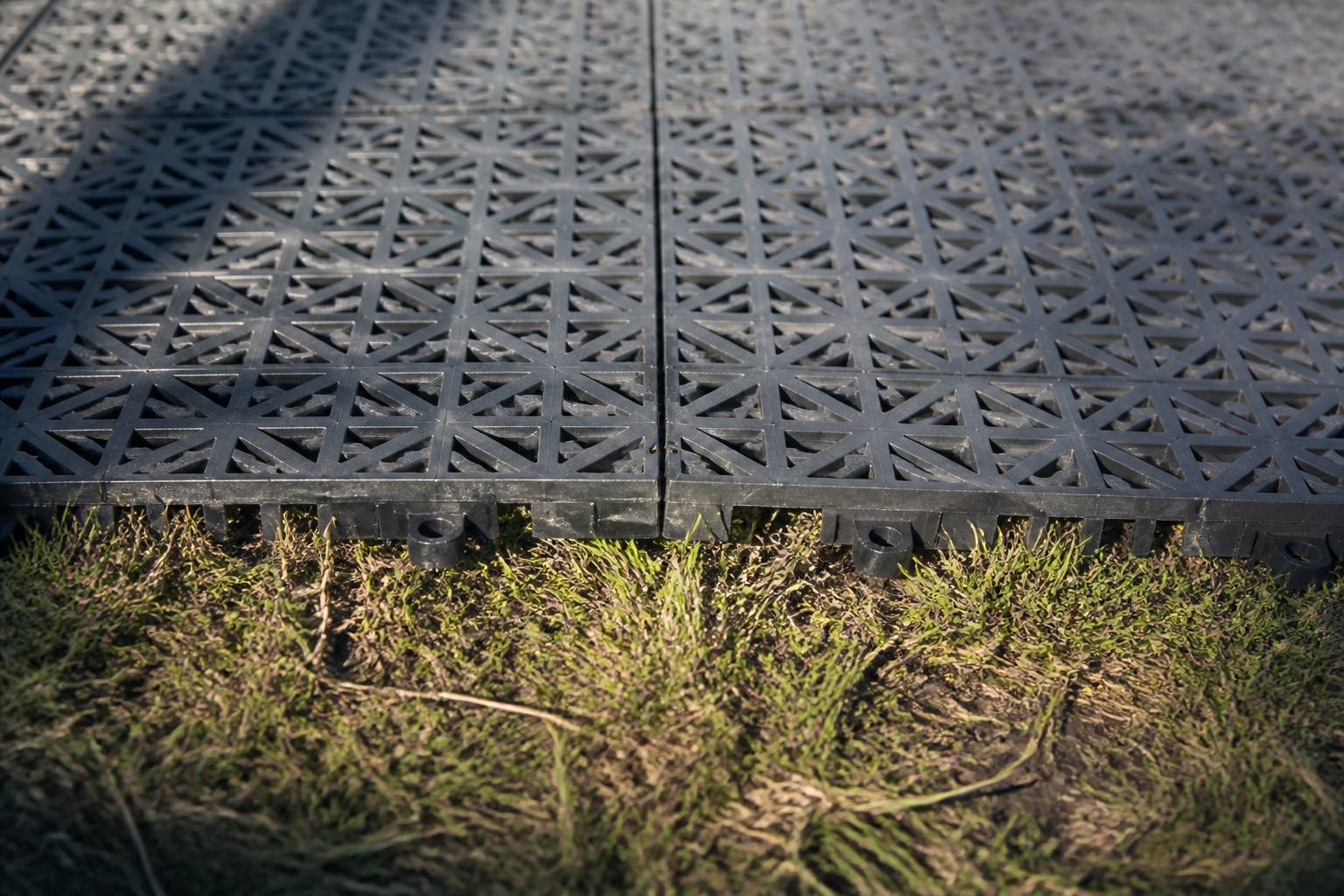
Before choosing a flooring type, walk your venue and note where the ground is uneven, sloped, soft, or prone to standing water after rain. Areas near trees, low points in a lawn, and anywhere close to sprinkler heads or irrigation lines are common trouble spots that may need more than a standard tent stake and grass setup.
If your event includes heavy items like a full dinner service, a dance floor, or a stage, the ground needs to support sustained weight in one place for hours, not just brief foot traffic. This is where plywood tent flooring becomes worth the investment, even under a tent on ground that looks solid at first glance.
Subflooring for tents on grass or gravel
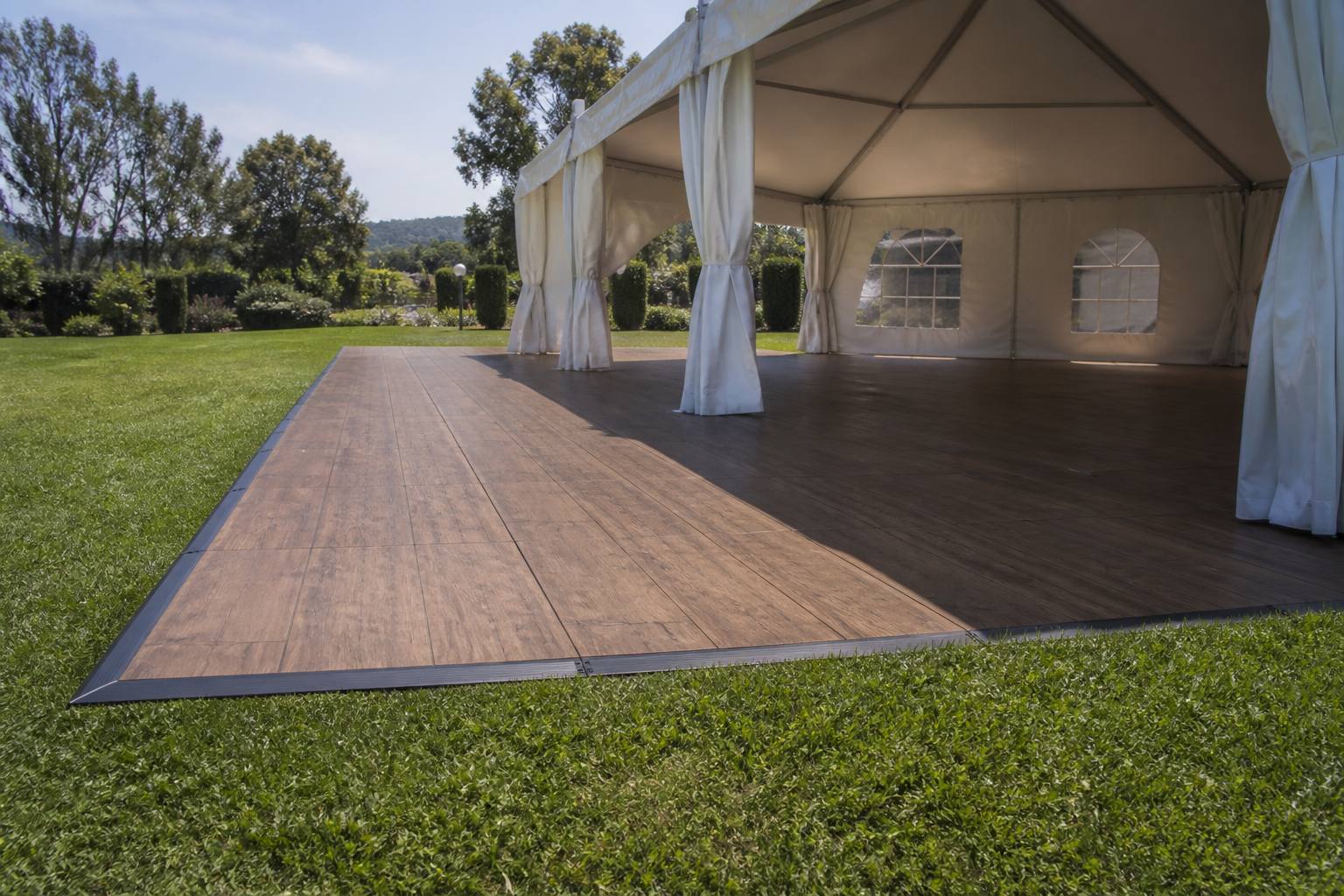
Plywood tent flooring is a raised, level surface that sits under the entire tent footprint. It levels out minor slope, keeps tables and chairs stable, and protects the venue's lawn from damage caused by tent stakes, chair legs, and heavy foot traffic over the course of an event. Subflooring is especially useful for venues that require the lawn to be restored to its original condition afterward, since it distributes weight across a wide surface instead of concentrating it under individual chair or table legs.
Subflooring can be finished with a top layer of carpet, depending on the look you want for the room, and it pairs directly with your tent size and table layout planning.
Event carpet and runners for guest movement
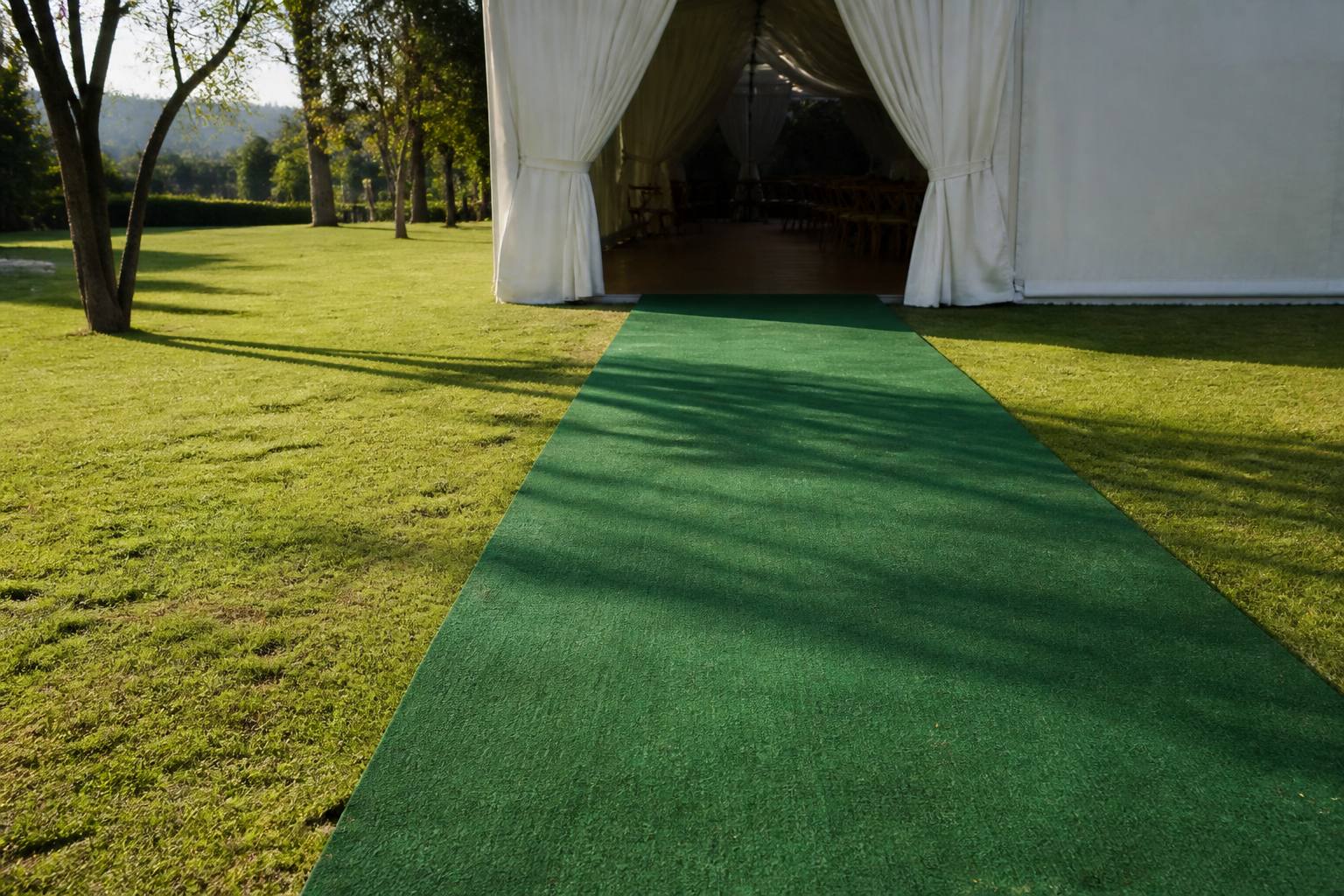
Event carpet and runners solve a different problem: guest movement across grass, gravel, or dirt in dress shoes or heels. Laying event carpet or a runner between the parking area, ceremony site, and reception tent gives guests a finished path to follow, covers uneven ground along the way, and keeps high-traffic paths looking clean throughout the event even if the surrounding grass gets worn down.
Event carpet is also useful near entrances, bar areas, and buffet lines, where guests naturally cluster and foot traffic is heaviest. These high-use zones tend to show wear on natural grass faster than the rest of the venue.
Dedicated dance floors and their surface requirements
A dance floor needs a flatter, firmer surface than general seating areas, both for safety and for how it performs under sustained movement. If your dance floor sits directly on grass or gravel without a leveling subfloor underneath, uneven ground can telegraph through the dance floor panels, creating gaps or an unstable feel even with a well-built floor on top. Planning dance floor placement together with your subflooring, rather than treating them as separate rental decisions, produces a more stable result.
For accessibility, keep at least one clear, level route to the dance floor free of raised panel edges or uneven transitions, so guests using mobility devices can access it as easily as anyone else.
Weather is the deciding factor for outdoor flooring
Recent rainfall changes ground conditions quickly, and a lawn that felt solid during a site visit weeks earlier can turn soft or muddy after a storm closer to the event date. This is especially relevant across Southwest Florida, where afternoon rain is common for much of the year. If your venue has any history of standing water or soft ground after rain, plan for flooring as a safeguard rather than an optional upgrade, and coordinate the decision with your event's rain backup plan so both pieces work together instead of being decided separately at the last minute.
Consider flooring for more than just the tent interior
It's easy to think of flooring purely as something that goes inside a tent, but the same ground-condition problems apply to bar setups, lounge areas, and even standing cocktail spaces that sit outside the main tent footprint. A bar station on soft grass can develop uneven footing after a few hours of guests standing and shifting weight in the same spot, and a lounge area with furniture legs sinking unevenly into grass can look tilted in photos even when the furniture itself is level. Walk through every area guests will actually use, not just the seated dining space, when deciding where flooring is worth the investment.
Flooring cost considerations worth planning for
Flooring is often one of the rental line items hosts trim first when working within a budget, but it's worth weighing that decision against the actual risk at your specific venue. A venue with a level, well-drained lawn and a dry forecast may not need full subflooring at all, while a venue with known low spots, heavy shade that keeps the ground damp, or a history of muddy conditions after rain is a much higher-risk trim. Ask your rental team for an honest assessment of your specific site rather than a generic recommendation, since the right answer varies significantly from one venue to another.
If a full subfloor isn't in the budget, prioritizing flooring for just the highest-risk or highest-traffic zones, such as under the dance floor and along the main guest pathway, can reduce risk without the cost of flooring the entire tent footprint.
Flooring and accessibility work together
Beyond general safety, flooring plays a direct role in accessibility for guests using wheelchairs, walkers, or other mobility devices. Natural grass and gravel can be difficult or impossible to navigate with wheels, while a level subfloor or a firm, level path gives guests using mobility devices a surface they can cross more easily. If you know in advance that your guest list includes anyone who uses a mobility device, treat flooring and pathway planning as a required accessibility feature rather than an optional upgrade, and confirm the route from parking through to every area of the event, not just the ceremony or dance floor. The Americans with Disabilities Act guidance on accessible routes, level surfaces, and adequate path width is a useful benchmark when reviewing a temporary outdoor flooring plan with your venue and rental team.
Frequently Asked Questions
What flooring types are covered?
The article covers plywood tent flooring, dedicated dance-floor surfaces, and event carpet and runners for guest pathways.
When is a full subfloor useful?
It is useful on grass or gravel with slope, soft ground, or other uneven conditions, especially with heavy items, sustained traffic, or a dance floor.
How does flooring support accessibility?
A level subfloor or a firm, level path can help guests using wheelchairs, walkers, or other mobility devices; keep clear, level routes to event areas.
Bring your venue details into the rental conversation
Share your venue's ground type (grass, gravel, or paved), any known slope or low spots, and the footprint of your tent and dance floor with your rental team early. That information lets them recommend the right flooring for each area instead of defaulting to a one-size option that may not match your actual site conditions.
Ready to plan flooring for your outdoor event? Request a quote with your venue's ground conditions, call us at (239) 768-6393, or contact our team to talk through your flooring plan before you finalize your layout.